Two key drivers are rapidly reshaping finance and accounting teams and the office of the CFO. A national push to revamp licensure requirements for certified public accountants is widening the onramp into the accounting profession just as AI is recasting the scope and type of work that next-gen accountants must tackle.
Since early last year, more than 40 states have changed their regulations and eased educational requirements to become a CPA. (Keep up with CPA licensure changes by accessing CFO Dive’s tracker on the topic here.) Meanwhile, generative AI is increasingly handling routine finance tasks and speeding the pace of the monthly close and other processes.
In this emerging AI era of accounting, entry-level staffers must learn how to vet technology’s results and CFOs must ensure company data is reliable and safe. That leaves educators of the future ultimately “teaching people accounting when they’re not going to do accounting,” Tom Hood, executive vice president of business engagement and growth at AICPA and CIMA, told CFO Dive in an interview.
To help finance chiefs naviagate this shifting labor scenario, we’ve compiled some of CFO Dive’s top articles on the trends and strategies others are using to assemble and lead future-proof accounting teams and practices.
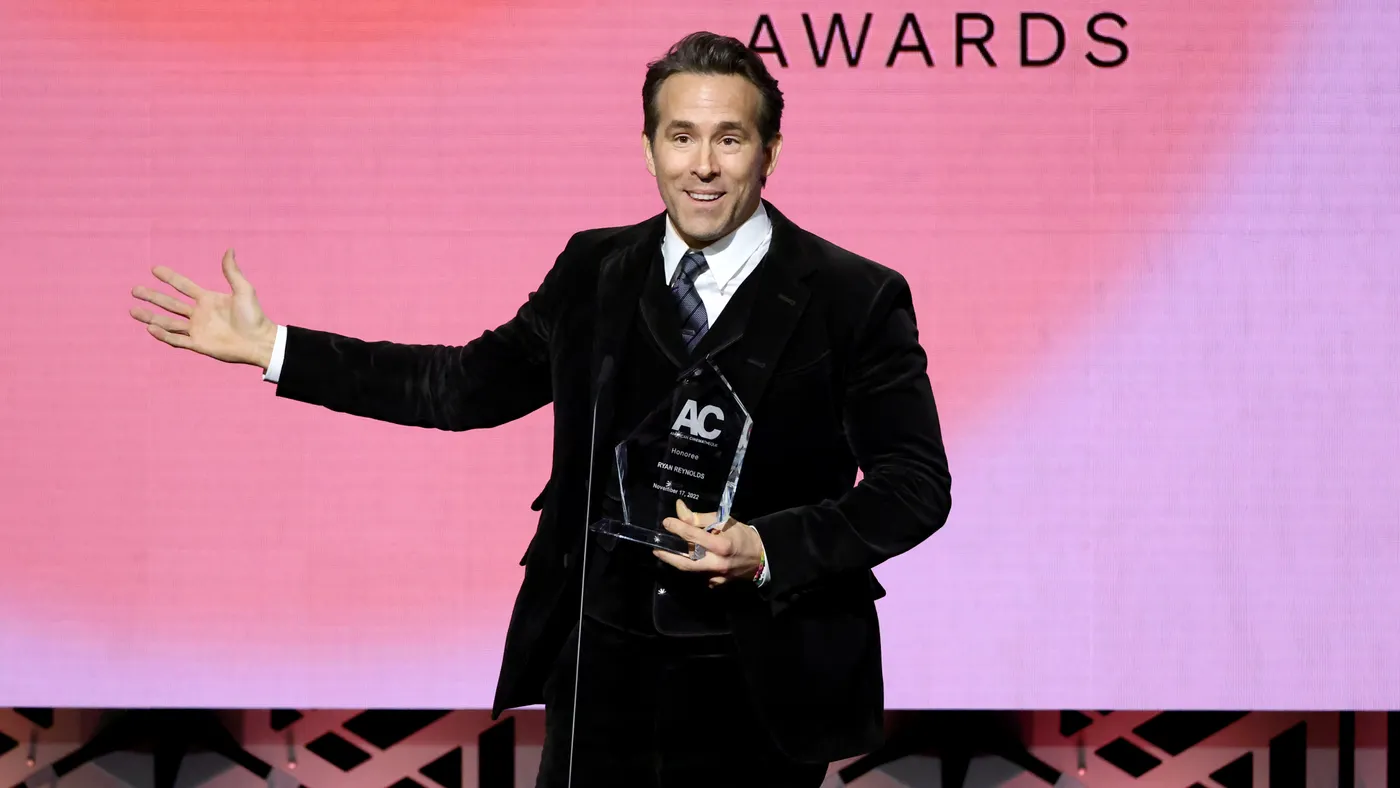
Costco’s retired CFO and Ryan Reynolds: An improbable bromance
The retailer’s ex-CFO Richard Galanti and the Hollywood actor talked budgets and hot dogs during their keynote appearance at an AICPA conference Monday.
By: Maura Webber Sadovi• Published June 9, 2026
When actor Ryan Reynolds of Deadpool films fame and retired Costco CFO Richard Galanti took the conference stage in Las Vegas Monday, it might have seemed like an odd matchup.
The fast-talking Hollywood A-lister is prone to profanity-laced quips, at one point graphically describing his fear of throwing up in the mask that his Deadpool character wears. Meanwhile Galanti, nicknamed Costco’s “voice” because of the deft approach to earnings calls he developed over his four decades as finance chief, is known for his ability to bring data to life with wholesome and sometimes kooky tales about customer trends and return sagas.
But the two have a history of bridging those differences. Galanti appeared last summer as an “anti-inflation” officer in a commercial for Mint Mobile, the wireless company that Reynolds sold to T-Mobile in a $1.3 billion deal. In it, he touts his role in keeping Costco’s hot dog and soda combo’s price at $1.50.
This week they took that chemistry — call it a hot dog-fueled bromance or marketing genius — to one of the accounting industry’s biggest conferences. The two headlined a keynote address kicking off The American Institute of Certified Public Accountants’ conference taking place this week: Engage 2026 Las Vegas.
Reynolds wasted little time before playing to the audience, while also insisting he wasn’t pandering. The Canadian actor, whose father was a cop, maintained he came from a working-class family and wished there were more accountants involved in movies to keep budgets in line.
“I just happen to be in a room with a few thousand very intimidating accountants but I’ve always wished that accountants ran show business, because I often say that too much time and too much money will hurt creativity and that’s very true,” Reynolds said. “They’re just firing money out of a T-shirt cannon at every problem.”
For example, he recalled when he first got Deadpool approved or greenlit, he had little money to make it so he had to think creatively about financing it. Knowing he needed some Chevrolet Suburban trucks that would be totalled during film making, he reached out to the automaker to see if he could strike a deal with them.
“So the next day I’m on the phone with Chevy, saying, “hey, what if we destroy your vehicles and at the end of the movie I say something about how ‘no Suburbans were harmed in the making of this movie?’” he recalled. “Whatever it is...you just do something to make it happen, find a way and then suddenly you’re making a movie on $50 million that should have been shot for $150 million.”
Separately, Galanti was called upon to talk about the genesis of the famed hot dog soda combo, and some hard decisions he had to make in shifting from serving a smaller kosher hot dog to a non-kosher, larger private label version that the company manufactures in two plants it opened.
The two also talked about Galanti’s appearance in the commercial, which Galanti joined the Screen Actors Guild for a day to make. Galanti’s 25-year-old daughter came during the making of the commercial in New York to meet Reynolds.
“He was very nice and all my wife and my friends asked, ‘is he as nice and handsome in person?’ And I said ‘absolutely not,’” Galanti said, deadpanning. “No, he’s shorter than me.”
The two also talked about the power of humor and story telling. Galanti recalled that he was a CFO of a big company handling tax, audits, accounting, payroll and audits. But having a sense of humor helped him raise his CFO grade.
“Over my 40 years, I went from a D to a solid B…But what made me an A, in my mother's view, was my humor ability and because I got to do all the earnings calls I added a little humor to it,” Galanti said. “It goes a long way.”
Article top image credit: Emma McIntyre via Getty Images
AICPA tackles accounting’s AI era: 4 predictions
The crowd-sourced 44-page report from AICPA and CIMA examines AI-related changes reshaping the accounting industry.
By: Maura Webber Sadovi• Published June 8, 2026
A newly released report from two major accounting industry organizations is full of relatively clear-eyed advice when it comes to navigating the stark AI and technological changes that are expected to continue broadly reshaping the accounting profession in the coming decade.
The crowd-sourced 44-page paper: Rise 2040: Shaping the Future of Finance and Accounting Vision Report from the American Institute of CPAs and the Chartered Institute of Management Accountants presents the shifts as a call to action for accountants. At the same time, the report also acknowledges anxiety and concerns about jobs being displaced and what that future will look like.
Tom Hood, executive vice president of business engagement and growth at AICPA and CIMA, said in an interview Friday that the report’s findings grew out of discussions led by the organizations from June 2025 to January, with more than 6,000 accountants, CFOs, controllers and educators in 25 countries. The results as a whole represent one of the industry’s first global responses to the AI-related changes affecting the profession and a blueprint for how to navigate the new era, Hood said.
“Yes, fear was in the discussions but then…when you shift your brain into, ‘how do I find an opportunity in this?’ it flips to optimism,” Hood told CFO Dive. Among the challenges ahead, for example, will be training a new generation of accountants that will oversee technology and check its results without ever having done the routine work themselves. The profession and education will ultimately be “teaching people accounting when they’re not going to do accounting,” Hood said.
Below are four predictions for the future change coming to the accounting industry, and some solutions for addressing them:
AI-enabled accounting expansion will lead compliance to become “invisible,” audit to become a continuous activity and require entry-level roles to be redesigned. Some ways to “pre-solve” the predictable problems to which this could lead include creating AI-driven “institutional memory” and providing risk and fraud monitoring through ongoing analytics, according to the report.
Automation and AI will reduce costs, compress labor time and affect demand for talent. To address this, accounting firms can consider implementing subscription or value-based pricing or consider offering “CFO-as-a-Service,” according to the report.
Workforce reinvention and the increasingly AI-enabled profession could lead to a breakdown of traditional training pathways and loss of institutional knowledge. The report advised companies can consider implementing intergenerational training and “human-AI” training models, among other solutions.
As “manual processes fail,” a premium will be placed on trust and assurance. “As complexity increases, the need for trusted professionals, ethical oversight and high-quality standards increases alongside it,” the report states. Professionals can consider developing “trust score platforms” and implementing automated anomoly detection.
Article top image credit: Getty Images
CPA pathways: Class of 2026 weighs in
Recent college graduates are split on whether changing CPA licensing rules will help or hurt the accounting profession.
By: Maura Webber Sadovi• Published May 29, 2026
Like all college students graduating in the class of 2026, aspiring accountants are stepping into a fast-changing workforce charged with a high degree of uncertainty.
Layered on top of those pressures is a singular change facing graduates on the certified public accountant track: a broad overhaul of CPA licensing requirements is underway. It is aimed at lowering what some see as a costly barrier to getting the CPA — a credential which can pave the way to higher compensation and more senior roles in public accounting as well as CFO seats.
Since early last year, about 43 states have tackled an accounting labor shortage by changing rules or passing laws that either eliminate the requirement that CPAs complete 150 college credit hours — or provide the option of alternative paths that don’t include credits that typically mean a fifth year of college. By substituting an extra year of experience instead, the new certification model being adopted typically requires candidates to complete a bachelor’s or 120 credit hours, two years of professional experience and to pass the CPA exam.
This year’s graduates are joining an industry in the throes of that tumultuous regulatory transition. CFO Dive spoke with six aspiring CPAs about their career paths, and how they think the new CPA pathways are likely to impact young professionals and the accounting industry.
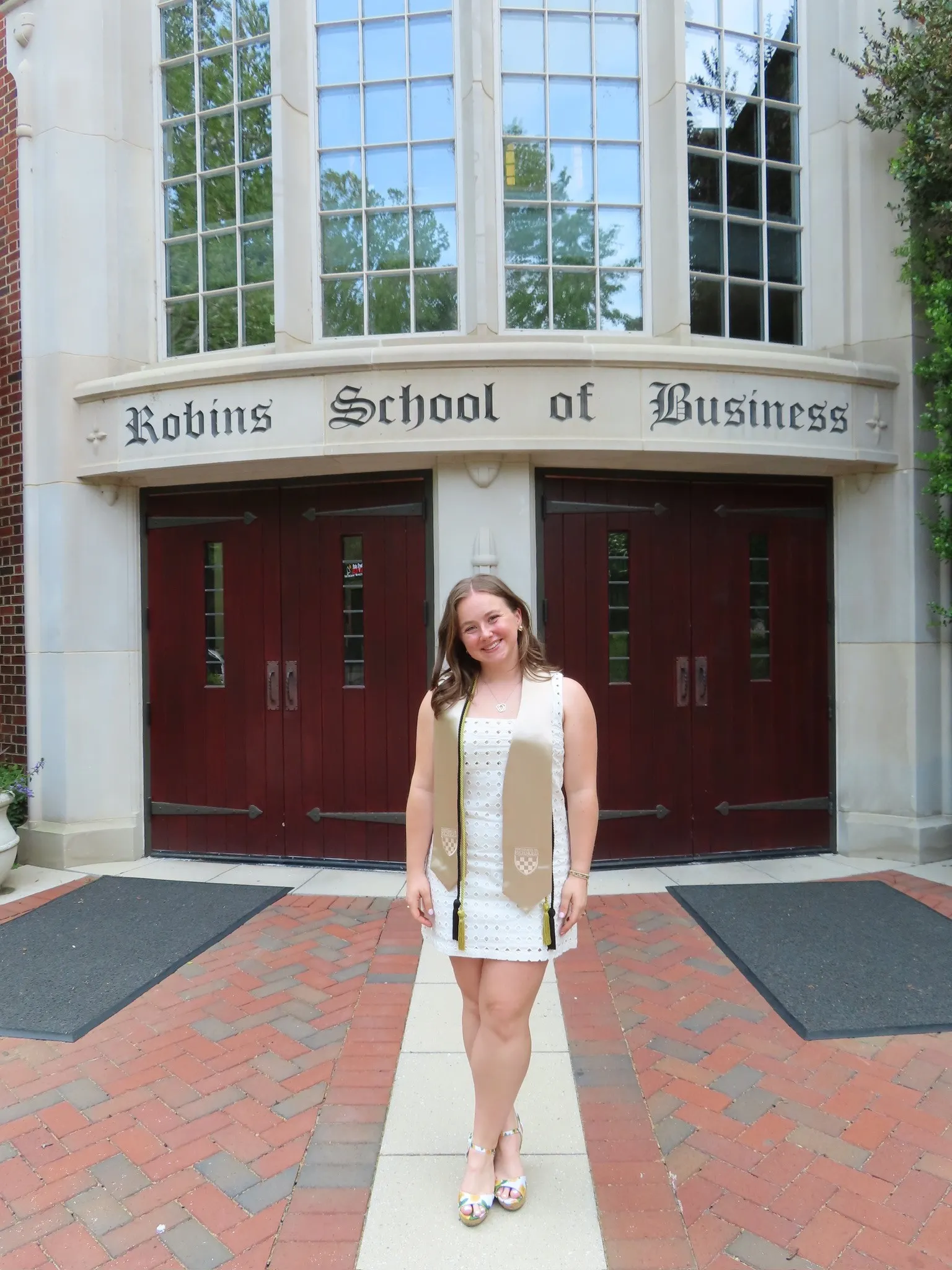
Alexa Keating: A ‘test of will’
Alexa Keating was a junior at the University of Richmond last year when Virginia passed the state’s new CPA education requirements. She vividly remembers her auditing professor starting each class by updating the students about the status of the CPA state legislation.
“He’d say, ‘Is anybody interested in this state?’ and if not he’d move on, and if they were he would cover it,” Keating said in an interview. “It was great.”
Alexa Keating
Courtesy of Paula Carreño
However, the rule change was a little late for Keating. She was already well on her way to completing the plan she drew up with her adviser for a rigorous course load enabling her to earn a bachelor’s degree and obtain all 150 hours of credit needed for the CPA credential in four years. Had the law changed earlier, she might have graduated in three years and used her fourth year to get a master’s. Instead, she stayed the course.
“I just decided to commit to the 150 hours and suck it up,” she said. This month, she earned her bachelor’s in business administration with a concentration in accounting and a Spanish minor. In August, she’ll start working as an assurance associate with the accounting firm of Yount Hyde & Barbour.
She thinks the new licensing rules are for the most part a positive change for the profession, because it will save people money on tuition and help keep the accounting population “steady.” But she isn’t sure if 120 credit hours is enough to prepare people for the CPA exam for which she is now studying.
“I think I would feel uncertain about whether I was adequately prepared if I hadn’t taken the 150 hours,” Keating said. “Part of the 150-hour rule is, ‘do you have the perseverance it takes to get this amount of credit hours and on top of it sit and study for this grueling exam?’ It’s almost like a test of will, are you gritty enough?”
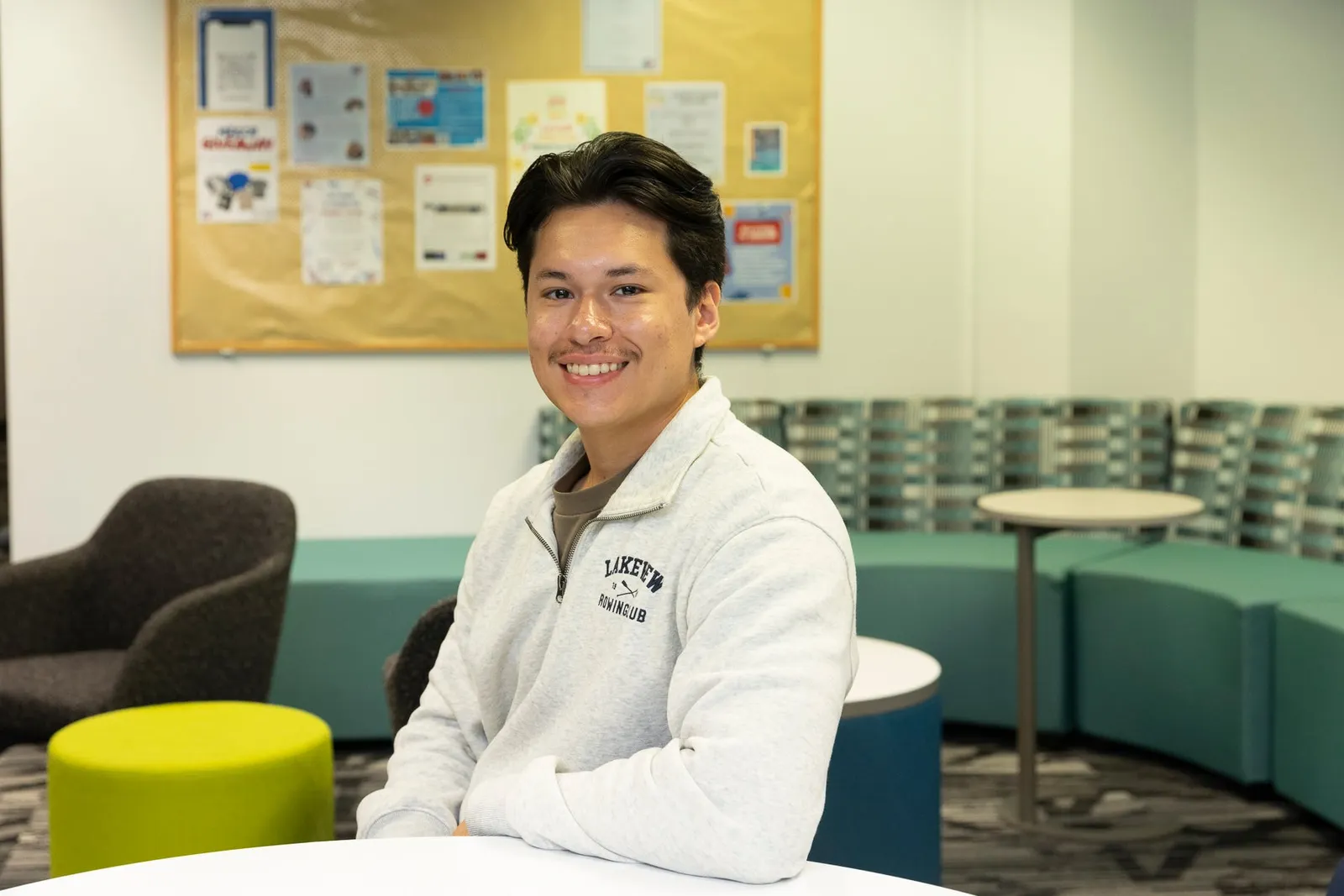
Steven Zuniga: They still ‘want the 150’
As vice president of the accounting club at University of Illinois Chicago, Steven Zuniga has had the chance to meet with accounting firms of all sizes. He has come away noticing that many firms and recruiters aren’t thinking or talking much about the new CPA pathways legislation yet.
Steven Zuniga
Courtesy of Jenny Fontaine/UIC
“None of them seem to mention the new rule even though it’s such a big deal,” Zuniga said in an interview. “None of them mention it and when students mention it it’s kind of like, ‘no we want the 150.’ The impression I got is they still want students and candidates to go the 150-credit-hour route since not all states have it.”
That works for Zuniga, who this month graduated magna cum laude with a bachelor’s in accounting and with 150 credit hours. He will start full time in Deloitte’s tax practice in July and hopes to earn his CPA after completing Illinois' requirement of one year of experience in late 2027.
He doesn’t think the firms are hardened against the so-called “bachelor’s plus two” path to a CPA license, but believes firms likely want to watch how it is implemented and what effects it has before making adjustments to their recruiting practices. “People don’t just want to instantly move to a whole new system,” he said.
Zuniga himself sees short-term benefits from the new rules, in that they are already having the desired effect of drawing more students to study accounting, which will ultimately help address labor shortages in the field. But he worries the change could also yield an oversupply of CPAs.
“When you lower barriers to entry for things there's more competition and when there’s more competition some things become less profitable and there’s less opportunity,” Zuniga said. “Long term, it’s going to have some negative effects.”
Matt Landon: The school of work
Matt Landon served in the army before going to UIC, where he is on track to graduate in December with a master’s in accounting. Like Zuniga, he too has mixed views about the long-term impact of the new rules, especially when it comes to its potential dampening effect on salaries.
Matt Landon
Permission granted by Matt Landon
“There’s maybe a little bit of a concern that if [CPA licensure] becomes a little easier, it could be flooded and there could be less potential opportunities for jobs and also less opportunities for competitive salaries,” Landon said. “But initially, it’s nice to know you don't have to do an additional year of school.”
At the same time, he rejects the idea that the new pathways will produce CPAs that don’t have the same rigor and knowledge base that those who take 150 hours of credits do. The studies needed to pass the exam will make up for anything that the shorter period in college might have missed, he believes.
He’s also a firm believer in the educational benefits that an extra year of professional experience and the intensity of working through accounting’s “busy season” will bring. Indeed, looking back at a recent internship with Grant Thornton he feels like the time working was many times more instructive than coursework.
“That three months was crammed,” he said. “I felt like I had 12 months of education experience.”
Spencer Leventhal: ‘150 gives the flexibility I want’
Spencer Leventhal graduated this month from Hofstra University with a bachelor’s in business administration, majoring in accounting. He’s headed to an internship with Anderson Tax in the commercial group and is also applying to a master’s program, because he wants to make sure he has the hours needed for his license to be easily transferable to the remaining states that still require the 150 hours of credit.
Spencer Leventhal
Permission granted by Spencer Leventhal
Although New York, where he will be working, has new pathways on the books that don’t require 150 hours, other states like Florida have not yet passed similar pathways. “I do have a desire to maybe move elsewhere and if I want to have my career be as open as possible I feel having the 150 will give me that flexibility that I want,” he said.
Then too, currently many employers offering summer internships typically offer full-time jobs one year out after the internship is completed, which allows for new hires to obtain their master’s and reach the 150-credit hour requirement, he said.
“As long as you’re CPA eligible they’re ok with whatever pathway… it’s just the planning with hiring is now a little tricky because it’s just being implemented,” Leventhal said of the new CPA rules.
Robert Harris: CPA pathways a ‘band-aid fix’
Robert Harris followed in the footsteps of his father, who was also an accountant. Harris graduated with a master’s in accounting from James Madison University this month and will be joining Ernst & Young in October.
Robert Harris
Permission granted by Rober Harris
He is a skeptic when it comes to the new CPA licensing pathways. Lowering the education requirements, or at least offering an alternative path to do so, is a risky solution to the accounting shortage, which he views as a more complicated problem. He also wonders whether it will lead to a lower level of assurance work.
“I think it’s a short-term band-aid fix,” Harris said in an interview. “I think really what the market needs to respond to is, if we want accountants to get the 150 credits, if we want them to come out qualified for these jobs get the education, the pay needs to reflect that.”
Harris thinks it will take about five years to see how the shift away from the 150 hours of education plays out. He’s also not fearful of AI. Rather, he sees it as an evolving and useful tool while remaining confident that people will still be needed in accounting.
“My dad says this all the time: ‘the money making in accounting isn’t about being able to make the journal entry, it’s being able to make the judgment,’” Harris recalled. “And AI can’t make judgments like people can. It’s a hard thing to train any code to do.”
Brendan Trainer: AI trumps pathways
Brendan Trainer graduated with a master’s in accounting from James Madison University this month and will start at PricewaterhouseCoopers full-time in August. He also completed and passed the last section of the CPA exam in January.
He too was already locked into his CPA path by the time the rules changed in Virginia, and is largely supportive of the new rules. However, he believes a master’s in accounting is good preparation for the exam and ultimately for working in accounting jobs after the test.
His main concerns regarding the preparedness of students for the accounting industry are around AI rather than the CPA pathways. As a graduate student, he assisted professors grading papers and began to see students shortchanging their education: Not by taking the shorter path to CPA but by using AI to cheat on assignments rather than learning for themselves.
At the same time, when AI is used properly Trainer sees a place for it as a tool he needs to learn to use.
“The best thing I can do as a student is just learn how to use it and kind of make myself more valuable than my neighbor,” Trainer said, adding the same driver is pushing him to get his CPA credential quickly. In the future, he’s betting the CPA will “still be a mark of not only accounting ability but also the fact that you can knuckle down and study when necessary.”
Editor's note: This story was updated to correct the number of states that have passed CPA pathways legislation or changed their licensing rules.
Article top image credit: Getty Images
SEC unveils blueprint for ditching quarterly reporting
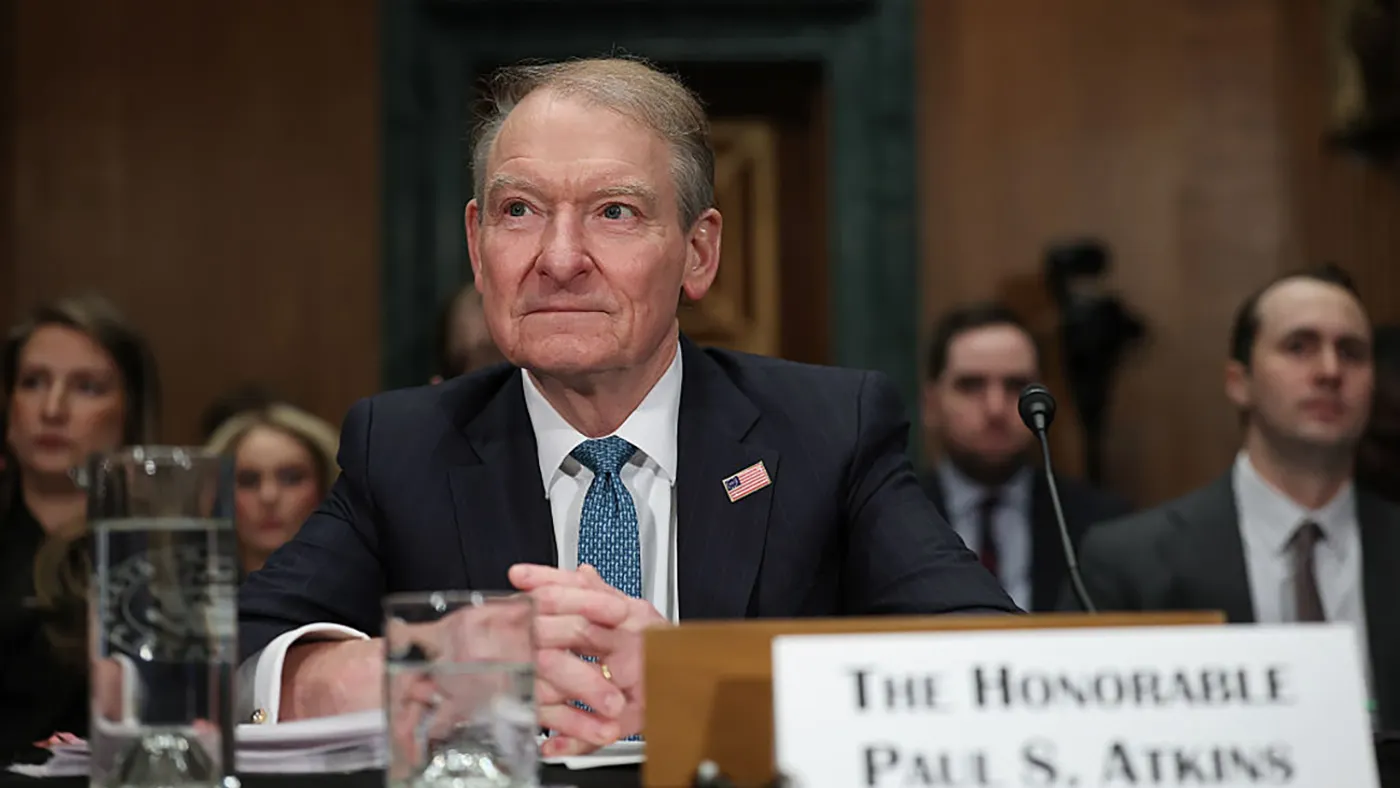
The proposal is part of the “Make IPOs Great Again” push aimed at reducing the “rigidity” of rules governing public companies, SEC Chair Paul Atkins said Tuesday.
By: Maura Webber Sadovi• Published May 5, 2026
The Securities and Exchange Commission on Tuesday released a formal proposal that would make quarterly financial reports optional, allowing public companies to choose instead to file semiannual reports on a new Form 10-S instead of quarterly reports or 10-Q filings
The proposal, which would amend Regulation S-X that governs financial statement requirements, will be published in the Federal Register after which the public comment period will remain open for 60 days, according to a Tuesday SEC release.
SEC Chairman Paul S. Atkins said the initiative was part of his “Make IPOs Great Again” agenda aimed at reshaping rules governing public companies in order to encourage them to go and stay public by reducing the “rigidity” of the SEC’s rules. “Over the next few months, I expect that the Commission will be considering a series of proposals that, if adopted, will not only redefine what it means to be a public company, but will make being public attractive again,” Atkins said in a statement.
The move comes about eight months after President Donald Trump doubled down on a push he made in his first term to allow public companies to ditch quarter earnings reports and instead shift to reporting every six months.
“This will save money, and allow managers to focus on properly running their companies,” Trump wrote in a September social media post. “Did you ever hear the statement that, ‘China has a 50 to 100 year view on management of a company, whereas we run our companies on a quarterly basis???’ Not good!!!”
If the commission ultimately adopts the plan, the shift would mark a major change to the compliance remit that CFOs of public companies have overseen for decades. Semiannual reporting goes back to about 1955, with today’s quarterly reporting being put in place about 15 years later, according to a statement Tuesday made by Commissioner Hester M. Peirce.
Peirce also signaled that a more nuanced change should also be considered. While many companies find quarterly reporting “quite onerous,” Peirce suggested an approach focusing on “slimming down the Form 10-Q — instead of or in addition to making it optional — could be helpful.” During the public comment period, she asked for commenters to take up the question of whether the SEC should adjust the reporting burden of what is required rather than adjust the cadence.
The reaction to the SEC’s long anticipated proposal was varied. Some experts echoed Peirce’s suggestion that the requirements themselves, rather than the timing, might be worth addressing.
An approach of “mending not ending” the current quarterly financial reporting cadence is what some CFOs would likely lean toward, Jack McCullough, founder and president of the CFO Leadership Council, told CFO Dive.
“I think most of them actually kind of liked quarterly reporting, it was just a great way to communicate important information to your investors,” McCullough said, noting that the discipline of the structure around earnings reports is something that many CFOs are comfortable with. “I didn’t sense there was any real unhappiness with the previous system.”
Nick Araco Jr., CEO of the CFO Alliance, said he’s hearing from more CFOs who want “cleaner signals” on what the SEC expects from their reporting rather than calls for less frequent reporting.
“There’s also a real concern that reducing formal reporting could create a false sense of breathing room,” Araco said in an emailed response to questions. “In practice, many CFOs expect the pressure to shift inward — more reliance on internal reporting rhythms, more scrutiny from boards, and more responsibility on finance to surface issues proactively without the forcing function of a quarterly cycle.”
Francine McKenna, an adjunct professor at Montclair State University in New Jersey and author of the substack accounting newsletter “The Dig,” said she was strongly opposed to the proposal, calling it a misguided attempt that addresses the quantity rather than the quality issue that is already affecting financial reporting.
Many companies put out financial reports with non-standard non-GAAP numbers in earnings releases and conference calls, and the less frequent filings will mean investors will need to wait longer to get more clarity on what is going on at a given company.
“The emphasis on alternative and non-GAAP metrics is only going to increase,” McKenna said in an interview.
The SEC estimated in its proposed rule that on average issuers who opt to provide semiannual reports rather than quarterly filings could see a net reduction in direct compliance costs of about $198,000 per fiscal year.
On the other side of the cost and benefit analysis, accountants and lawyers would likely lose a chunk of business should the proposal go through, according to Neil Bass, a managing member of the Bass Tax Group based in Coral Springs, Florida. Bass said he would be interested to see if the accounting industry or investors push back on the plan. He nontheless expects it to move forward despite the potentially higher risk that the reduced scrutiny could lead to more accounting scandals like Enron.
“Memory is short-term,” Bass said. “Enron was in 2001 and people forget.”
Article top image credit: Spencer Platt via Getty Images
Data bottlenecks stall CFOs’ push for faster month-end close
“Companies are investing in AI, but they’re still not closing the books as fast as they would like,” said Aaryn Ross, a financial data analyst at LiveFlow.
By: Grace Noto• Published May 5, 2026
Nearly eight in 10 corporate finance professionals blame month-end close delays on having to wait for data from other systems or departments, according to research unveiled Tuesday by finance software firm LiveFlow.
Reconciling information across multiple platforms was another barrier, cited by more than half of survey respondents. The findings suggest that despite widespread investment in finance automation tools, key accounting workflows remain hampered by challenges like fragmented data environments, LiveFlow Financial Data Analyst Aaryn Ross told CFO Dive.
“Companies are investing in AI, but they're still not closing the books as fast as they would like,” Ross said.
LiveFlow’s enterprise resource planning platform is designed to automate accounting and finance workflows, including month-end closes. Ross said the New York-based technology vendor conducted its survey in part to better understand where bottlenecks persist in finance operations.&nbs/span>
The company found that while finance teams are increasingly equipped with advanced analytics and productivity tools, those capabilities have not yet materially changed the structure of the month-end close cycle.
Only 16% of respondents said they complete their month-end close in under three days. The largest group, 37%, reported cycles of three to five days, followed by 21% at five to 10 days and 16% extending beyond 10 days.
Ross said AI is commonly applied to higher-value work such as analytical and reporting tasks, while the underlying operational workload has shifted far less, leaving the most time-consuming parts of the close largely unchanged.
About 80% of respondents said they use AI in their work for drafting content, and 65% cited financial analysis. Adoption drops off for more operational use cases, with just 23% relying on AI feaures embedded in finance systems.
“Much of the repetitive work — data entry, transaction categorization, reconciling numbers — is still being done manually,” Ross said.
A November 2025 McKinsey report underscores how elusive meaningful operational impact from AI remains, even as adoption accelerates. Nearly two-thirds of respondents said their organizations have not yet begun scaling AI across the enterprise, with many initiatives stalling at the pilot stage or failing to integrate into core processes.
“To capture AI’s potential in finance, teams will need to do more than add new tools on top of old ways of working,” the authors said. “They must rewire core processes, talent, and technology so that adoption takes hold and creates value.”
Article top image credit: The image by Rachel Johnson is licensed under CC BY-ND 2.0
SEC moves to narrow application of strict audit, reporting rules
The agency says the reforms are part of a broader effort to ease regulatory burdens and encourage more companies to go and stay public.
By: Alexei Alexis• Published May 20, 2026
The Securities and Exchange Commission on Tuesday proposed raising the thresholds that determine which public companies qualify as “large accelerated filers,” a status that carries stringent reporting and internal-control audit requirements.
The proposal is part of a broader package aimed at revamping rules governing public-company disclosures and registered securities offerings, which the SEC said would reduce compliance burdens and make it easier for companies to raise capital in public markets.
“Incentivizing more companies to go and stay public ultimately serves to protect and benefit investors,” SEC Chairman Paul Atkins said in a statement. “Yet, the current public company regulatory framework is in dire need of a comprehensive overhaul.”
The move comes as the SEC is also advancing a separate proposal that would allow public companies to report earnings on a semiannual basis instead of quarterly, if they choose to do so, as part of its larger effort to reduce regulatory requirements.
Tuesday’s announcement included a proposed expansion of access to “shelf registrations,” allowing more public companies to pre-register stock offerings and quickly sell shares when they want to raise capital. The agency also proposed broadening eligibility for Form S-3, a streamlined securities registration form that allows issuers to access public markets more quickly.
The SEC also proposed raising the bar for companies to qualify as “large accelerated filers” by increasing the so-called public float threshold from $700 million to $2 billion. The agency said the threshold would be calculated using the average stock price over the final 10 trading days of a company’s second fiscal quarter.
Companies would need to meet the public float threshold for two consecutive years before qualifying as large accelerated filers, and would be required to have at least 60 consecutive months of public reporting history.
The proposal would eliminate the categories of “accelerated filer” and “smaller reporting company filer,” meaning all companies that are not large accelerated filers would become non-accelerated filers exempt from auditor attestation requirements for internal controls over financial reporting.
The SEC also proposed a new sub-category of “small non-accelerated filers” for companies with total assets of $35 million or less for the two most recent years. Such filers would have an additional 30 days to file Form 10-K annual reports and an additional five days to file Form 10-Q quarterly reports.
Altogether, the changes would result in “significant practical consequences across the spectrum of public companies,” according to an analysis by global law firm Ropes & Gray.
“The proposed amendments represent the most comprehensive simplification of the SEC’s filer status framework in over two decades and, if adopted, would significantly reduce compliance costs and reporting burdens for the large majority of public companies while preserving full disclosure requirements for the largest issuers,” the firm said.
If the proposal is adopted, the SEC estimates that 19.2% of public companies would qualify as large accelerated filers, down from 35.4% under current rules. The remaining 80.8% would be non-accelerated filers.
The agency framed the push as part of a wider effort to encourage participation in U.S. public markets at a time when many companies have remained private longer and cited regulatory costs as a deterrent to public listings.
“These proposals build upon the legislative and regulatory concepts that have proven successful in the past and aim to extend that success to more companies — particularly small and mid-sized companies — and incentivize them to go and stay public,” Atkins said.
Article top image credit: Win McNamee via Getty Images
OneStream closes $6.4B go-private deal with Hg
The delisting comes less than two years after the office of the CFO software provider was taken public by investment firm KKR.
By: Alexei Alexis• Published April 7, 2026
Finance software provider OneStream is a private company again after completing its $6.4 billion agreement to be acquired by London-based private equity firm Hg, which focuses on buying software and data businesses, according to a recent announcement.
With the completion of the deal, OneStream's Class A common stock has ceased trading on NASDAQ, the company said, adding that its leadership team has been retained.
“With Hg's partnership, we are well positioned to accelerate innovation, scale globally, and deliver even greater value to Finance leaders around the world,” Tom Shea, the company’s founder and CEO, said in a press release.
The delisting comes less than two years after Birmingham, Michigan-based OneStream, which offers an AI-enabled platform designed to modernize the office of the CFO, was taken public by investment firm KKR.
“We're excited to be a part of OneStream's next phase of growth through this acquisition,” Alan Cline, partner and head of North America at Hg, said in the same release.
Demand for finance software tools has remained high despite challenges in the broader macroeconomic environment such as uncertainty around President Donald Trump’s shifting tariff policies, Shea said early last year.
OneStreamposted $163.7 million for its fiscal 2025 fourth quarter ended Dec. 31, an increase of 24% year over year, the software maker announced in February, marking its final earnings report before going private. It reported a net operating loss of $5.2 million for the quarter compared to $47.4 million for the year-earlier period.
The company is one of many vendors competing in the increasingly crowded “office of the CFO software market,” which is expected to grow from $71 billion in 2023 to $131 billion in 2028, according to global investment bank Carlsquare.
In December, financial close and accounting automation firm Blackline said it acquired New York-based finance tech startup WiseLayer. The financial terms of the deal weren’t disclosed.
Meanwhile, finance and HR software giant Workday said last November that it agreed to buy Pipedream, an integration platform for AI agents, also for an undisclosed amount.
In the second half of 2025, there were over 120 merger-and-acquisition and funding transactions recorded globally in the CFO software market, according to an analysis by global tech investment bank Drake Star Partners.
“The Office of the CFO (OCFO) software ecosystem continues to expand at pace, supported by structural tailwinds, regulatory catalysts and sustained investor appetite,” the report said.
Article top image credit: Getty Images
Will 2026 be a decisive or disruptive year for CPA pathways?
By year’s end, experts expect roughly 40 states to have joined the push to widen on-ramps into accounting by lowering the 150-hour college credit hurdle. Buckle up.
By: Maura Webber Sadovi• Published Jan. 16, 2026
Just a year ago, Ohio became the first state to answer a growing industry call to tackle the accounting talent shortage by putting new licensing rules for certified public accountants on its books.
Fast forward 12 months and state by state — with New Jersey falling in line on Monday — and 25 states have either removed or provided alternatives to the 150-hour college credit licensing requirement that critics saw as a costly barrier into the profession, because it meant CPAs had to complete a fifth year of post-secondary education.
By either changing laws or amending regulations, the growing band of states are effectively widening the ramps into the profession: They’re enabling candidates to get certified by earning a bachelor’s degree, logging an extra year of experience for a total of two, and passing the CPA exam.
Now, with the licensing reform hitting its midpoint, many accounting experts are confident the year ahead will be a decisive one when it comes to the growing majority of states that are expected to adopt new regulations by Dec. 31. But is the transition to a growing patchwork of regulation more realistically poised to make 2026 the year of CPA disruption?
“It’s a little of both,” Mark Koziel, CEO of the American Institute of Certified Public Accountants, told CFO Dive in an interview this week. With staggering implementation dates for the new rules, he is hopeful that all states will get on board quickly to support CPA mobility: a term for the ability of CPAs to work in states they are not licensed in that is challenged by the patchwork of regulations.
“Once we have one [state change], mobility is broken. The faster we can get it to be consistent, the better off we are going to be,” Koziel said. “We expect a big push in 2026 though it will probably bleed into 2027.”
CFOs looking to build strong finance teams should watch these five forces that experts expect to shape the CPA pathways rollout and the accounting labor landscape this year:
1. Familiarity could breed support for more CPA reforms
Not to be outdone by the coastal states that have led the drive in 2025, Alabama kicked off the new year by introducing CPA pathways legislation this week on the heels of lawmakers in Wisconsin and Missouri following suit late last year.
Meanwhile Michigan, Massachusetts, and Arkansas rule changes are also advancing, while Florida lawmakers have reintroduced legislation hoping that the second time will prove to be the charm this year.
Robert J. Pawlewicz, an assistant professor of accounting at the Robins School of Business at the University of Richmond in Virginia who has been closely tracking the state CPA race, expects only a handful of states to still be on the sidelines by the end of the year.
“I would expect that more than 40 states will have a CPA license pathway with 120 credit hours before the end of 2026,” Pawlewicz said in an email, adding that “40-45 states feels like a good landing spot by the end of 2026.”
The holdouts won’t likely be opponents of the change. Instead, Pawlewicz said they will likely be states like North Dakota that have legislatures which only meet every other year. The CPA change will continue to gain steam more steadily than a reverse push led by Florida to increase the educational requirements to 150 credit hours, because there’s less uncertainty with how the new standards will work, he said.
“These new pathways are really just the old ones,” he said in an interview. “It’s a much easier sell than creating new ones that require more time and more expense to get licenses.”
2. ‘A lot of work’ needed to fix mobility issues
Defined as the “ability for a CPA to practice across state lines without a separate license,” long-held concerns about CPA pathways triggering fractured mobility is now a reality in this transitional year.
The AICPA and the National Association of State Boards of Accountancy, arguably the biggest U.S. accounting trade associations, sought to encourage consistency by updating model language that states could use in the July 2025 edition of the Uniform Accountancy Act. Under the modeled changes, a CPA’s ability to practice outside their home state is determined by an individual’s qualifications, rather than whether any two states’ rules are deemed “substantially equivalent.”
Still, the dream of a CPA credential being akin to a driver’s license, where no notice or fee needs to be given or paid by an out-of-state CPA, will likely remain a dream for a while longer.
One way Koziel is hoping to increase uniformity is for states to describe the new pathway requirements as simply a bachelor’s plus two years of experience, rather than specifying credit hours which can vary from one school to the next. He also said the AICPA is looking at ways technology can be used to smooth mobility.
“We still have a lot of work to do on mobility,” he said. “We’re looking at solutions and tools that are out there to help.”
3. Employers might start pathways conversations
The impact of CPA pathways on hiring at employers like Big Four accounting firm KPMG is just beginning to be seen.
With Pennsylvania being one of the earliest states in which CPA pathways went into effect on June 30 last year, KPMG began fielding more questions from aspiring candidates in that region, Derek Thomas, KPMG’s national partner in charge of university talent acquisition said in an interview.
While noting that KPMG has been very supportive of CPA pathways, Thomas said the company has not adjusted its hiring in any way, although the initiative is something he expects will be part of ongoing conversations. KPMG is open to hiring college graduates into entry-level positions that are “CPA-eligible” who choose any of the licensing and education pathways.
“Whether you’re getting a master’s or a bachelor’s and an extra year of experience, as long as you’re meeting your requirements for the state you’re going to be working in, you can apply for a job with our organization,” Thomas said. “We’re just going to look at everybody and say, ‘hey, who are the best and brightest?’”
KPMG is also keeping an eye on mobility, but Thomas said that he is encouraged to see many states are passing mobility provisions that should help enable its CPA employees to be able to work across states.
4. Specter of broader deregulation looms
Fear that regulatory easing could ultimately go too far has crept into the industry since a controversial deregulation battle in Florida derailed the Sunshine State’s CPA pathways legislation last year.
The pathways issue was added to a piece of legislation that would also have eliminated continuing education standards for CPAs, as well as engineers and architects, and abolished the Florida Board of Accountancy. That bill was unsuccessful last year, but the threat reared its head last month when a new deregulation bill, HB 607, was introduced again.
The Florida Institute of CPAs strongly opposes the deregulation initiative, but supports a new and separate CPA pathway bill, SB364, which was introduced in November.
“Broad, across-the-board deregulation efforts could absolutely undermine national consistency and disrupt state-to-state alignment that makes workforce modernization possible,” FICPA President and CEO Shelly Weir said in an email sent to CFO Dive. “FICPA supports targeted efforts to find efficiencies and streamlining where it is possible to lower any unnecessary red tape or bureaucracy while maintaining those key uniform standards for the profession between states that promotes commerce and mobility.”
Weir said she is hopeful that the pathways bill will be passed in the current legislative session in time to be implemented by July 1.
5. Murky new laws await clarification
In some states like New York and Illinois, the passing of the new CPA pathways is just the framework for the new rules, with many details left to be hammered out by regulators.
In May, Martin Green, senior vice president and legislative counsel for the Illinois CPA Society, told CFO Dive that the bill which amended the Illinois Public Accounting Act in order to create the new licensing pathways was made to go into effect Jan. 1 of next year. That’s more than a full year after it was passed last May, a gap made to allow time for the new administrative rules to be set.
As it stands, the surface text of the Illinois law can take some time to parse in certain areas. For example, there needs to be more clarification of what courses would qualify as college accounting hours, according to Shail Pandit, an associate professor in the department of accounting at the University of Illinois Chicago.
“On the whole, the amendment opens up more pathways to CPA licensure, consistent with its stated goal of removing hurdles and increasing the supply in the market,” Pandit said in an email. “However, we need more guidance from the Board [of Examiners] and the [Illinois Department of Financial and Professional Regulation] in terms of practical implementation of the statutes.”
Article top image credit: Michael M. Santiago via Getty Images
Modern accounting and the CFO
The accounting talent crunch has pushed the industry to revamp licensing to draw in the next generation of professionals, just as AI is rising as a potential solution to CFOs’ short-staffed human teams. Meanwhile, state legislatures are taking center stage in the push to solve the accounting industry’s labor woes.
included in this trendline
Costco’s retired CFO and Ryan Reynolds: An improbable bromance
AICPA tackles accounting’s AI era: 4 predictions
CPA pathways: Class of 2026 weighs in
Our Trendlines go deep on the biggest trends. These special reports, produced by our team of award-winning journalists, help business leaders understand how their industries are changing.