Dive Brief:
- Damage from the war with Iran looms larger in surveys of U.S. companies, S&P Global said Thursday, noting harm from rising inflation to economic growth, employment and the business outlook.
- The S&P composite purchasing managers index for May revealed a second straight month of lackluster growth for manufacturers and service businesses, S&P Global said. “Precautionary stock building” spurred a rise in new orders for goods, lifting manufacturer’s optimism to the highest level since February 2025. Yet service sector optimism slumped to the weakest level since April 2025, S&P Global said.
- Steady gains in orders “due to concerns over further price hikes and supply delays will not last forever,” Chris Williamson, chief business economist at S&P Global Market Intelligence, said in a statement. “The damaging impact from the war in the Middle East is becoming increasingly evident,” he said.
Dive Insight:
A war-induced pick-up in price pressures prompted most Federal Reserve officials at a meeting last month to indicate an increase in the main interest rate may be needed to cool inflation to their 2% goal, according to minutes of their April gathering released on Wednesday.
Traders in interest rate futures see 52.8% odds that policymakers will increase the benchmark rate this year by at least a quarter percentage point, according to the CME Group’s FedWatch tool. A month ago they saw no possibility of an increase.
Market expectations for higher rates are reasonable in light of rising price pressures, Philadelphia Fed President Anna Paulson said in a speech Tuesday.
Before the policymakers gathered last month, “markets were anticipating perhaps one rate cut this year,” she said.
“More recently, expectations have shifted to incorporate the possibility of steady rates or even a modest tightening,” Paulson said, adding “the way the market has moved in reaction to economic news over the last few months largely aligns with my own thinking.”
The Consumer Price Index on an annual basis surged last month to a three-year high of 3.8%, the Bureau of Labor Statistics said last week.
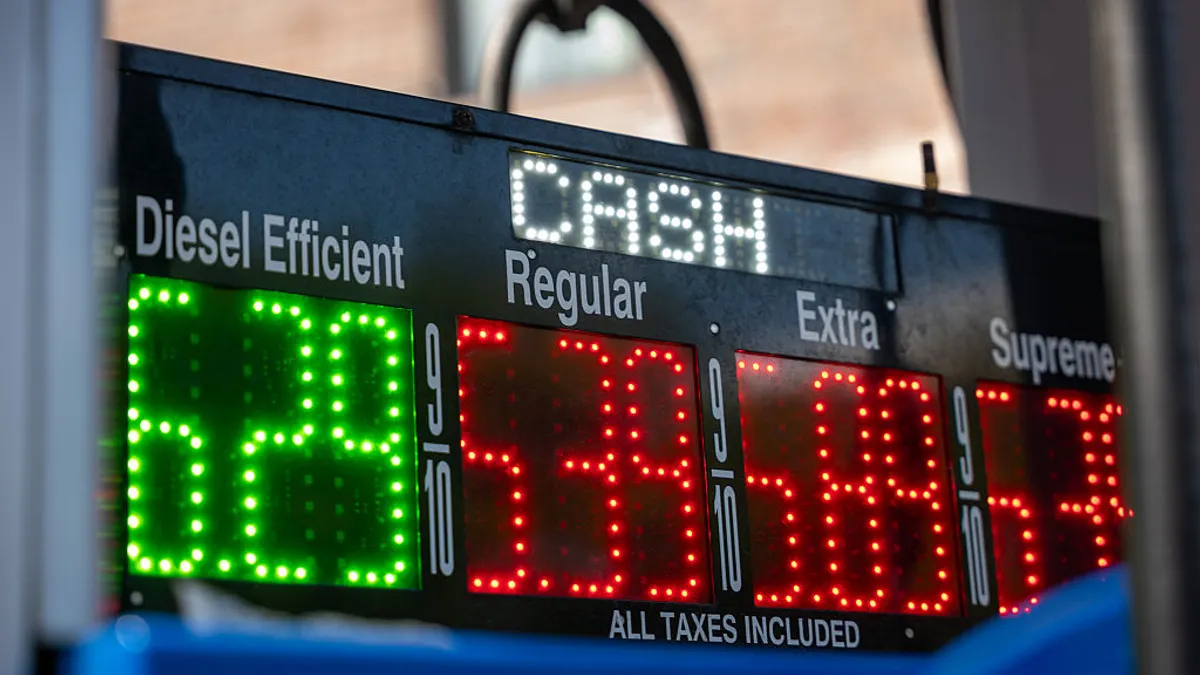
The cost of energy jumped 17.9% during the past year, spurred by a 28.4% increase in the price of gasoline and 54.3% gain in the price of fuel oil, the BLS said.
The energy shock, and persistence of inflation above the Fed’s 2% target for five years, risks unmooring expectations for steady prices over the long term, Richmond Fed President Tom Barkin said Thursday.
“Going forward, I wouldn’t be surprised if we continue to see rough seas that pressure the employment side of our mandate, the inflation side of our mandate, or conceivably both,” Barkin said in a speech. “If we do, the Fed is well positioned to respond as appropriate,” he said.
The economy will probably struggle to grow during the second quarter at an annualized rate of much more than 1%, Williamson said.
“Even this subdued pace of growth may not last,” he said.
“Firms’ costs have jumped higher at a pace not seen since the energy price shock of 2022 and are being passed on to customers in the form of sharply higher selling prices,” Williamson said. “The survey price gauges therefore indicate that inflation looks set to rise further just as the economy cools.”