Dive Brief:
- Business leaders favor reinvesting any potential refunds they receive from contested U.S. tariffs into operations rather than distributing the money to shareholders or customers, according to a survey conducted by Big Four accounting and consulting firm KPMG.
- Supply chain diversification/resilience topped the list of intended uses for potential tariff refunds, cited by 14% of organizations, followed by working capital and inventory (13%), R&D/product innovation (12%) and capital expenditures (12%), according to findings shared with CFO Dive. Shareholder returns and customer credits/rebates ranked the lowest at 5% and 4%, respectively. KPMG plans to release a report on the research in coming weeks, a spokesperson said.
- “The refunds are being viewed as real strategic investment opportunities,” Brian Higgins, KPMG’s US and Americas sector leader for industrial manufacturing, said in an interview.
Dive Insight:
The findings come as businesses await clarity on potential refunds tied to contested U.S. tariffs.
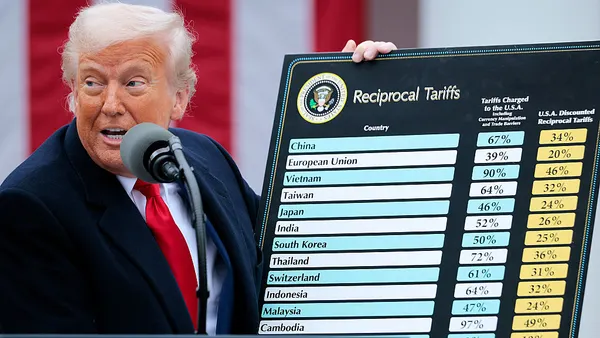
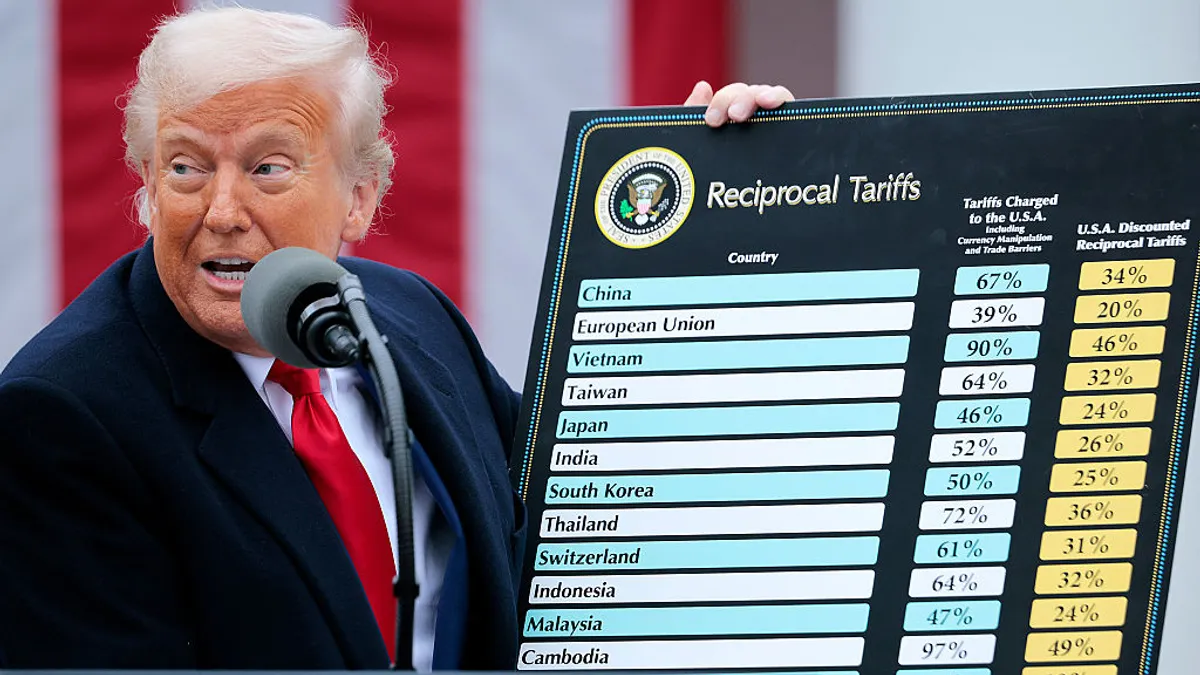
On Wednesday, the U.S. Court of International Trade ruled the Trump administration must refund companies that paid tariffs struck down last month by the Supreme Court. The high court held on Feb. 20 that President Donald Trump’s use of the 1977 International Emergency Economic Powers Act to impose open-ended tariffs was unconstitutional.
The trade court’s ruling is likely to be appealed by the administration, because authority to grant universal relief for entries subject to IEEPA duties is not clear, Gregory Husisian, a partner at Foley & Lardner, told CFO Dive sister publication Supply Chain Dive.
The federal government collected more than $130 billion from the contested tariffs through mid-December and could ultimately be on the hook for refunds worth $175 billion, according to the University of Pennsylvania's Penn Wharton Budget Model.
The KPMG survey also found that 34% of business executives would implement a partial rollback of price increases resulting from Trump’s tariffs. Thirty percent said they would use temporary promotional pricing, while only 18% said they would fully reverse price hikes.
“I think the gas pedal was slow on increasing prices, and the brakes are going to be slow when it comes to reducing them,” Higgins said.
KPMG surveyed 300 U.S.-based C-suite and business leaders representing organizations with annual revenue of $1 billion during the time period of Feb. 9-24.