Dive Brief:
- Consumer sentiment this month rose from a record low as cooling hostilities in the Iran war prompted a pullback in gas prices, according to an index released Friday by the University of Michigan.
- The index increased 10% in June, with gains spanning income levels and political affiliation, the university said. Expectations for inflation in a year edged down to 4.6% from 4.8% in May but persisted well above the 3.4% level in February before the start of the Iran war.
- "While consumers certainly welcomed the recent decline in gas prices, the persistence of high prices overall continues to weigh on their budgets," Joanne Hsu, the university’s director of surveys, said in a statement. "Consumers remain quite worried about the prospect of inflation eroding their living standards in the year ahead."
Dive Insight:
Inflation sped up last month to the fastest pace in three years, with the personal consumption expenditures index rising 0.4% and 4.1% on an annual basis, according to data released Thursday by the Bureau of Economic Analysis.
The pace of price gains for fuel and other products more than doubled the 2% inflation rate targeted by the Federal Reserve.
Prices for fuel have eased since mid-June, when the U.S. and Iran agreed on a framework for negotiating an end to the war.
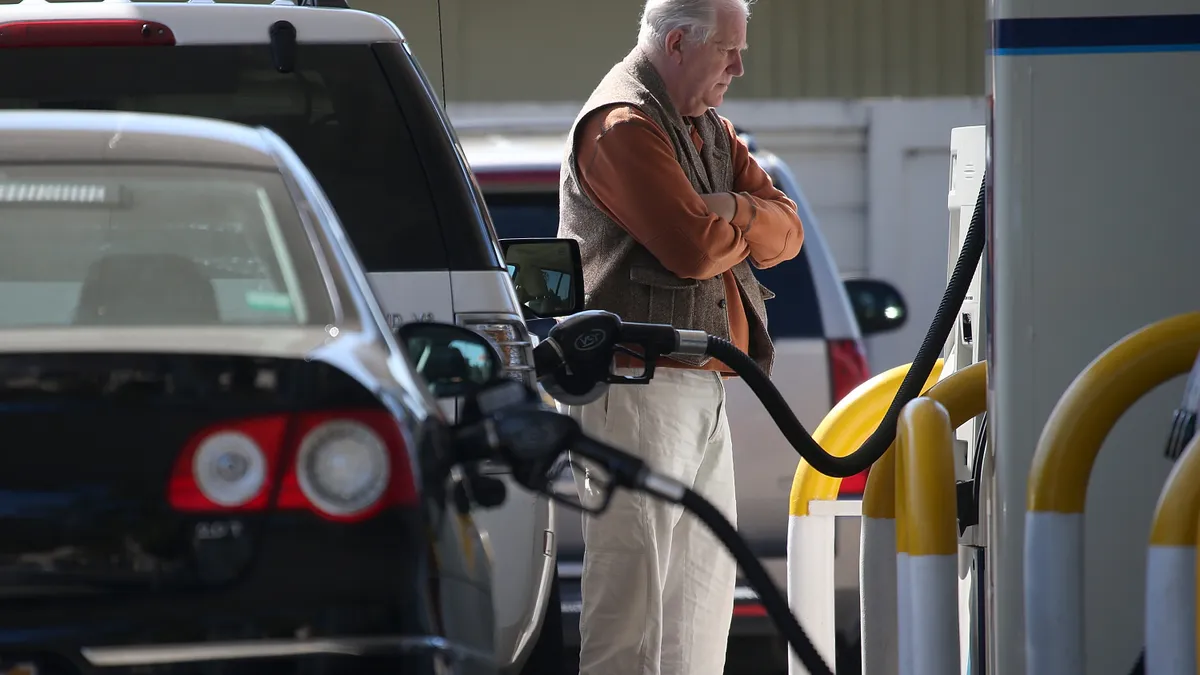
The average price for a gallon of regular gasoline has fallen during the past month to $3.90 from $4.49, a 15% decline, according to AAA.
“Americans are hopeful that the worst of the inflation crisis is behind them now,” Navy Federal Credit Union Chief Economist Heather Long said in a note, adding “they may be correct.”
“Inflation likely peaked in May as the worst of the war in Iran energy shock hit consumers,” she said.
“The big question is how quickly does inflation cool,” noting that high price pressures persist from the cost of electricity, medical care and some grocery items, she said.
“Consumer sentiment will tick up more this summer, but it will be a long time before it’s anything close to ‘normal’ again,” Long said.
Expected business conditions during the next five years, as measured by the university, surged 16%, Hsu said.
Also, household assessments of personal finances increased 9% in June, and expectations in a year gained 15%, Hsu said.
Yet both readings are well below the levels at the start of this year, she said, adding that for the third straight month, more than half of consumers spontaneously said that high prices are weighing down their personal finances.
The sentiment index persists in “unfavorable territory,” 13% below the level in February before the start of the war and 20% lower than a year ago, Hsu said.