Dive Brief:
- Consumer spending inched up in February, reflecting gloomy expectations for inflation even before the Iran war triggered a spike in energy prices.
- Real personal consumption expenditures rose just 0.1% after stagnating in January, the Bureau of Economic Analysis said Thursday. Real PCE has fallen since March 2025 as inflation, a headwind to consumer spending, has increased well beyond the Federal Reserve’s 2% goal. Personal income shrank 0.1%.
- “The combination of elevated gas prices, depressed confidence, weak underlying income growth and an already low personal saving rate all suggest that consumers’ spending will remain very weak in Q2,” Pantheon Macroeconomics Senior U.S. Economist Oliver Allen said in a note.
Dive Insight:
Both private- and public-sector economists have recently voiced concern that a surge in energy prices since the start of the Iran war on Feb. 28 will fuel inflation and slow both household outlays and economic growth.
“Consumer spending was soft in the first two months of 2026,” St. Louis Fed President Alberto Musalem said in a speech.
“Uncertainty from the Middle East conflict and unsettled tariff policy could weigh on consumer and business spending in the first half of the year,” he said on April 1. “So could higher fuel, aluminum and fertilizer prices, which are especially sensitive to supply chain disruptions in the region.”
The Fed’s preferred measure for inflation — the personal consumption expenditures price index minus volatile food and energy prices — rose 0.4% in February, matching the gain during January. On an annual basis, so-called core PCE increased 3%.
“There has been little progress in lowering core inflation over the past year,” Fed Vice Chair Philip Jefferson said on Tuesday.
The increase in energy prices during March and April “complicates my inflation forecast,” he said, noting that “the cost of many products rose sharply during the pandemic, and Americans still feel those higher prices when they shop and pay their bills.”
“The recent jump in gasoline prices understandably adds to frustrations,” he said.
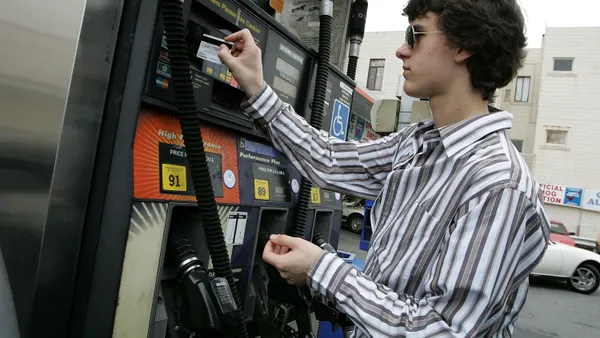
The average price for a gallon of gasoline has surged about 39% since U.S. and Israeli warplanes began strikes on Iran — from $2.98 to $4.16 on Thursday, according to AAA.
Households anticipate that the spike in prices for gas and other goods will increase inflation, according to a survey by the New York Fed.
Consumer expectations for inflation in a year jumped to 3.4% in March, with households anticipating that the price of gas will surge by 9.4% during the next 12 months, the New York Fed said Tuesday.
At the same time, consumers do not expect pay gains to ease the pain from price pressures. The median expectation among consumers for wage growth fell 0.1 percentage point last month to 2.4%, at the bottom end of the range since May 2021, the New York Fed said.