Dive Brief:
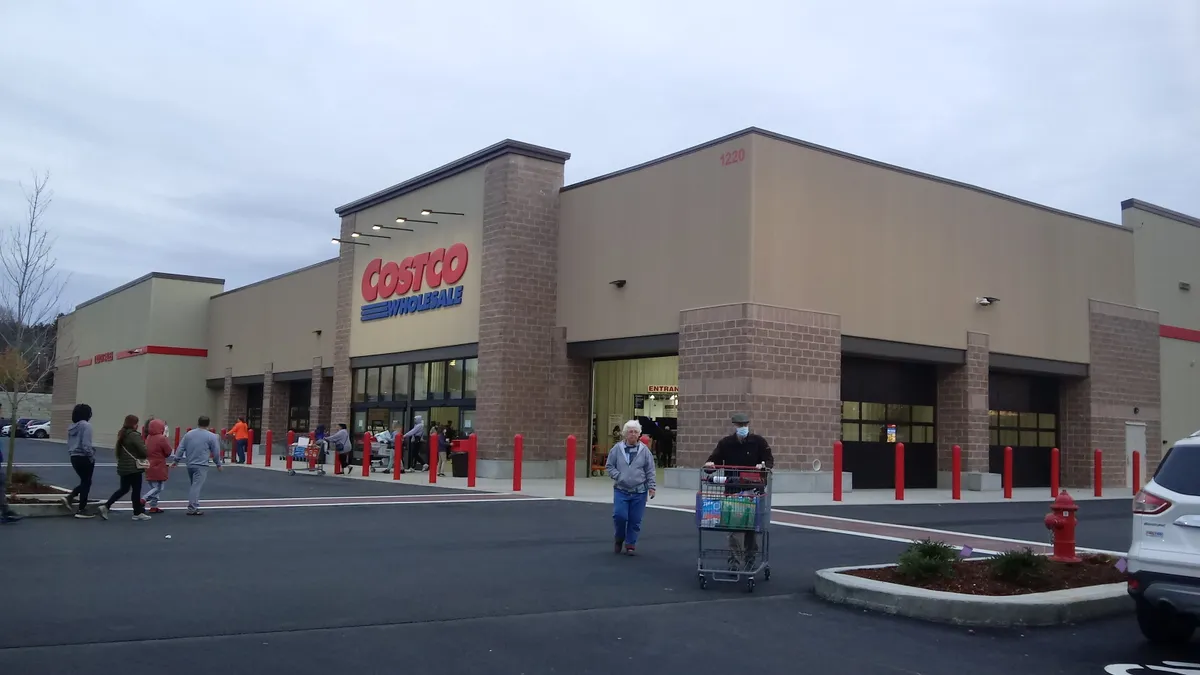
- An Illinois customer filed suit Wednesday against Costco Wholesale seeking to recoup tariff costs he alleges the retailer passed on to him and other consumers through higher prices before the Supreme Court last month struck down as unlawful the duties imposed by the Trump administration under the International Emergency Economic Powers Act, according to the complaint filed by Matthew Stockov in a federal court.
- The proposed class action suit takes issue with Costco’s recently stated commitment to return any potential refunds it receives to its customers through “lower prices and better values,” with the complaint asserting that the company’s commitment is a promise of “possible future benefit to an indeterminate group of future shoppers” and a “hypothetical action” that would not “make the class whole.”
- “Costco’s simultaneous recoupment of tariff costs from consumers through elevated pricing and from the government through court-ordered tariff refunds constitutes unjust enrichment at the expense of the classes,” the suit states. “Plaintiffs and the classes are entitled to restitution of the tariff overcharges they paid, or a proportionate share of any tariff refunds Costco recovers, together with interest, reasonable attorneys’ fees and costs.” Costco did not immediately respond to a request for comment about the suit.
Dive Insight:
Costco is one of a number of companies, including the delivery company FedEx and the maker of Ray-Ban sunglasses EssilorLuxottica, to be hit by lawsuits filed in the wake of the Supreme Court decision by retail customers seeking to recoup the increased tariff-related charges they paid, according to the Associated Press.
For CFOs, the litigation by consumers underscores another key issue in the complex path to obtaining tariff refunds that finance leaders must address. In addition to preserving their legal rights to any IEEPA duties paid, Luis “Lou” Abad, principal in the trade and customs group at KPMG, said importers who paid the tariffs on goods must carefully assess both their plans for using any refunds that they may receive along with any obligations or arrangements they may have for sharing the cost of the tariffs.
That entails reviewing potential tariff-sharing arrangements they entered with their vendors, suppliers or customers, and understanding if they are required to share the refunds or whether they should do so out of good will, Abad told CFO Dive. “That will be the next step or shoe to drop,” he said.
The suit against Costco was filed by Stockov, a Costco member who purchased imported electronics, food products, household items, small appliances, and health and hygiene products at prices “inflated by Costco’s pass-through of IEEPA tariff costs,” the suit states. The complaint asserts its proposed class contains more than 100 people, including at least one person from another state with the aggregate value of the matter exceeding $5 million.
The complaint details what it calls the “structural inequity” in the tariff refund process, in that the importer of record can recover tariff refunds rather than customers who often bear the brunt of the tariffs costs through higher prices.
“Thousands of companies — including Costco — have filed lawsuits in the [Court of International Trade], actively seeking refunds for every cent of their IEEPA tariff bill. If they succeed, they will not be obligated to return money to their customers under federal trade law,” the suit states.”This lawsuit seeks to prevent Costco, the third-largest retailer in the world, from double recovery.”
The suit echoes concerns raised by democratic lawmakers last month. In a Feb. 24 letter penned to President Donald Trump, Sens. Elizabeth Warren (D-Mass.) Cory Booker (D-N.J.) and Peter Welch (D-Vt.) called for a plan to refund the $175 billion in tariff funds that were “illegally collected” to consumers and small businesses.
“Any refunds from the federal government should be returned to the millions of Americans and small businesses that were illegally cheated out of their hard-earned money,” the letter states.
George Zelcs, a Chicago attorney with the law firm of Korein Tillery who filed the suit on behalf of Stockov, declined to comment.