Dive Brief:
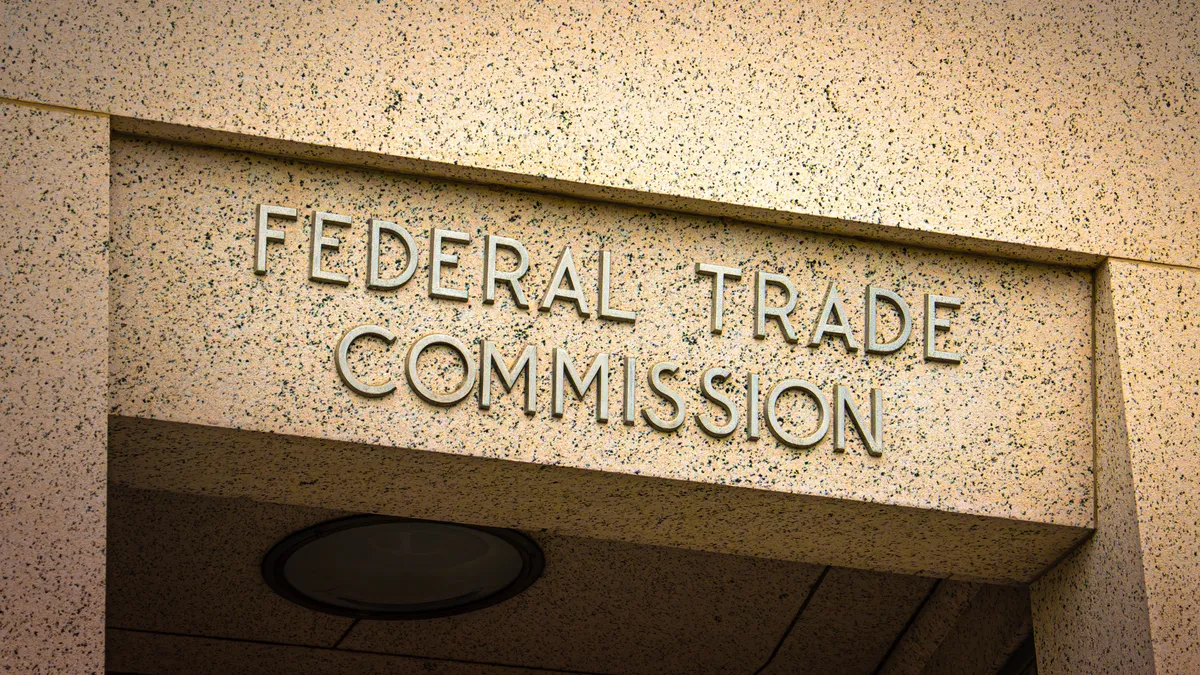
- The Federal Trade Commission on Dec. 22 announced that it decided to set aside a Biden-era order against Rytr LLC, a provider of an artificial intelligence-enabled writing tool.
- The abandoned order, issued in December 2024, settled allegations that Rytr’s service allowed subscribers to generate false and deceptive online reviews. The order had also banned the company from providing such a service in the future.
- After reopening the order and reviewing the case, the commission found the complaint against Rytr “failed to satisfy the legal requirements of the FTC Act” and the resulting order posed an undue burden on AI innovation in violation of a White House AI action plan issued last year.
Dive Insight:
The reversal shows that, at least for now, the FTC appears willing to afford AI-related businesses “a relatively longer leash where alleged consumer harm is indirect, speculative, or dependent on third-party misuse,” according to an analysis by attorneys at law firm Parker Poe Adams & Bernstein.
“The commission made clear that AI products that enable deceptive or unfair conduct are not unlawful simply because they can be misused by some users, and that ... actions [under Section 5 of the FTC Act] must be grounded in concrete facts demonstrating actual unfair or deceptive practices rather than hypothetical downstream conduct,” the attorneys wrote.
“At the same time, the FTC emphasized that it retains full authority to pursue AI-related cases involving deception, fraud, or demonstrable consumer harm,” they added.
The decision stems from the administration’s July 2025 AI action plan, which called for removing “bureaucratic red tape” at both the federal and state levels that could stifle the nascent market. The FTC was directed to review past final agency orders, consent decrees, and injunctions, and “where appropriate, seek to modify or set-aside any that unduly burden AI innovation.”
The FTC’s September 2024 complaint against Rytr alleged the company’s service violated the FTC Act by providing subscribers with the means to generate false and deceptive written content for reviews. It also alleged that Rytr engaged in an “unfair business practice” by offering a service that was likely to “pollute the marketplace with a glut of fake reviews.”
After its review, the current commission said the complaint contains “no allegations that Rytr itself created deceptive marketing material, only that its customers might have used its tool to do so, and fails even to provide a single allegation that such false reviews were in fact created and used.”
The complaint also fails to sufficiently argue that Rytr’s platform “causes or is likely to cause any injury to consumers, much less substantial injury,” the commission said.
The Parker Poe Dec. 30 legal analysis of the FTC’s move warned companies to approach the commission’s new “long leash” enforcement stance with caution.
“Product features and marketing materials should accurately describe intended and reasonably foreseeable uses, particularly where tools touch advertising, endorsements, or other consumer-facing representations,” the authors wrote.
“Companies should also assess whether internal controls, usage restrictions, and monitoring mechanisms align with the stated use cases and documented risk assessments. Additionally, FTC enforcement priorities can shift as administrations change, and future commissions may bring actions based on conduct that occurred in prior years, even if that conduct received limited scrutiny at the time,” the analysis states.