Lawmakers in Alabama, Vermont and Maryland are among a growing number of state legislators that have advanced CPA licensing reform this month, injecting new energy into the accounting industry push to reverse a labor shortage that could put adoption of the changes on a faster timeline than some experts had expected.
Since early last year at least 25 states have formally either changed licensing rules or put new laws on the books that remove the 150 college credit hour requirement (typically a fifth year of post-secondary education that critics have called a barrier to entry) or provide alternative paths that allow candidates to substitute an extra year of experience for the year that typically equates to 30 extra credit hours.
This month to date over a dozen states have either introduced or taken action on new CPA pathways bills that will make those changes a reality, bringing to 44 the number of states that are already on or getting on board with the initiative, according to Robert J. Pawlewicz, an assistant professor in accounting at the University of Richmond who has been closely tracking the changes. The states with active legislation recently introduced include Nebraska, South Dakota, West Virginia, Maryland, Mississippi, Vermont, and Kentucky.
“Assuming the active bills don't get derailed, new CPA license pathways might soon be ubiquitous,” Robert J. Pawlewicz, an assistant professor in accounting at the University of Richmond who has been tracking the changes, said in an email Friday.
“This year's legislative sessions are moving faster than even I expected!” he said.
Pawlewicz forecast earlier this month that it would take into 2027 for all 50 states to complete the changes, estimating that between 40 and 45 states would have revised licensing by the end of 2026. Mark Koziel, CEO of the American Institute of Certified Public Accountants, also told CFO Dive this month that he expected the process to “bleed into 2027,” and the number of states to end up closer to 40 by year-end.
But now Pawlewicz said it seems the state societies used the end of 2025 to gauge the state of the issue, spending time working with legislators to draft their bills.
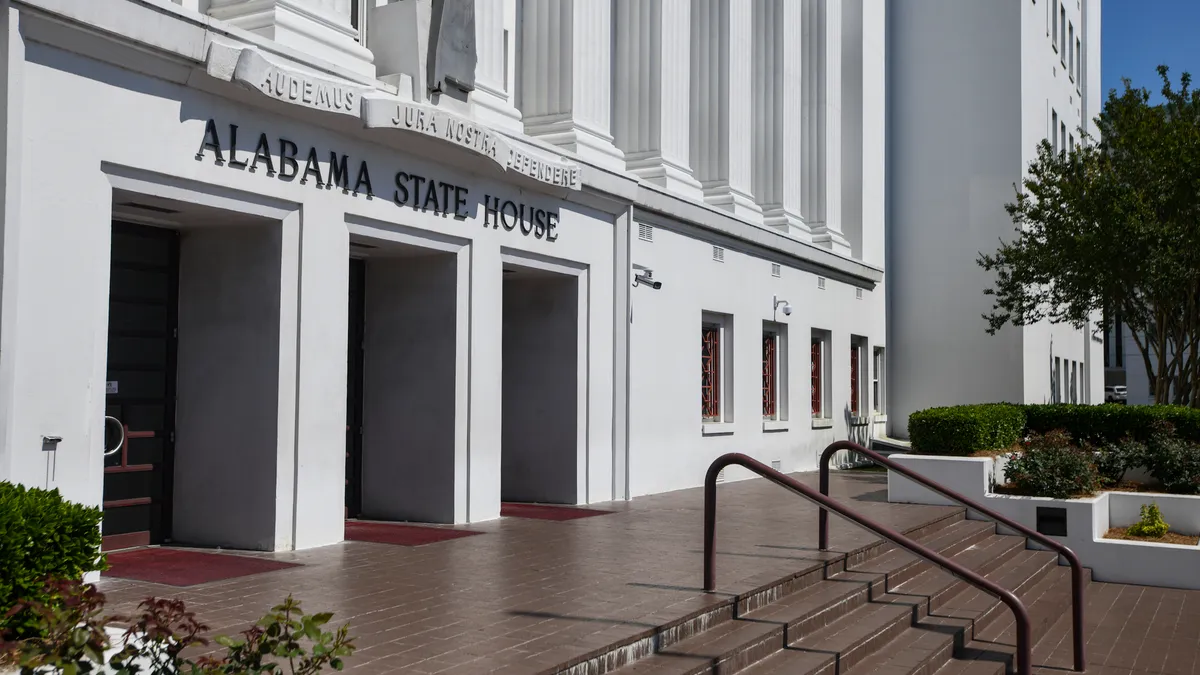
That was the case in Alabama, where the CPA pathways legislation (HB59) was passed by the state Senate on Thursday, two days after the House passed it and just over a week after it was introduced, according to the legislative tracker site fastdemocracy.com.
Alabama prefiled its legislation in November, positioning the bill to move forward once the 2026 regular legislation session opened on Jan. 13.
Pre-filing just teed up the bill for the beginning of session, said Robin Pearson, director of government affairs for the Alabama Society of CPAs. “There’s no other science to it, just making sure everyone understood what we wanted to do and could ask questions,” Pearson said in an email. “We also made it known that we wanted the Legislature to move quickly on the bill because current college seniors, employers and all other stakeholders would have the opportunity to adjust to a new pathway and licensure landscape here in Alabama.”
The bill, which will take effect Oct. 1, must still be signed into law, Pearson said.
As more states pass legislation, there will likely be extra pressure on the holdouts to catch up, with some states on the sidelines fearing students will seek out states with the newer rules. For example, last year in Maine the CPA licensing changes were stripped out of the bill that was signed into law with the remaining text simply allowing candidates to take the CPA exam after completing just 120 college credit hours.
Patricia Brigham, executive director of the Maine Society of CPAs, said this month that she is confident that Maine will introduce a new CPA pathways bill this year, as the state has gained “a level of comfort” that so many other states are pursuing licensing changes. She is hopeful that Maine in the meantime does not lose CPA candidates to other nearby states that are for now ahead of it in the licensing change process..
“We have brain drain anyway,” Brigham said in an interview. “I’m concerned about losing younger people who then go and get licensed in Massachusetts.”
Keep up with CPA licensure changes by accessing CFO Dive’s tracker on the topic here.