CFOs today are balancing many issues, from where to spend on new technologies to how to adjust to new federal regulations amid a turbulent period for capital markets.
On Wednesday, our CFO Live 2026: Future of Finance event brought together a range of experts and finance leaders from several industries to discuss top-of-mind issues for finance chiefs.
During four panel discussions, industry experts, CFOs, and legal and financial professions shared insights on topics ranging from how best to calculate return on investment in artificial intelligence and the challenges — and perks — of serving as a CFO for a major sports team.
Here are four top takeaways from the 2026 Future of Finance event. Sessions can also be viewed on-demand here.
Back to basics
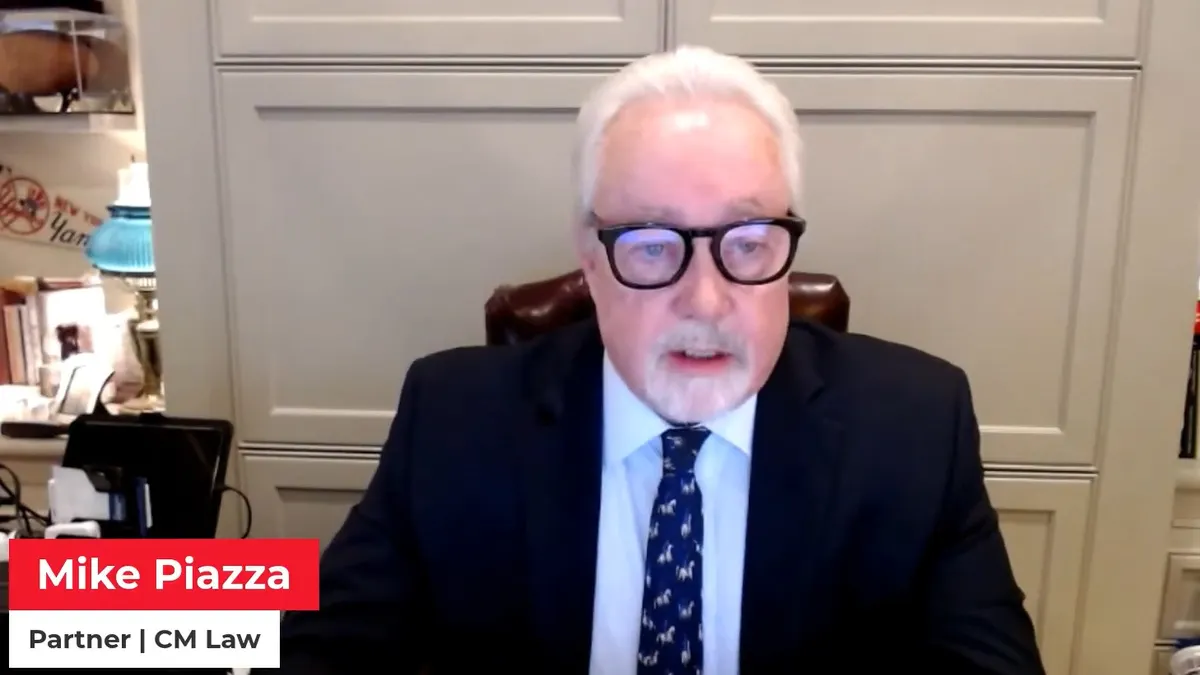
The Securities and Exchange Commission under Chairman Paul Atkins is getting back to basics — a strategy CFOs should try to emulate, Mike Piazza, a partner at CM Law, said during a panel discussion with Pat Daugherty, a partner at Foley & Lardner.
“Rather than getting whiplash, have a comprehensive and solid compliance program that bridges the current environment and protects against a future environment,” Piazza said. “That, honestly, is the best way to approach enforcement.”
Both Daugherty and Piazza credited Atkins with bringing back a more traditional, focused approach to enforcement at the SEC — rumors of the death of enforcement, as noted by critics of Atkins, are “well overstated,” in Piazza’s opinion.
Both panelists once worked at the commission, with Daugherty serving as counsel to former SEC Commissioner Edward Fleischman and Piazza acting as regional trial counsel for the SEC’s regional office in Los Angeles, according to company biographies.
The regulatory landscape under Atkins’ leadership, compared with that under former SEC Chair Gary Gensler, is “night and day,” Daugherty said during the panel. While policy changes pose risks, deregulation in certain key areas can also help ease operational stress for many companies.
For example, the SEC under Atkins is mulling a proposal to walk back some executive compensation disclosure rules, according to recent reports. Compensation sections in disclosure documents today “now exceed the entire length of disclosure documents produced in the 1980s,” when both Daugherty and Atkins were each “coming of age” on Wall Street, Daughtery said.
“I can tell you that the SEC enforcement spends an inordinate amount of time and effort looking at these compensation disclosures, or lack thereof,” Piazza noted. “And I've sat through testimony recently where they were questioning credit card amounts of $40 here, $30 there. I don't think that's really material to any investor.”
As regulation shifts under Atkins, CFOs need to ensure they watch changes at the agency carefully — but should also follow Atkins’ lead in getting back to basics, panelists advised.
“Is there whiplash? Well, that word implies sudden change. That is painful,” Daughtery said of current regulatory changes. “But the reverse is not so. Deregulation is not painful. I view the Atkins commission as relief from chronic pain.”
Going public with discipline
The $1 trillion initial public offering closed by the Elon Musk-led SpaceX has revitalized the conversation surrounding IPOs for many business leaders today. Large IPOs can expand market appetite and available liquidity, Jonathan DeCristofaro, CFO of banking for Citi said during a panel discussion together with Wealthfront CFO Alan Imberman.
However, such mega-IPOs can also “reset the benchmark for management maturity,” fellow panelist Elaine Duffus, senior specialized consultant, Wolters Kluwer Financial Services compliance program management said. “Mid-size companies can, of course, imitate space or match at scale, but they may face higher expectations for the infrastructure behind their own growth story.”
As such, while companies might move quickly to seize on the opportunity created by a mega-IPO like SpaceX’s, a disciplined approach is still essential — which requires careful oversight by the CFO. In a practical view, the CEO owns the strategy, but the CFO is also the one who “connects it all” and ensures the disclosures are in the right place, Duffus said.
A simple test to determine if companies have the right financial discipline, for example, “is whether management will be comfortable reporting earnings tomorrow,” De Cristofaro said. “And if the answer is ‘yes,’ they're probably closer to being IPO-ready.”
Broadening AI ROI aperture
Finding out the return on investment AI projects are bringing into the business has been a growing priority for CFOs for many years — but to get an accurate picture, “you may have to broaden your aperture in assessing the ROI,” Atif Zaim, deputy chair and managing principal at Big Four firm KPMG, said.
It’s relatively simple to gauge the ROI around setting up a new manufacturing plant, or opening a new location, Zaim said in a panel discussion with Michael Heric, a partner with Bain & Company and Brad Wayman, head of enterprise productivity and efficiency at Citi.
However, it’s trickier to calculate the full benefit that automating finance processes like reconciliations might yield. Such changes, while not reducing costs, can enable companies to close the books five days earlier, he said.
“Most CFOs will say, ‘well there’s a lot of value in that,’ but they’re not set up to say, ‘well, how much is that value?’” Zaim said.
As AI pilots begin to evolve — with many moving into production or actual work flows and out of the experimental phase — evolving not only the technology’s use, but the value of that use is critical, Wayman said.
“It’s not just about productivity,” Heric agreed. “I know some people will take AI and say it's all about, ‘I have 100 finance people; if I can get down to 80, then AI drove value.’ There's other ways that finance adds value.”
For example, AI can help the finance team identify opportunities to improve the company’s working capital, or draft a more real-time forecast, enabling faster, more efficient decision making and helping to be a better business partner, Heric said.
“It's a lot of the boring stuff that never makes the news where you can get good ROI,” Heric said. “Again, using [AI] to find working capital improvement might not make the 6:00 news, for example.”
Playing the long game
Measuring success can be complicated — even or perhaps especially for finance chiefs in the sports world, who need to weigh their teams’ wins and losses as part of their broader strategies.
Win, lose or tie (for some), it’s all about laying the proper foundation, according to Michael Dillion, CFO and chief operating officer for the Minnesota Timberwolves and Minnesota Lynx.
Winning can offer a definite tailwind, but it’s crucial to keep the long-term in mind, Dillon said during a panel with Darline Llamas Llopis, CFO of the Baltimore Orioles and Peter Stern, CFO of Brooklyn Sports and Entertainment, which includes the Brooklyn Nets, New York Liberty, ND Barclays Center arena.
When he joined the Houston Astros in 2012 as VP of strategy and analytics, for example, the baseball team was “losing 100 games a year, and so you're just praying for anything good to happen,” Dillon, who took the top finance seat for the two Minnesota basketball teams this May, said.
But, “We had faith in the plan that our baseball operations team had laid out, and it was on us on the on the business side to make sure we weren't taking any shortcuts along the way,” he said of his time at the Astros, which included their World Series win in 2017.
Keeping the long-term in mind is also crucial as the benefits of a win typically lag, he said. Where you’ll see the benefits depends on when in the season the wins happen, Orioles CFO Llamas Llopis agreed.
“If you have had a not-great season and you have seven wins at the end and you're not playoff relevant, it's not going to drive the needle too much,” she said.