Dive Brief:
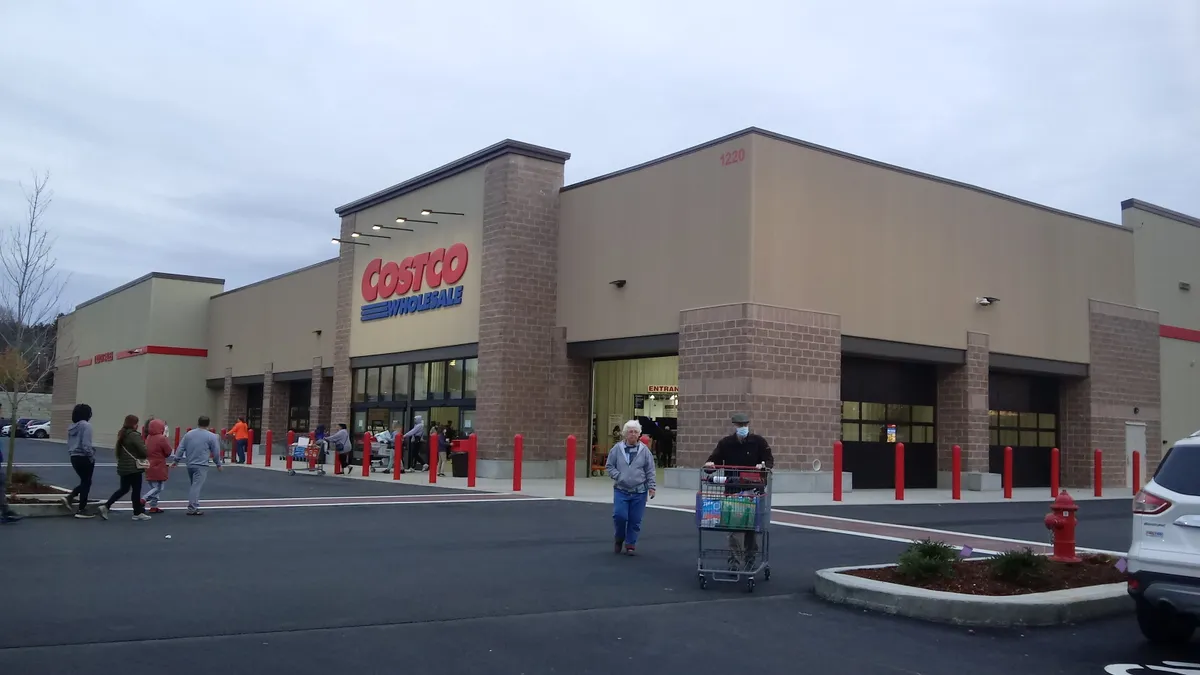
- Costco Wholesale has sued the Trump administration seeking a declaration that tariffs imposed by President Donald Trump under the International Emergency Economic Powers Act are unlawful and asking for a “full refund from Defendants of all the IEEPA duties Plaintiff has already paid to the United States,” according to a complaint filed Friday in the U.S. Court of International Trade.
- The lawsuit, which names as defendants U.S. Customs and Border Protection, the CBP Commissioner Rodney Scott and the U.S., acknowledges that the U.S. Supreme Court is already expected to rule soon on the Federal Circuit’s findings that the IEEPA duties “are unlawful.”
- The warehouse club retailer’s attorneys emphasize the urgency of the separate legal action, asserting that the tariffs paid by Costco are beginning to be “liquidated” or finalized, after which it may not be possible to recoup them. “This court and the Federal Circuit have cautioned that an importer may lack the legal right to recover refunds of duties for entries that have been liquidated, even where the underlying legality of a tariff is later found to be unlawful,” the filing states.
Dive Insight:
Costco’s effort to obtain a refund if the Supreme Court rules the sweeping duties illegal makes the Issaquah, Washington-based company one of the biggest to sue the Trump administration over tariffs, The Wall Street Journal reported.
A CBP spokesperson did not directly comment on the suit, but emailed CFO Dive a statement from White House deputy press secretary Kush Desai. “The economic consequences of the failure to uphold President Trump’s lawful tariffs are enormous and this suit highlights that fact. The White House looks forward to the Supreme Court’s speedy and proper resolution of this matter,” the statement from Desai said.
Alex Durante, a senior economist with the Tax Foundation, said he was unclear whether a lawsuit filed by a larger company like Costco might open the floodgates to more firms filing suit. But he said he expects that many firms want to get answers on whether the tariffs will be upheld as they prepare their 2026 strategies.
“My impression so far is that a lot of these firms have been drawing down their existing inventories,” Durante said in an interview. “I imagine it has implications for them as they want to have clarity about whether it will stand or not.”
If the Supreme Court strikes down the tariffs tied to the IEEPA, there are other ways under which the President could institute tariffs such as those allowed under the Trade Act of 1974. However, they would likely be much more narrow. “He would not be able to do the very broad tariffs that he has imposed now,” Durante said.
This week’s lawsuit also details the uncertainties that color the multi-step customs process that Costco and other importers face when managing the costs and the timing of the duties payments.
The suit states that the importer of record initially pays an estimated duty based on the customs declaration, which the CBP later fixes by confirming the final value, classification, duty rate and amount to be paid. “Once the final amount of duty is determined by customs, CBP ‘liquidates’ the entry and notifies the importer of record as to whether they owe more money or are entitled to a refund,” with the CBP aiming to liquidate or finalize the tariffs 314 days after the goods enter the country, the filing states.
Costco’s tariff mitigation strategies have included pulling forward purchases of seasonal items, rerouting goods sourced from countries with large tariff exposure and buying more of its store brand Kirkland Signature products in countries or regions where the items are sold, company executives have said on earnings calls. Much of the tone that company executives struck on Costco’s last earnings call in September was more measured than the language in the suit, with CFO Gary Millerchip saying on the call that the tariff environment remained “fluid” but asserting the company had “done a fantastic job” in navigating it.
In contrast, Costco’s filing asserts the company “faces imminent and irreparable harm because entries for which it paid IEEPA duties are anticipated to liquidate as early as December 15, 2025.”
The complaint is silent on the dollar value of the refunds being sought by Costco and a spokesperson for the attorneys representing Costco declined to comment on the suit.