Dive Brief:
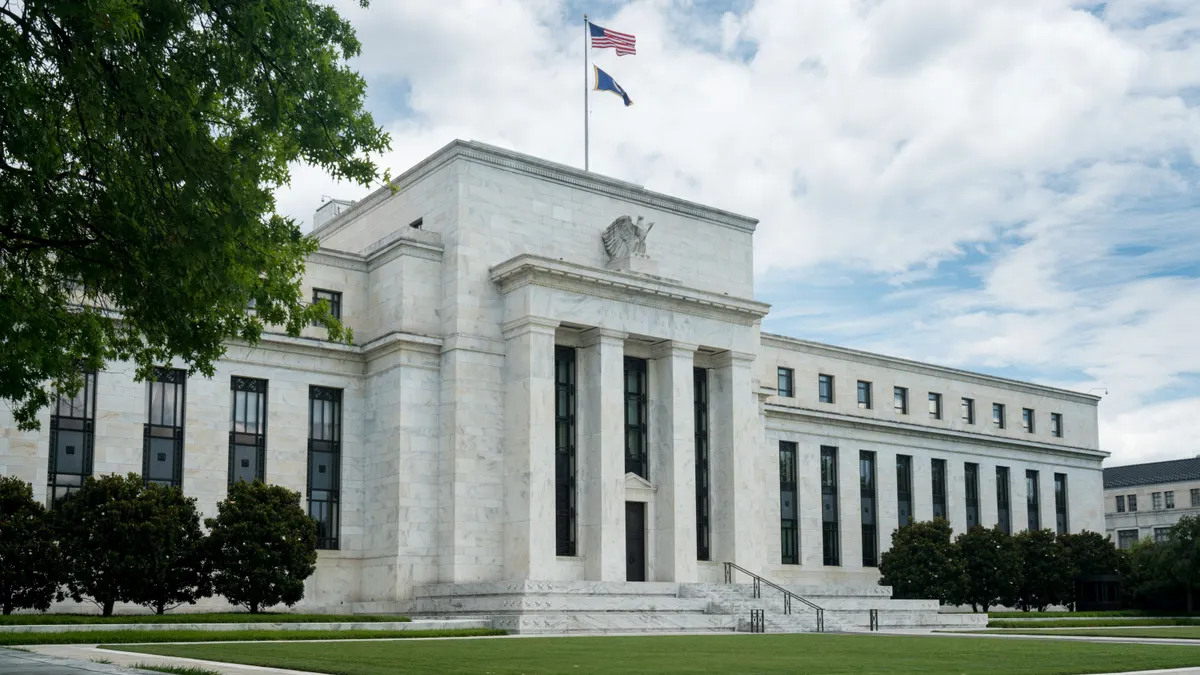
- The economy since early July has expanded “modestly” as inflation-wary consumers limited spending increases and rising orders for military goods and artificial intelligence products spurred manufacturing, the Federal Reserve said Wednesday.
- Financial conditions slightly improved, with loan volumes holding steady or rising, according to the central bank’s “Beige Book” survey of its 12 district banks. Auto sales were lackluster due to low consumer confidence, high fuel prices and rising financing costs.
- “The general outlook for the coming months was positive, but sentiment was mixed across sectors, with contacts reporting heightened uncertainty surrounding the effects of higher energy prices, policy and international conflict,” according to the Fed.
Dive Insight:
The Fed survey, released two weeks before central bank officials gather to consider changes to monetary policy, flagged a moderate increase in inflation in eight districts and a robust gain in one district.
With the approach of a policy meeting on Sept. 15-16, Fed officials have identified inflation as their top concern. Some policymakers have indicated that they will likely favor raising the federal funds rate if price pressures persist at current levels.
Inflation has exceeded the Fed’s 2% target for more than five years and, according to the Beige Book, bedevils several parts of the economy.
“Input price pressures were notably elevated in manufacturing and construction across multiple districts, with widespread reports of price increases for energy, transportation and raw materials, particularly metals and petrochemicals,” according to the Fed.
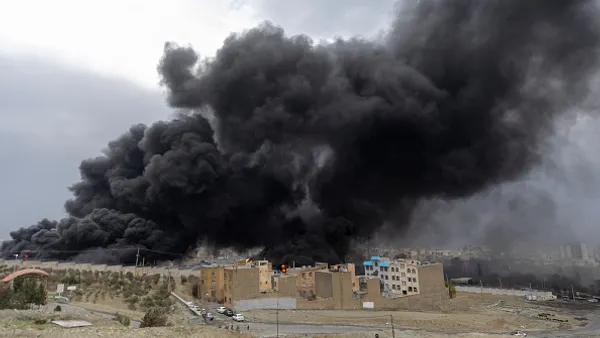
Energy prices have surged during the past week, with Brent crude oil futures rising 9.1% after fighting resumed between U.S. and Iranian forces.
The inflationary impact of tariffs persists among retailers and manufacturers, the central bank said.
“Consumer-facing contacts in a few districts noted that heightened price sensitivity among customers was putting a limit on their ability to pass through input price increases,” according to the central bank.
Fed Chair Kevin Warsh and other policymakers, including Governor Michael Barr, have recently indicated that they would lean toward increasing the federal funds in the absence of falling price pressures.
“We must be confident that underlying inflation is moving to our objective, clearly and at sufficient speed,” Warsh said in a speech Friday. “Otherwise, we have work to do. That's our job...our mandate...and our charge to keep.”
Warsh also said he “would be hard pressed to describe broad financial conditions as restrictive.”
Yet there is no indication of a hawkish consensus on the policy-setting Federal Open Market Committee.
New York Fed President John Williams said Wednesday that price shocks from tariffs and the U.S.-Iran war may eventually fade, slowing inflation.
"There's no clear signs right now…whether monetary policy currently is sufficient to make sure we bring inflation back to target in the next year or two, or whether we need to see further action to do that," Williams said in an interview with CNBC.
Still, Williams, vice chair of the FOMC, affirmed a commitment to meet the Fed’s congressional mandate to achieve stable prices.
“It's our job to ensure that we ensure price stability, and most importantly, right now is to get inflation back to 2% on a sustained basis,” he said. “That's job No. 1.”