Dive Brief:
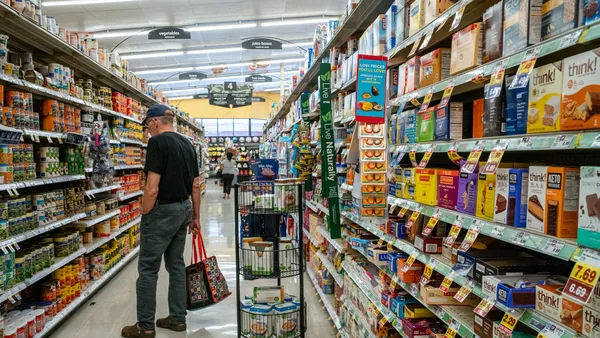
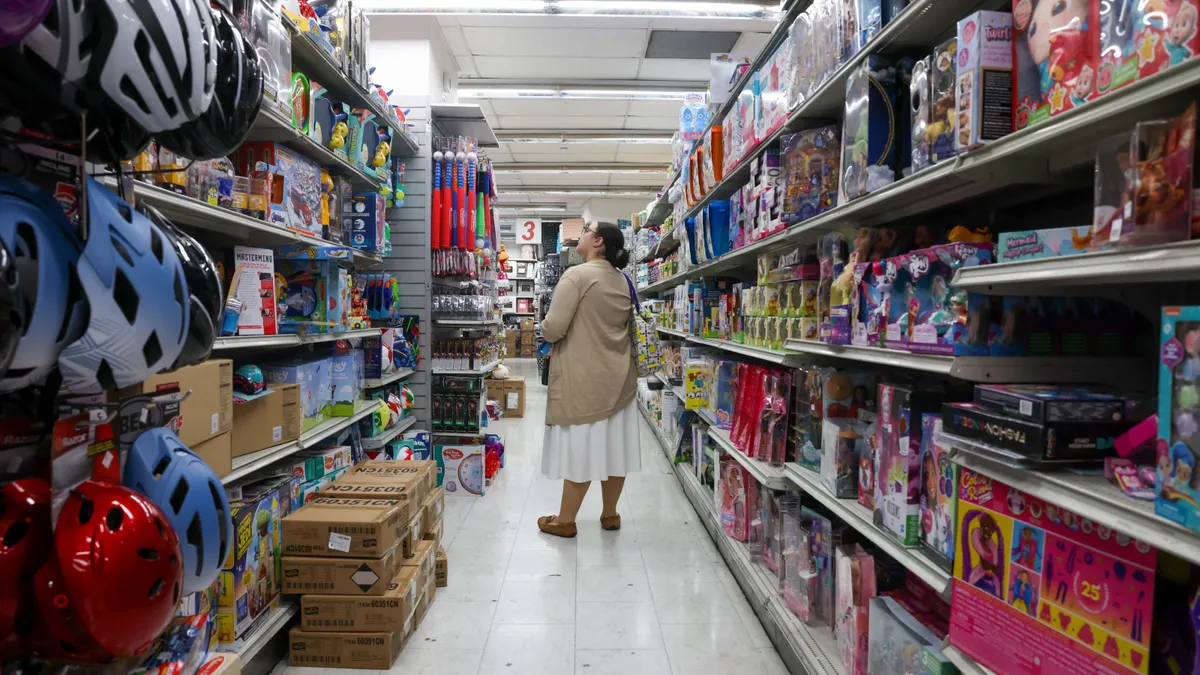
- Retail sales were unexpectedly flat in December, the Census Bureau said Tuesday, affirming the results of recent surveys indicating that consumers started the new year in a downbeat mood.
- Sales in stores were little changed after rising 0.6% in November, with furniture outlets, clothing stores and eight other retail categories reporting declines, the Census Bureau said.
- “December’s weak headline print and the downward revisions to the earlier months’ numbers provide clearer signs that consumers are starting to tire,” Pantheon Macroeconomics Senior U.S. Economist Oliver Allen said. The pace of spending growth during the second half of 2025 appears unsustainable given that “growth in real incomes has slowed to a crawl recently, in part due to weakness in the labor market.”
Dive Insight:
Soft retail spending and indications of a gloomy mood among U.S. households contradict the upbeat message from resilience in the stock market and forecasts that economic growth will remain solid in coming quarters.
The economy likely expanded during the fourth quarter at an annual rate of 3.7%, the Federal Reserve Bank of Atlanta estimated on Tuesday.
Looking ahead, Fed officials in a median estimate forecast that gross national product will grow 2.3% this year after a 1.7% gain in 2025.
Policymakers trimmed the main interest rate three times during the final months of 2025, seeking to shore up the labor market although inflation persists above their 2% target.
“The good news is that the outlook is brightening,” Cleveland Fed President Beth Hammack said Tuesday.
“Recent readings on economic growth have been encouraging, and the labor market appears to have stabilized,” she said in a speech. “Many forecasts, including my own, call for some easing in inflation over the course of this year.”
Dallas Fed President Lorie Logan also expressed a favorable outlook for the economy, inflation and the job market.
“Economic activity has rebounded strongly since the first half of last year, bolstered by strong consumer spending and business investment, which should support the labor market,” she said Tuesday.
“Third quarter real GDP growth is estimated to have been a robust 4.4%,” she said in a speech. “And tracking estimates suggest strong GDP growth in the fourth quarter, even adjusting for temporary slowing effects of the government shutdown.”
Many consumers are not as optimistic as Fed officials.
Consumer confidence, deflated by low hiring and high prices, sagged last month to the lowest level in more than a decade, according to the Conference Board.
An index based on a survey of household confidence fell to 84.5 this month from 94.2 in December, with consumers voicing concern about high tariffs and a dimming job market, the Conference Board said.
Indeed, job openings fell last month and, during all of 2025, plunged by 966,000 to 6.5 million, the lowest level since Sept. 2020, the Bureau of Labor Statistics said Thursday.
With a bull market for stocks extending into 2026, a bright mood among high-net-worth households this month has offset gloom among consumers of more modest means, the University of Michigan said Friday, reporting on results of a survey.
Findings of the New York Fed report on household debt released Tuesday align with a so-called K-shape income trend since the end of the pandemic: While wealthy consumers thrive, most other households struggle to maintain their living standards.
Delinquency rates on loans in Q4, including mortgages and credit card debt, increased to 4.8% of all outstanding household debt — the highest level since 2019, according to data released Tuesday by the New York Fed.
“As household debt levels grow modestly, mortgage delinquencies continue to increase,” New York Fed Economic Research Advisor Wilbert van der Klaauw, said in a statement.
“Delinquency rates for mortgages are near historically normal levels, but the deterioration is concentrated in lower-income areas and in areas with declining home prices,” he said.