Dive Brief:
- The U.S. economy during the fourth quarter grew at a less-than-forecast annualized pace of 1.4%, slowed by the federal government shutdown and flagging exports, the Bureau of Economic Analysis said Friday.
- The economy cooled from a 4.4% annualized rate during Q3, ending the full year with a 2.2% expansion, the BEA said. The halt to federal services during the Oct. 1 through Nov. 12 shutdown shaved roughly 1 percentage point from GDP growth during Q4.
- The slowdown “reflects that the cumulative high rates and temporary government sector disruptions are finally cooling the extraordinary momentum of previous quarters,” Art Hogan, chief market strategist at B. Riley Wealth, said in a statement. “Details under the GDP hood show solid business investment, positive consumption (but slower than Q3) and a significant pullback in government spending.”
Dive Insight:
Along with the shutdown, declining exports slowed the economy last quarter.
Shipments abroad fell — despite a decline in the value of the dollar last year — as the most sweeping shifts to U.S. trade policy in decades disrupted commercial relations with the nation’s largest trading partners.
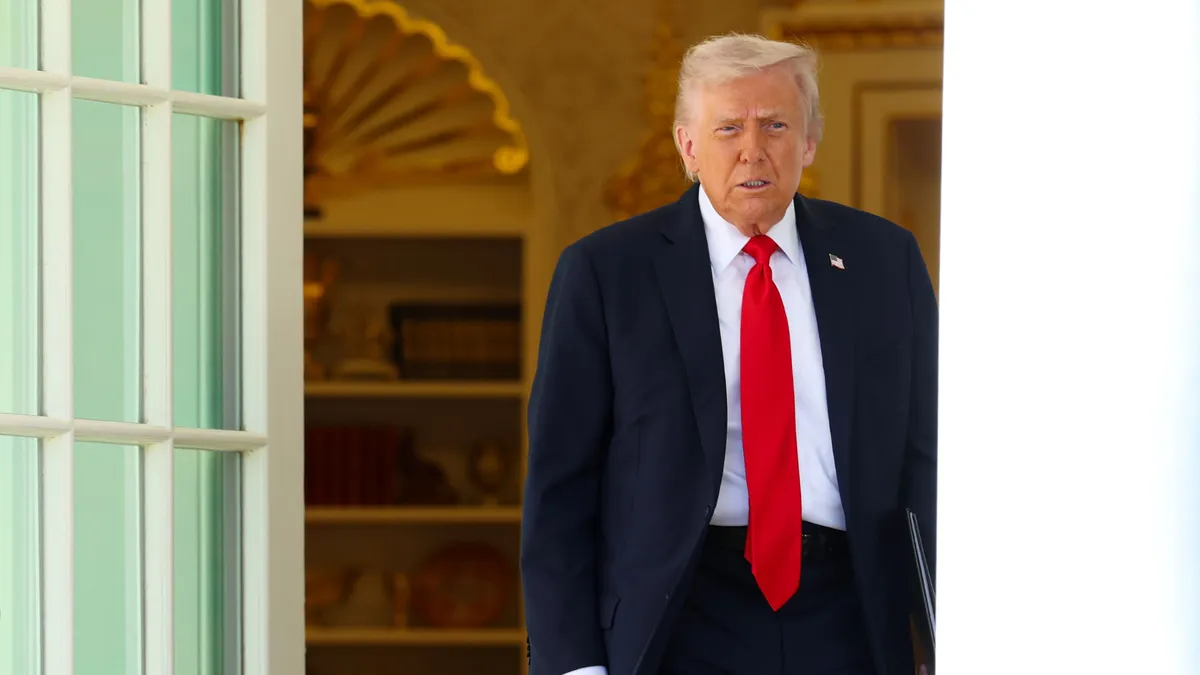
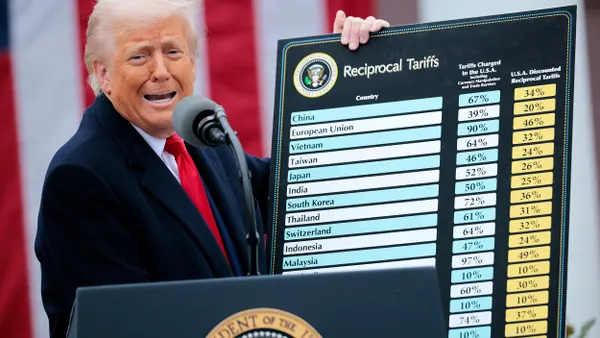
The outlook for U.S. trade grew hazier Friday as the Supreme Court in a 6-3 decision ruled that most of President Donald Trump’s tariffs are illegal, defying the constitutional authority of Congress to determine taxation.
The court did not address whether the U.S. will need to reimburse companies for import duties already paid.
Following the ruling, Trump said he will impose a 10% global tariff under a different law to substitute for those rescinded by the court.
U.S. stock market indexes rose after the court’s ruling. The pullback in tariffs will likely prove especially helpful to small businesses, analysts said.
"This Supreme Court decision could ease cost pressures for small businesses that have absorbed higher import expenses over the past year,” Mark Valentino, head of business banking at Citizens, said in a statement.
“For many owners, tariffs have directly affected pricing, inventory decisions and cash flow, so any reduction — or potential refund — would be a welcome development,” he said.
Consumer spending fueled the expansion last quarter while slowing to a 2.4% gain from 3.5% during Q3, the BEA said.
Consumer sentiment has risen slightly in recent months but is roughly 13% below the level of a year ago and 21% below January 2025, according to a University of Michigan index.
Inflation persists as a leading concern.
“About 46% of consumers spontaneously mentioned high prices eroding their personal finances,” Joanne Hsu, director of the university’s surveys of consumers, said Friday in a statement, noting that “readings have exceeded 40% for seven months in a row.”
Households on Friday could find more cause for worry about price pressures after the release of a report showing an increase in the Federal Reserve’s preferred measure of inflation.
The personal consumption expenditures price index, excluding food and energy costs, increased 3% in December from a year earlier compared with a 2.8% gain in November, the BEA said.
Fed policymakers have repeatedly vowed to curb inflation to their 2% long-run target.