Dive Brief:
- Inflation held steady in September, the Bureau of Labor Statistics said Friday, bolstering odds that the Federal Reserve will trim the main interest rate on Dec. 10 in a third straight cut.
- The core personal consumption expenditures price index, the Fed’s preferred gauge of inflation excluding volatile food and energy prices, rose 0.2% in September for the third consecutive month, the BLS said. On an annual basis it increased 2.8%, exceeding the central bank’s 2% inflation target, the bureau said in a report delayed because of the federal government shutdown.
- “The slightly stale September inflation report shows that prices remained reasonably stable despite tariffs and healthy consumer spending,” Scott Helfstein, head of investment strategy at Global X, said in a statement. “This probably provides further air cover for the Fed to cut rates in December.”
Dive Insight:
Fed officials on Dec. 9 begin a two-day meeting unusually divided over the best way forward for monetary policy, according to analysts and minutes of their most recent meeting.
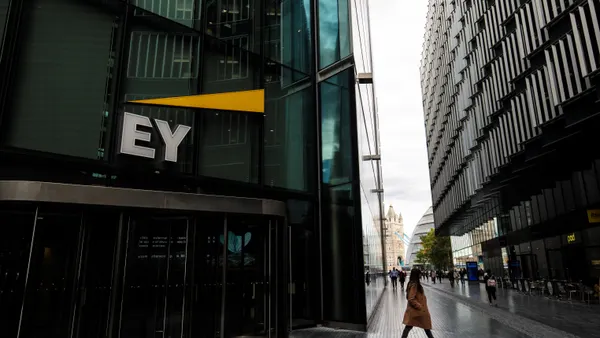
The central bank will likely trim the federal funds rate by a quarter point to a range of 3.5% to 3.75% in a decision with “two-sided dissents, reflecting not only divergent views among policymakers but increasingly polarized factions,” EY-Parthenon Chief Economist Gregory Daco said Friday.
Kansas City Fed President Jeffrey Schmid and possibly St. Louis Fed President Alberto Musalem will likely dissent in favor of no change to the main rate while noting that inflation persists above target, Daco said. Fed Governor Stephen Miran will likely call for shoring up a softening labor market and dissent in favor of more easing, Daco said in an email.
“We expect Fed Chair [Jerome] Powell to sway several reticent policymakers toward supporting a third consecutive ‘risk management’ rate cut while strongly signaling that substantial further easing is unlikely before next spring absent a material weakening of the economy,” Daco said.
Anxieties about inflation and the job market bedevil consumers, Joanne Hsu, director of the University of Michigan’s surveys of consumers, said Friday.
Although household sentiment inched up this month compared with November, “the overall tenor of views is broadly somber, as consumers continue to cite the burden of high prices,” Hsu said. “Labor market expectations improved a touch but remained relatively dismal,” she said in a statement.
Several signs that the labor market is cooling have emerged in recent months, with unemployment edging up to 4.4% in September and the pace of hiring slowing.
The BLS has delayed publishing its November job report to Dec. 16, six days after the meeting of policymakers. The bureau did not publish an employment report for October because of the shutdown.
Unofficial indicators of job market health have soured in the past several weeks.
“Mid-2026 expectations for labor market conditions remained decidedly negative,” the Conference Board said on Nov. 25, describing results of its monthly consumer confidence survey. Only 27.6% of consumers said jobs were “plentiful,” a decrease of 1 percentage point from October.
Among owners of small businesses, 56% reported hiring or trying to hire in October, a decline of 2 percentage points from the prior month, the National Federation of Independent Business said last month.