Dive Brief:
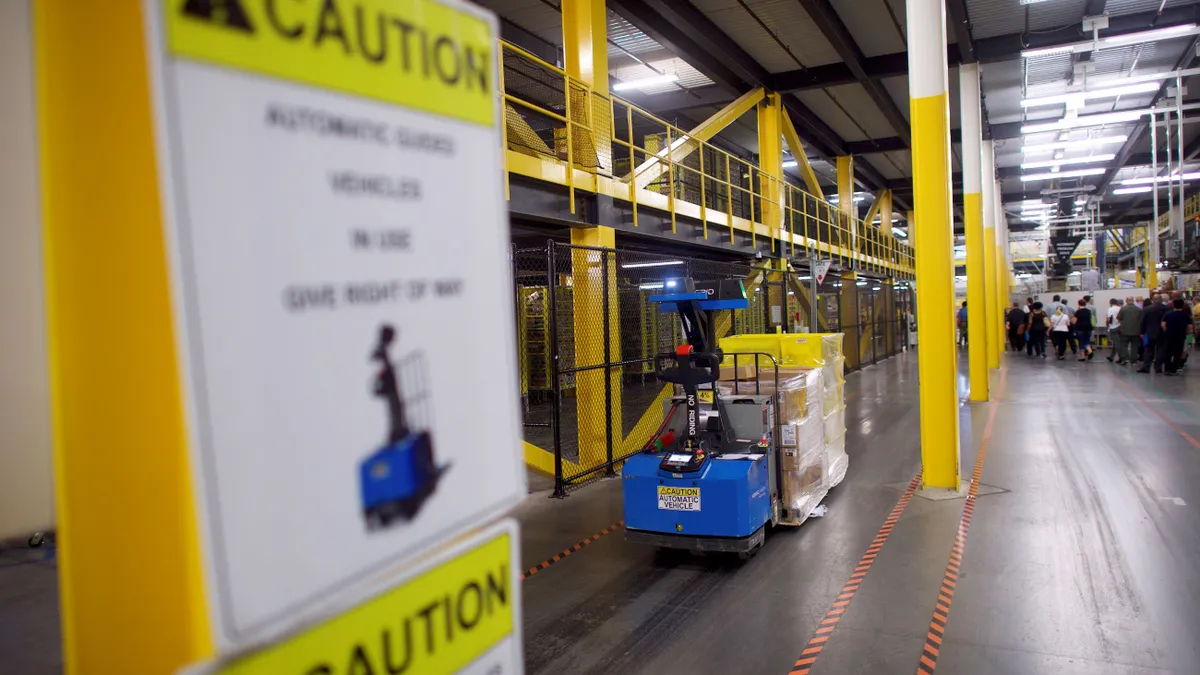
- The global market for mobile robots used for warehouse and factory automation is on track to remain a high-growth sector this year and beyond despite challenges in 2025, according to Interact Analysis.
- In a report this month, the market research firm predicted mobile robot revenue will increase from just under $5 billion in 2024 to $14 billion in 2030. That’s still below the downwardly revised $15.6 billion estimate for 2030 that Interact Analysis forecast in May 2025, citing tariffs that reshaped global supply chains.
- Mobile forklifts are expected to account for an estimated one-third of total mobile robot revenue, despite a smaller share of overall shipments. “The forklift segment continues to attract new entrants and innovation, with vendors expanding portfolios to include forklifts as part of integrated mobile automation solutions,” Ash Sharma, who leads the firm’s robotics and warehouse automation research, said in a statement included in the report.
Dive Insight:
Companies such as Amazon and Tesco have continued to announce major warehouse automation investments “despite weak macroeconomic fundamentals,” according to a separate Interact Analysis report released in December.
During an earnings call last summer, Amazon CEO Andy Jassy said automation and robotics were “important contributors to improving cost efficiencies and driving better customer experiences over time.” Those remarks came on the heels of the online retail giant announcing that it deployed its one millionth mobile robot.
In May 2025, Interact Analysis said it was downgrading forecasts for warehouse automation spending after U.S. tariffs resulted in price increases that adversely impacted the market.
The outlook, though still lower than the more optimistic forecast before the tariffs, has improved heading into the new year as global macroeconomic uncertainty has begun to ease, according to the market research firm.
“As conditions have stabilized, visibility into future market dynamics has improved, giving end users greater confidence to move ahead with large capital investments,” the December report said. “This shift has led us to adopt a slightly more optimistic view of warehouse construction and automation spending in our latest forecast. This does not imply that macroeconomic fundamentals have fully recovered — far from it — but we are notably less pessimistic than we were six months ago.”