Dive Brief:
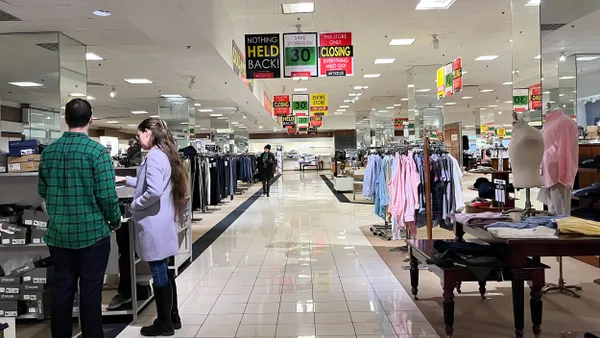
- Fifty-four percent of U.S. households saved no money last month, EY-Parthenon found in a survey, highlighting how the rising price for gasoline and other goods is undermining consumers’ buying power.
- One out of five households spent more than it earned and tapped debt or savings to cover expenses, EY-Parthenon said. Seventy-two percent of consumers identified dining out, apparel, beauty and personal care, and other discretionary categories as candidates for spending cuts.
- “Many households are maintaining stability through spending trade-offs, delayed purchases and the use of savings or debt,” Mark Chambers, the retail sector leader for EY Americas, said in a statement, while noting consumers’ “resilience.”
Dive Insight:
Consumers are altering their outlays to cope with persistent price pressures. Inflation rose 3.4% on an annual basis last month after increasing 3.5% in June, even as energy prices during July fell 1.5%, the Bureau of Labor Statistics said Wednesday.
In August, the price of gasoline and other energy commodities have increased amid a flare-up in the U.S.-Iran conflict. The price of a gallon of gasoline increased during the past month to $4.06 from $3.98, according to AAA.
Inflation has exceeded the 2% target of the Federal Reserve for more than five years. During the 12 months through July, real average hourly earnings for all U.S. employees declined 0.2%, the BLS said on Wednesday.
Retail sales last month fell 0.6%, well short of forecasts, after a 0.2% increase in June, the Census Bureau reported Friday.
Sales at gas stations and auto dealers decreased 0.9% and 2%, respectively, the Census Bureau said, with lower gas sales reflecting cheaper prices at the pump. Even excluding those two volatile categories, however, retail sales declined.
The spending data reflects a dimming mood among households.
Consumer sentiment fell 8% this month after two straight months of improvement, according to Joanne Hsu, director for surveys of consumers at the University of Michigan.
“Although the early-month weakening in sentiment was pervasive across various demographic groups, notably large reductions were seen among older consumers, lower-income consumers and those without a college degree,” Hsu said.
“These groups are all particularly vulnerable to any erosion of purchasing power stemming from inflation,” she said, reporting on preliminary data for August.
Some measures of consumer finances are flashing red. From the third quarter of 2022 to the Q1 this year, the share of credit card balances delinquent for more than 90 days rose to 12.8% from 7.6%, according to the New York Fed.
The trend has “prompted concerns that Americans are falling behind on their debt payments at rates not seen since the Great Recession,” New York Fed researchers said in a blog post.
To be sure, total debt balances among consumers dipped $13 billion during Q2 and delinquency rates among most debt products “remained fairly stable,” the researchers said.