The Securities and Exchange Commission is charging the former CEO, CFO and senior director of finance for now-defunct Tricolor Holdings with fraud in association with their roles in a “multi-year scheme,” which ultimately led to the collapse of the subprime auto lender, according to a Tuesday press release.
Former CEO Daniel Chu, ex-CFO Jerome Kollar, and former senior director of finance Ameryn Seibold deceived underwriters and investors and raised over $1.9 billion through asset-backed security offerings — making false statements regarding the auto lender’s financial health despite knowing Tricolor was facing severe liquidity challenges, the complaint alleges. The SEC’s suit is a parallel action to a previous lawsuit filed against Chu and Kollar, among other executives, by the U.S. District Attorney’s Office in December.
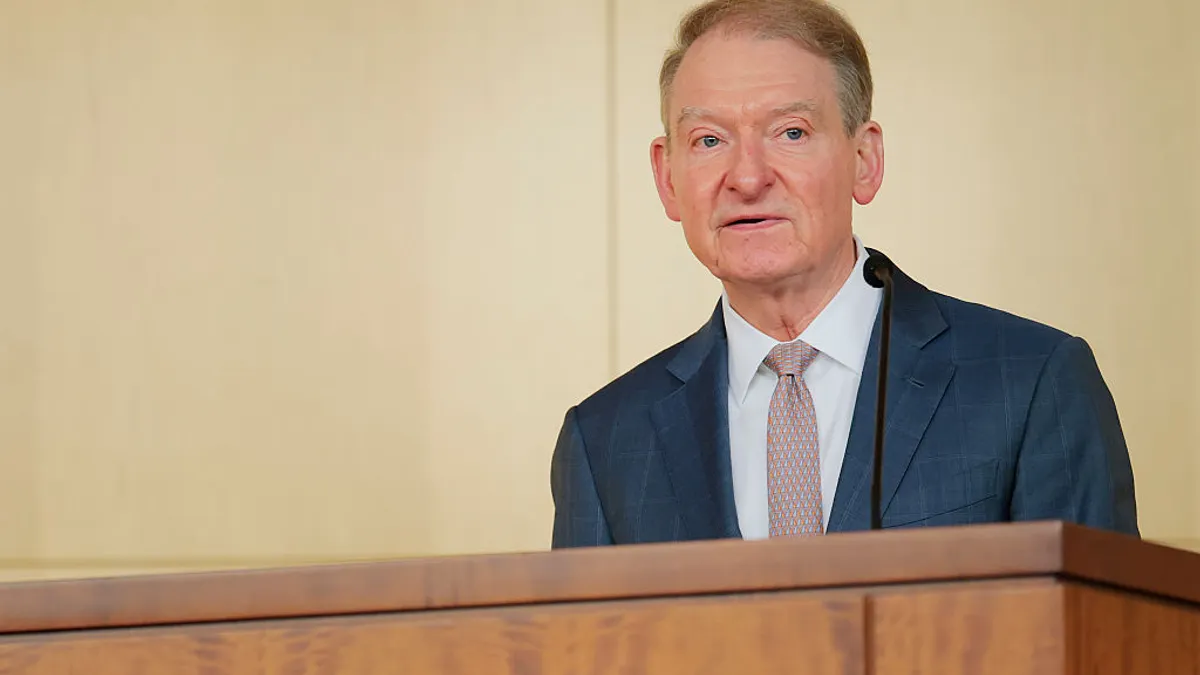
“We allege that these defendants defrauded investors based on bogus collateral and violated the integrity of our private credit markets,” David Woodcock, director of the SEC’s Division of Enforcement said in a statement included in the release.
Chu served as founder, controlling shareholder and chairman of Tricolor during the relevant period in the SEC’s complaint, which concerns a timeframe beginning 2020 until the company filed for bankruptcy by liquidation in September 2025. The suit does not specify when Kollar joined the company, but notes he served as CFO during that period, with Seibold serving as senior director of finance and director of treasury.
Tricolor used a series of special purpose vehicles to issue the nearly two billion in ABS offerings, “purportedly collateralized” by pools of subprime loans, the SEC said in its Tuesday complaint.
However, the three executives charged made false or misleading statements to the Dallas, Texas-based subprime auto lender’s investors, including falsely representing that loans included in its ABS pool were free of other liens “when the defendants knew that many had been or would soon be double pledged,” according to the Tuesday release.
“Chu and Kollar further falsely represented to investors that Tricolor’s financial condition was sound when they knew that Tricolor was facing a growing liquidity crisis and edging closer to its eventual collapse,” the SEC said in its complaint filed with the Southern District of New York.
At Chu’s direction, Kollar and Siebold both undertook other fraudulent actions, such as including “large quantities of ineligible collateral” in its Tricolor Auto Securitization Trusts ABS offering — a group which included delinquent loans or loans that should have been written off as uncollectible, according to the complaint.
“Chu and other Tricolor executives called these uncollectible loans ‘dead loans’ because the borrowers were not making payments — but nonetheless reported them to investors as current and impermissibly counted them in collateral pools,” the complaint notes. “By manipulating the securitized collateral in this way, Defendants ensured Tricolor’s ultimate collapse.”
Chu and Kollar also received “substantial compensation and bonuses tied to, and made possible by, the completion of the TAST ABS Offerings,” the complaint alleges. Kollar received two securitization success bonuses totaling $275,000 for 2025, while Chu received two securitization success bonuses of $125,000 as well as a “special” $15 million bonus that year.
The SEC’s suit is seeking for all three defendants to be permanently enjoined from violating federal securities law, to pay back any ill-gotten gains and the payment of civil penalties, according to the complaint. It is also seeking to permanently bar Chu and Kollar from serving as officers or directors for any company that has a class of securities or is required to file reports under the Exchange Act.
The collapse
The SEC’s action is the latest to arrive after the subprime auto lender collapsed last September following allegations of fraud.
Tricolor focused on offering loans to undocumented immigrants in the U.S. Southwest, according to a September 2025 report from Bloomberg. At the time, scrutiny on the lender had sharpened after one of its creditors, Fifth Third Bank, announced it had discovered alleged fraud at an unnamed client — with Tricolor filing for Chapter 7 bankruptcy a day after the announcement, Bloomberg said.
The SEC’s complaint this week notes that “certain Tricolor lenders” discovered the lender’s fraud in the summer of 2025 and called in the company’s debt.
In December of that year, the DA for the Southern District of New York charged multiple company executives including Chu, Kollar and Seibold — with perpetuating a multi-year scheme of “systematic fraud.” According to the release, the executives aimed to defraud Tricolor’s lenders by “double pledging” collateral to multiple lenders, falsifying auto loan data, and manipulating collateral data to make “ineligible, near-worthless assets appear to meet lender requirements.”
Chu and David Goodgame, formerly Tricolor’s chief operating officer, were indicted for bank and wire fraud, while Kollar and Siebold both pled guilty to fraud charges, according to the December release. Goodgame pled guilty to the charges last June, according to a report by Bloomberg.
Tricolor listed about 25,000 creditors in its September 2025 bankruptcy petition, while reporting both liablities and assets between a $1 billion and $10 billion respective range, Bloomberg reported at the time. Both the bankruptcy case and an associated review of Tricolor’s collateral are still ongoing, according to the SEC’s complaint, meaning the “full scope” of the loss is still unknown.
Banks including Fifth Third, J.P. Morgan Chase and Barclays each logged charge offs of over $100 million following Tricolor’s bankruptcy, Industry Dive sister publication Banking Dive previously reported. Investors filed suit against the three banks this May, alleging the institutions missed “giant red flags” regarding the company’s financial health prior to its bankruptcy filing. A federal judge dismissed the case in June, Banking Dive reported.
The SEC declined to comment beyond its press release. CFO Dive was unable to contact defendants for comment.