Dive Brief:
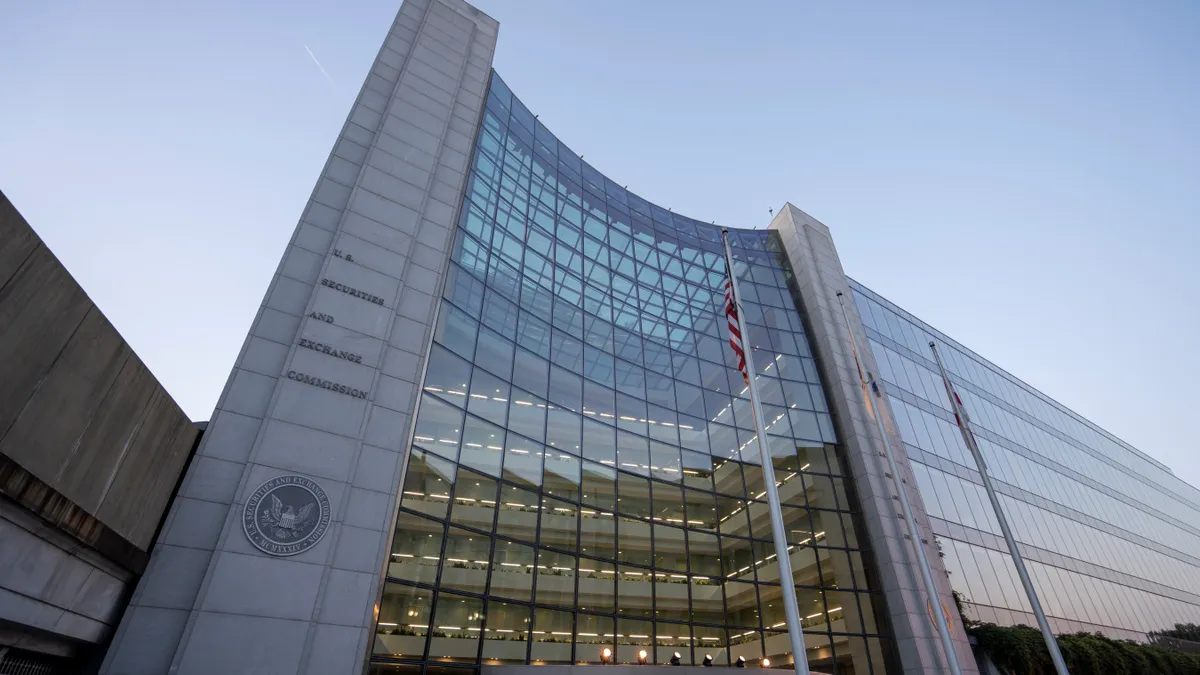
- The Securities and Exchange Commission is establishing a new enforcement unit focused on pursuing financial reporting and accounting fraud cases, the agency said Wednesday.
- The unit will be housed within the SEC’s Division of Enforcement and staffed by both attorneys and accountants with specialized skills related to financial reporting, accounting, and auditing in securities regulation, according to the announcement.
- “Since my return to the Division, I have been assessing every aspect of our staffing to ensure that we are aligned to deliver results in our core mission areas,” David Woodcock, director of the SEC's Division of Enforcement, said in a statement.
Dive Insight:
The announcement is “a little surprising” given the SEC’s current deregulatory focus under Chair Paul Atkins, Rebecca Fike, a partner in Reed Smith's regulatory and enforcement group, told CFO Dive.
At the same time, she said the move is consistent with Woodcock's background. The enforcement director previously chaired a Financial Reporting and Audit Task Force created at the SEC in 2013, and began his career as an auditor with Ernst & Young.
“I think time will sort of tell what this really means — whether it’s about letting companies and accounting firms know the SEC is out there, or actually bringing cases or fraud charges,” Fike said.
Woodcock said the new unit builds on the Enforcement Division's longstanding work investigating accounting and auditing violations and “will be critical in our efforts to pursuing financial reporting fraud, as well as accounting and auditor misconduct more generally.”
The unit will be led by Timothy Zimmerman, who joined the division in May as a senior adviser to Woodcock.
Whether the move ultimately results in a meaningful enforcement boost remains to be seen, attorneys at law firm Foley Hoag said in a client’s alert. The taskforce Woodcock previously chaired led to an increase in financial reporting cases that was small by historical enforcement standards, they said.
“On the one hand, if past is prologue, the increase may be only modest,” according to the Foley Hoag analysis. “On the other hand, given diminished Public Company Accounting Oversight Board enforcement activity and a similar decline in Department of Justice investigations and cases focused on financial or accounting fraud, the SEC may attempt to fill the void with higher levels of Enforcement focus on the accounting and auditing industry and financial reporting matters in general.”
Unlike other legal analysts, Jina Choi, a partner in the securities enforcement group at global law firm Gibson Dunn, was not at all surprised by the announcement.
“Making sure an issuer’s financial statements are accurate and free from fraud is what investors expect from the SEC,” Choi said in an email. “Dedicating resources and expertise to pursue accounting and financial reporting fraud cases is very much in line with back-to-basics enforcement.”
In light of the new anti-fraud unit, companies should pay special attention to internal reports and complaints about conduct in financial reporting and accounting, Choi said. “Many SEC enforcement actions and investigations come out of whistleblower reports and the numbers this year are trending up,” she said.