Dive Brief:
- An index aimed at predicting future strength of the U.S. economy edged down last month, eroded by worsening consumer expectations and a decline in building permits, the Conference Board said Friday.
- The Leading Economic Index dipped 0.1% to 99.5 after rising 0.2% in July, according to the Conference Board. Four out of the index’s 10 components fell, with measures of credit availability and equity prices helping to avert a deeper drop. During the six months through August, the index declined 0.1%, a slower pace than the 0.6% pullback during the previous six months.
- Consumer expectations remained “a significant strain on the index,” Justyna Zabinska-La Monica, senior manager for business cycle indicators at the Conference Board, said in a statement. Economic “growth is expected to slow,” she said. The Conference Board, which forecasts gross domestic product will grow 1.9% this year, marked down its forecast for 2027 GDP growth to 1.8% from 1.9%.
Dive Insight:
The dip in the LEI tracks recent indications that inflation is clouding how consumers view prospects for the economy in the months ahead.
Consumer sentiment in September fell for the second consecutive month as households anticipate that import taxes and rising fuel prices will further erode their buying power, according to the University of Michigan.
Household sentiment has slumped 16% since February, prior to the start of the U.S.-Iran war, the university said on Sept. 11.
Year-ahead inflation expectations jumped from 4% in August to 4.6% this month, the highest reading since June, while long-run inflation expectations, a top concern among Federal Reserve officials, edged up this month to 3.4%, ending three straight months at 3.3%, the university said.
Despite their dimming sentiments, consumer spending is still robust. Retail sales on a full range of goods jumped a higher-than-forecast 1.2% last month after shrinking 0.5% in July, the Census Bureau said Wednesday. From June through August, sales increased 6%.
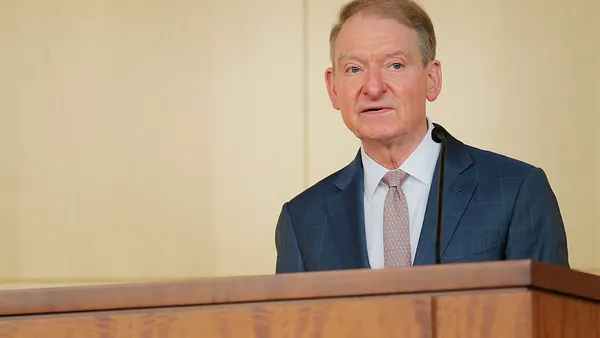
Fed Chair Kevin Warsh on Wednesday cited economic strength as one of the factors undergirding a decision by policymakers to raise the main interest rate by a quarter percentage point to curb inflation.
“Consider the geopolitical landscape of shocks and uncertainty, and you begin to appreciate the resilience of the U.S. economy,” Warsh said at a press conference.
“Given that resilience, and the potential for even greater performance, an attitude of optimism is exactly what I heard inside the FOMC these last two days,” Warsh said, referring to the Sept. 15-16 meeting of the Federal Open Market Committee.
Central bank officials are more optimistic about the outlook for GDP growth than the Conference Board. They forecast 2.3% economic growth this year and 2.4% next year, according to the median of their individual forecasts.
At the same time, they do not expect to slow inflation to their 2% goal until 2029.