Dive Brief:
- About four in 10 U.S. companies plan to increase investment in supply chain agility over the next year amid ongoing trade and tariff policy uncertainty, Big Four accounting and consulting firm KPMG found in a recent survey.
- Nearly half (48%) of organizations said they are actively modeling and deploying tariff mitigation strategies, according to KPMG’s 2026 U.S. CEO Outlook Pulse Survey results released Tuesday. Forty-one percent of respondents reported deploying artificial intelligence to manage and optimize trade compliance.
- “Policy uncertainty is the baseline, and agility is the only way to stay ahead of it,” KPMG U.S. Chair and CEO Tim Walsh said in a press release. “CEOs are keenly aware that their customers are price sensitive right now. Leading companies are not just re-examining their supply chains. They are investing in technology and AI to gain every edge.”
Dive Insight:
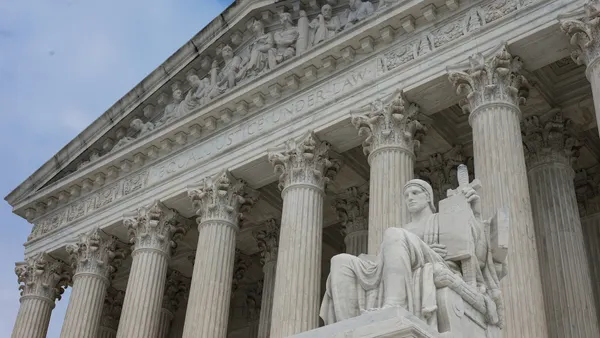
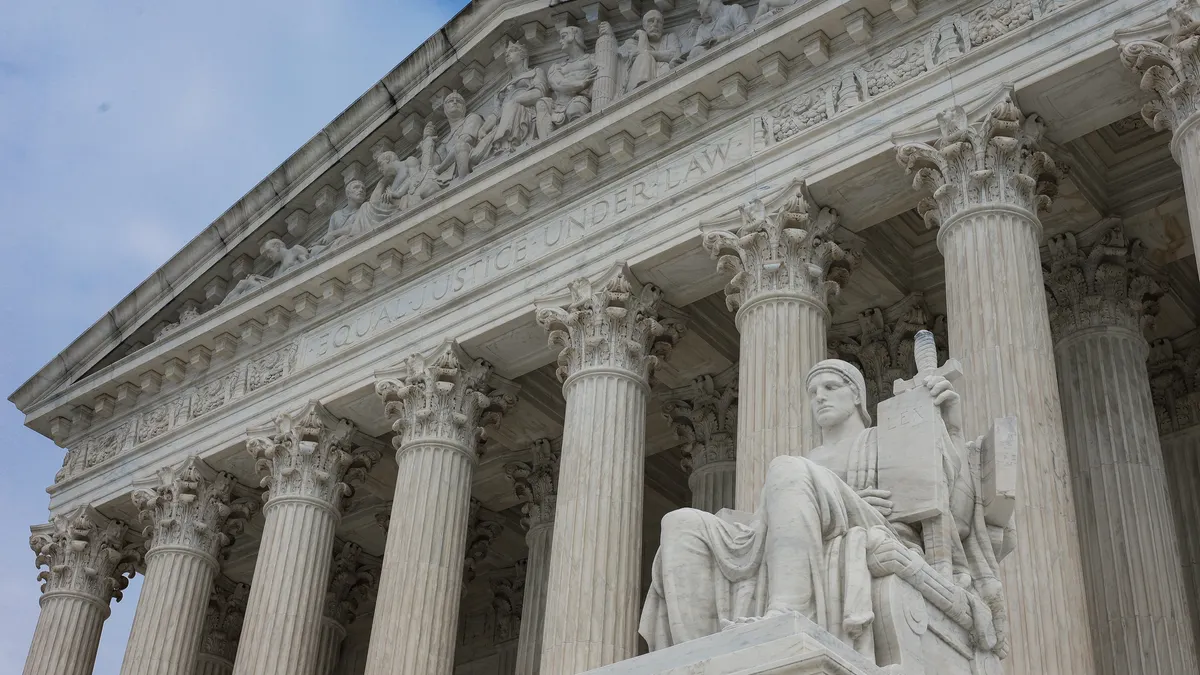
The findings come in the wake of a recent U.S. Supreme Court ruling that struck down sweeping tariffs imposed by the Trump administration last year while introducing new questions for businesses.
“What we’re seeing now is uncertainty reentering the system at exactly the wrong time,” Brian Higgins, US & consulting sector leader for industrial manufacturing at KPMG, said in an email. “Companies are once again leaning harder on price increases to protect margins, pushing capital investments further out, and hesitating to make long‑term commitments on jobs or reshoring. Even where production is coming back, it’s increasingly automated, not labor‑intensive.”
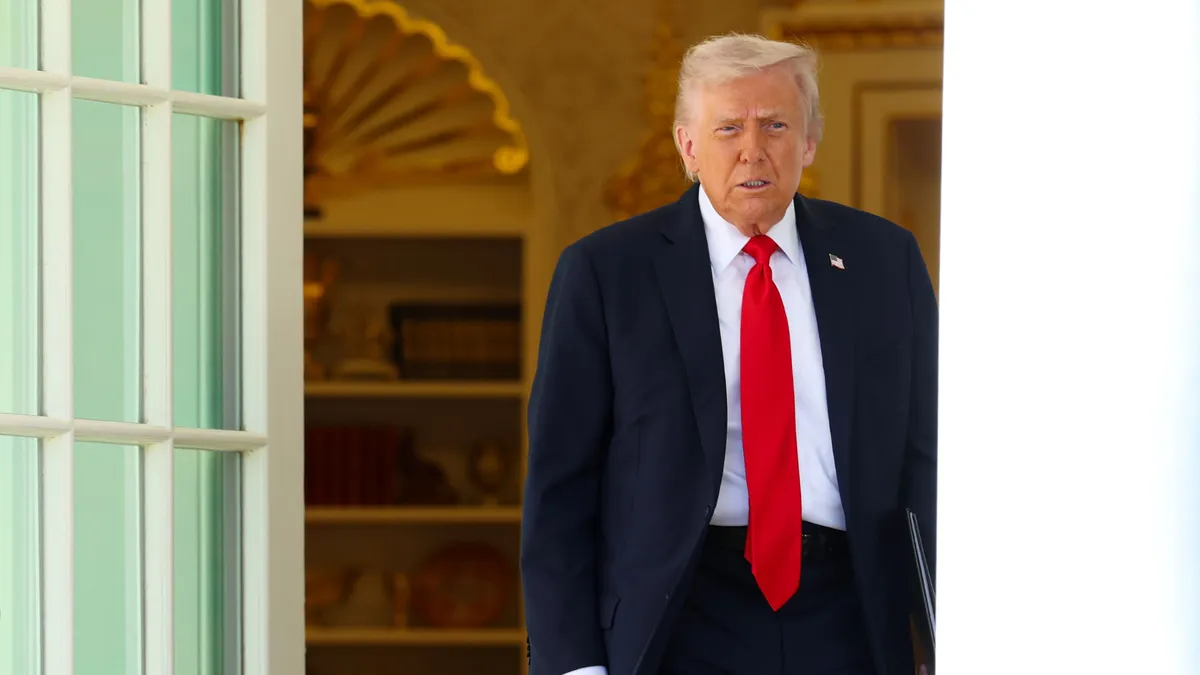
Last month, the Supreme Court ruled that President Donald Trump lacked authority under the 1977 International Emergency Economic Powers Act to impose sweeping tariffs. The administration has since pursued tariffs under other trade statutes with clearer legal precedent.
Meanwhile, earlier this month, the U.S. Court of International Trade said companies that paid the now-invalid tariffs are entitled to refunds. However, the administration’s process and timeline for issuing those refunds remains unclear.
Trade law analysts say the ruling has added to an already complex environment for businesses managing cross-border supply chains.
In an analysis of the decision, Baker McKenzie said the ruling removed a key legal mechanism used to impose tariffs, forcing the administration to consider alternative authorities and leaving companies facing a period of uncertainty as the government determines how to proceed. The firm noted that the shift could reshape the U.S. trade enforcement strategy and complicate planning for importers.
“While the Supreme Court decision renders the IEEPA tariffs invalid, significant questions remain unanswered,” Baker McKenzie attorneys said.
Despite the uncertainty, CEOs remain broadly confident in their companies’ growth prospects, according to KPMG’s research. More than 80% of CEOs expressed confidence in their organization’s growth outlook, though confidence was more muted when it came to the broader economy, reflecting caution amid ongoing geopolitical and trade tensions.
More than half (52%) of CEOs cited uncertainty in areas such as tariffs, interest rates and regulation as the top pressure driving their short-term decisions.
“For most of the past year, companies had started to settle into what they thought was a new normal on tariffs,” Higgins said. “Margins were stabilizing, pricing increases were becoming more measured, and there was cautious optimism that capital investment could start moving again. But the recent court rulings and policy shifts have disrupted that progress.”