Dive Brief:
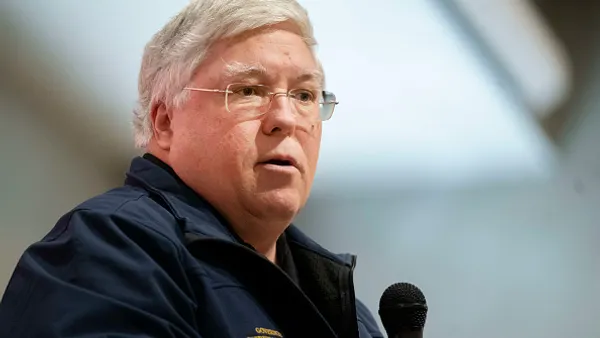
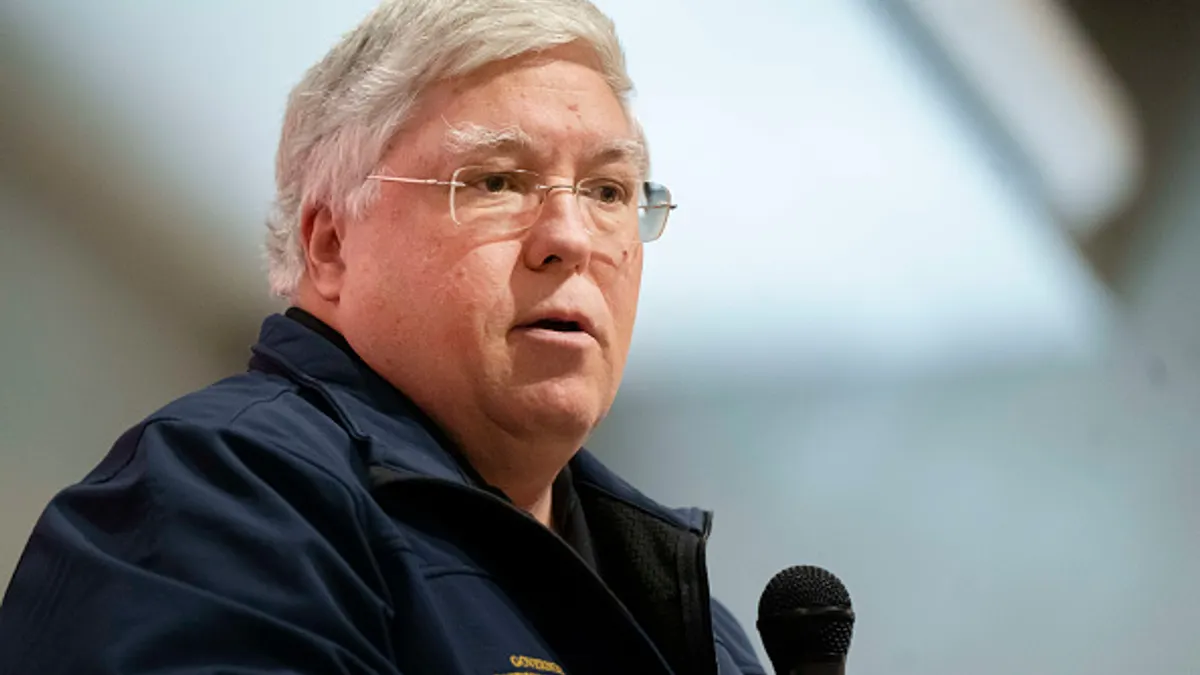
- West Virginia Gov. Patrick Morrisey signed legislation into law on Monday making his state the latest to create an alternative path for becoming a certified public accountant that doesn’t require 150 college credit hours — typically five years of post-secondary education.
- Under the new law, (House Bill 4088), CPA candidates in West Virginia will be able to choose from three routes to licensure: the first requires a bachelor’s degree plus 30 semester credit hours including an accounting concentration or the equivalent, one year of accounting experience and passing the exam; the second requires a bachelor’s degree including an accounting concentration or the equivalent and two years of experience and passing the CPA exam. The third route requires a master’s or graduate degree that includes an accounting concentration or the equivalent, one year of experience and passing the exam.
- The new pathways will go into effect May 24. “We realize there’s an accounting shortage and we are proactively taking care of ourselves and making sure the next generation of CPAs are ready for the future,” Megan Kueck, CEO of the West Virginia Society of CPAs, which worked with legislators and supported the bill, told CFO Dive Tuesday.
Dive Insight:
With the addition of West Virginia, more than two dozen states have either put new CPA pathways laws on the books or changed rules to usher in accounting licensure reform in a bid to lower the barriers into the profession and tackle the accounting shortage.
Last week, Nebraska Gov. Jim Pillen also signed (LB718) licensing reform legislation into law. The state-by-state push to remove the 150-hour barrier — viewed by many critics as costly and time-consuming — is advancing at a pace that has surprised some accounting experts.
Pressure from neighboring states such as Ohio, the first state to adopt pathways rules early last year, was part of the pull that West Virginia felt to adopt new rules, according to Kueck. “We’re neighbors of Ohio, Kentucky, Pennsylvania and Virginia,” she said. “We knew we were going to have to make a change.”
Despite the acceleration of the initiative this year, there are still some who have voiced reservations about the profession allowing CPA licensing with less education.
D. Scott Showalter, director of the Jenkins Master of Accounting Program at North Carolina State University in Raleigh, North Carolina, is a proponent of the traditional pathway that includes 150 college credit hours. In a December article, he acknowledged that the alternative pathway with fewer credit hours has its benefits but he doesn’t support it.
His position is “based more on my 33-year career in the public accounting profession than on the academic role I’ve held for the last 17 years,” Showalter wrote. “And that experience tells me prospective accountants should prioritize developing skills that will serve them in the long term, not finding the fastest path to a credential.”
He also asserts that higher degrees are associated with “professions as opposed to a trade” and that, as AI and other complex technologies play a bigger role in accounting, “professionals will need more education, not less.”
Keep up with CPA licensure changes with CFO Dive’s tracker on the topic here.