
For most businesses today, fleet performance is a financial concern as well as an operational one.
In 2026, that reality is coming into sharper focus. Rising costs, economic uncertainty and evolving technology are forcing leaders to rethink how fleets are managed, optimized and scaled.
According to Element’s latest Market Pulse Report, fleet leaders are responding with a clear shift in priorities: discipline first, transformation second.
Cost control is the top priority
The data tells a straightforward story. Cost savings have emerged as the dominant priority for fleet leaders, with 78% ranking it as a top focus in 2026.
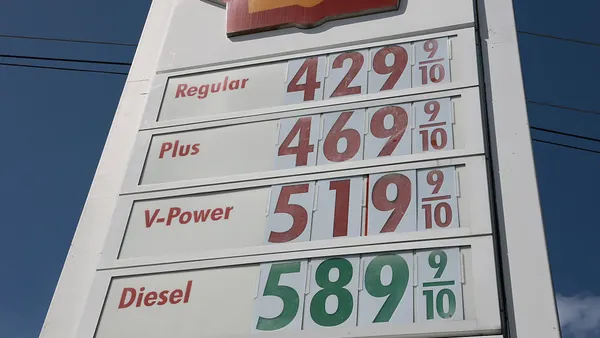
That shift reflects broader macroeconomic pressure. The report shows that 88% of respondents are concerned about inflation and rising costs, pushing organizations to scrutinize every aspect of fleet spend.
For businesses managing large, distributed fleets, this often applies to practical decisions like:
- Extending vehicle lifecycles
- Delaying replacements
- Tightening maintenance strategies
In fact, 36% of fleets are delaying vehicle replacement cycles due to tariff-driven cost increases.
The takeaway is clear: growth isn’t off the table, but it’s being approached cautiously.
Stability over expansion
Rather than aggressive expansion, many organizations are choosing to hold steady.
About 50% of fleet leaders expect to maintain their current fleet size, while others plan gradual increases. This “stay the course” mindset reflects a broader emphasis on operational stability.
For business leaders, this has real implications. Instead of scaling fleets to meet demand spikes, the focus is shifting toward:
- Maximizing utilization of existing assets
- Improving scheduling and routing efficiency
- Reducing downtime through proactive maintenance
In other words, it’s about doing more with what you already have.
Technology investment gets more targeted
Even in a cost-conscious environment, investment in technology hasn’t stopped. It’s just become more selective.
More than half of fleet leaders (53%) are exploring AI and digital tools, but adoption is pragmatic rather than experimental.
The most common use cases are tightly aligned with core business goals:
- 67% are using AI to improve driver safety
- 61% are using it to control and track costs
For fleets, that translates into tools like telematics, predictive maintenance and route optimization. These are solutions that deliver immediate ROI rather than long-term speculation.
External pressures are reshaping strategy
Economic forces are also playing a larger role in fleet decision-making.
More than half of fleet leaders (54%) report moderate to significant operational impacts from tariffs and trade policies. These pressures are influencing everything from procurement strategies to asset lifecycle decisions.
The result is a more flexible, scenario-based approach to planning. Instead of locking into long-term strategies, organizations are building flexibility into their fleet models.
A gradual path to transformation
While cost discipline dominates today, long-term transformation is moving at a different pace.
Electrification, for example, is still on the radar, but progress is incremental. Only 19% of fleets are in early-stage EV transition planning, with many organizations opting for hybrid or alternative fuel solutions as a bridge.
At the same time, alternative mobility options are gaining traction. About 31% of fleets are already exploring or using flexible mobility solutions, such as short-term rentals, to manage demand variability without long-term commitments.
Turning insight into action
For fleet and business leaders, the focus is on operating with intention rather than reacting to disruption.
In today’s environment, high-performing organizations are focusing on three key moves:
- Optimize before expanding: Maximize utilization and extend asset life before adding new vehicles.
- Invest where ROI is immediate: Prioritize technologies that improve safety, visibility and cost control.
- Build flexibility into strategy: Use alternative mobility and adaptable procurement models to manage uncertainty
The organizations that get the balance between discipline today and transformation tomorrow right will be best positioned to navigate whatever comes next.