Dive Brief:
- Most corporate economists (59%) believe that higher inflation from the Iran war will prove temporary and that the U.S. economy will suffer just a slight setback from the conflict and expand 2.2% this year, Wolters Kluwer found in a monthly survey.
- Still, tension in the Persian Gulf prompted economists at companies ranging from Northern Trust to Ford Motor and Visa to Eaton Corp to raise the odds of a U.S. recession during the next 12 months to 35%, Wolters Kluwer said. With energy prices rising, they also pushed back their forecast date for an interest rate cut by the Federal Reserve, with 71% predicting that policymakers will trim borrowing costs after July.
- “The U.S. military action against Iran has the potential to both fuel inflation and depress economic growth, and the latest Blue Chip Economic Indicators survey shows shifts in these directions,” Wolters Kluwer said. “However, the effects are seen as temporary and less than overwhelming.”
Dive Insight:
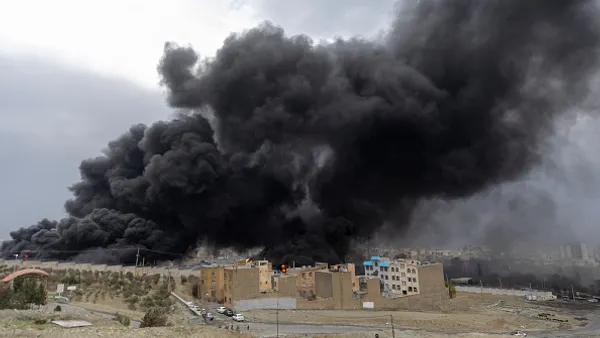
Surging energy prices since the start of the war on Feb. 28 have yet to flow through the broader economy.
Headline inflation, or the Consumer Price Index including all categories of prices, rose 0.9% last month, or 3.3% on an annual basis, with a 21.2% leap in an index for gasoline fueling nearly 75% of the increase, the Bureau of Labor Statistics said Friday.
In turn, the soaring price of oil prompted 97% of the survey respondents to raise their forecast for inflation, Wolters Kluwer said.
Yet most survey respondents expect “the oil-price shock to be short-lived, with 59% expecting no or only a minor pass-through into core inflation,” according to Wolters Kluwer.
Indeed, the CPI excluding volatile food and energy prices increased just 0.2% in March, or 2.6% over 12 months after a 2.5% annual gain in February, the Bureau of Labor Statistics said Friday.
Survey respondents expect that rising energy prices will prompt the Fed to slow monetary easing this year, with their consensus projection indicating that the federal funds rate will end the year at 3.35%, nearly 0.2 percentage point higher than their forecast last month. The main rate is currently set at a range from 3.5% to 3.75%.
Respondents are far from ruling out the risk of broader inflation.
“Panelists most likely expect the effects of the energy shock to build over time — through weaker real incomes, higher input costs for firms and renewed pressure on global supply chains,” Haver Analytics economists Mike Moran and Sandy Batten said, referring to the survey results.
“Supply chains could be disrupted, thereby amplifying the impact of higher energy prices on overall inflation, as occurred in the early stages of the pandemic,” Moran and Batten said.
Yet the U.S. economy is far less vulnerable to rocketing energy prices than during the last major oil shock five decades ago, according to economists.
During the 1970s, a 10% surge in the price of oil pushed up inflation by 0.9 percentage points, according to Candace Browning Platt, head of global research at Bank of America. Since then, the price impact has fallen to 0.25 percentage point, she said.
“Growth is even less impacted,” she said, estimating a 0.05 percentage point setback to GDP today in reaction to a 10% gain in oil prices compared with 0.7 percentage points in the 1970s.