Dive Brief:
- Nearly three-quarters of U.S. finance leaders rank healthcare among their companies’ five biggest operating expense concerns, consulting firm Mercer found in a recent survey.
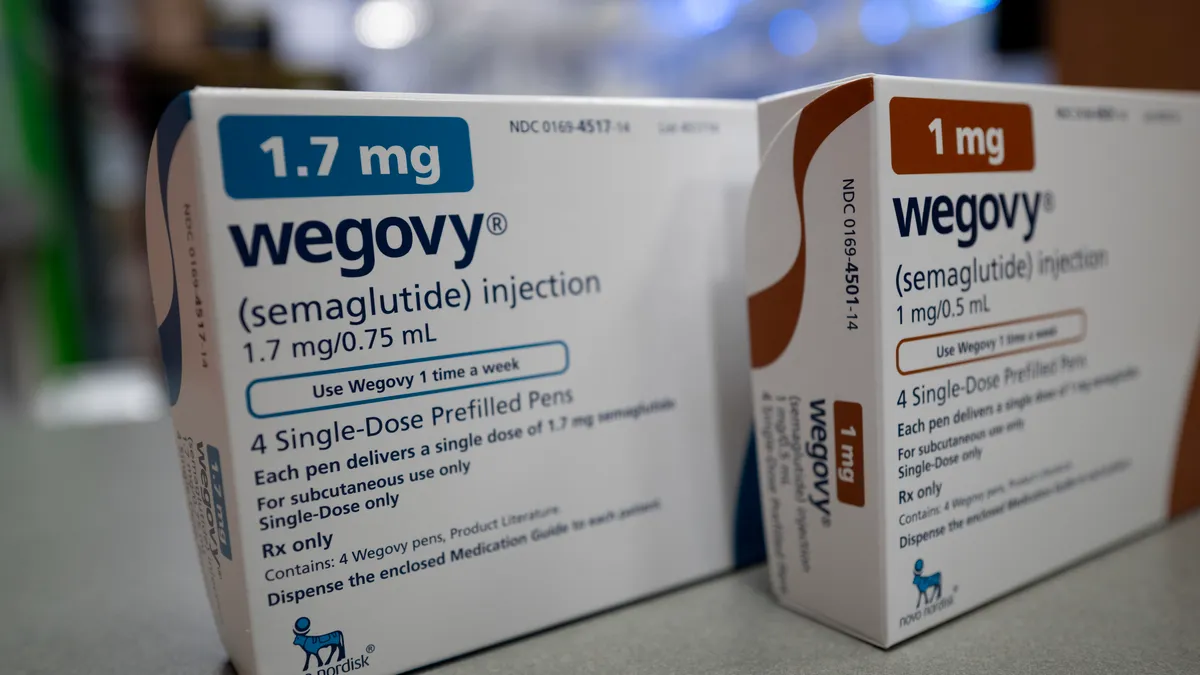
- The research comes as the rapid rise of GLP-1 weight-loss medications — like Wegovy and Ozempic — is adding to volatility in employer health costs.
- “The survey results make clear the far-reaching impacts of rising health benefit costs for individual organizations,” Susan Potter, president of Mercer U.S. & Canada, said in an emailed statement. “Only about one in four CFOs said that their organization was able to absorb the cost increases over the past two years without any business impacts, such as slower wage growth, reduced hiring, or higher prices.”
Dive Insight:
Employer-sponsored health insurance costs are projected to rise 6.7% in 2026, the highest increase in 15 years, pushing the average expense per employee above $18,500, according to Mercer, a Marsh McLennan subsidiary that advises companies on workforce issues.
The 6.7% figure, which comes from Mercer’s 2025 National Survey of Employer Sponsored Health Plans, represents the expected average increase after cost-saving changes employers planned to make, the consulting firm said. Before changes, employers anticipated an average increase of over 9%, which would be 5 to 6 points above the Consumer Price Index.
“The current elevated cost trend, which began in 2023 following a decade of growth averaging only about 3% annually, is putting mounting pressure on benefit budgets and, in some organizations, beginning to affect broader business operations,” the report said.
The share of finance leaders identifying healthcare as a top-three concern has risen from 19% in 2024 to 33% in 2026, reflecting a growing CFO challenge, according to Beth Umland, director of health research at Mercer US.
“While inflation related to other goods and services has cooled over this timeframe, the healthcare trend is accelerating, which is a red flag for CFOs,” Umland said in an email response to questions. “In addition, health care claims cost has been increasingly volatile, making it harder for organizations with self-funded plans to manage their budgets.”
Nearly half of those surveyed said they favor changes to plan design such as higher deductibles or modified cost-sharing structures. Fewer CFOs supported increasing employee premium contributions.
GLP-1 drugs typically cost between $1,000 and $1,500 per month for consumers, with employers often covering 70% to 100% of that cost, according to a January Society for Human Resource Management article.
Medicare spending on GLP-1 drugs reached about $27.5 billion in 2024, more than five times higher than in 2019, according to a Kaiser Family Foundation analysis of claims data.
About half of large employers — those with 500 or more employees — currently cover GLP-1s for weight management, Mercer found.
“While more employers have offered this coverage each year for the past three years, we may see that trend slow or stop in 2026 as employers sought to curb high cost increases,” Umland said.
“Those that currently provide this coverage are evaluating all methods for managing utilization, from eligibility controls that help ensure the medications are used by those who will benefit most, to requiring participation in a support program that will help ensure members who do use these medications are positioned to get the maximum benefits.”
Mercer surveyed 161 CFOs and other finance professionals in February.