Dive Brief:
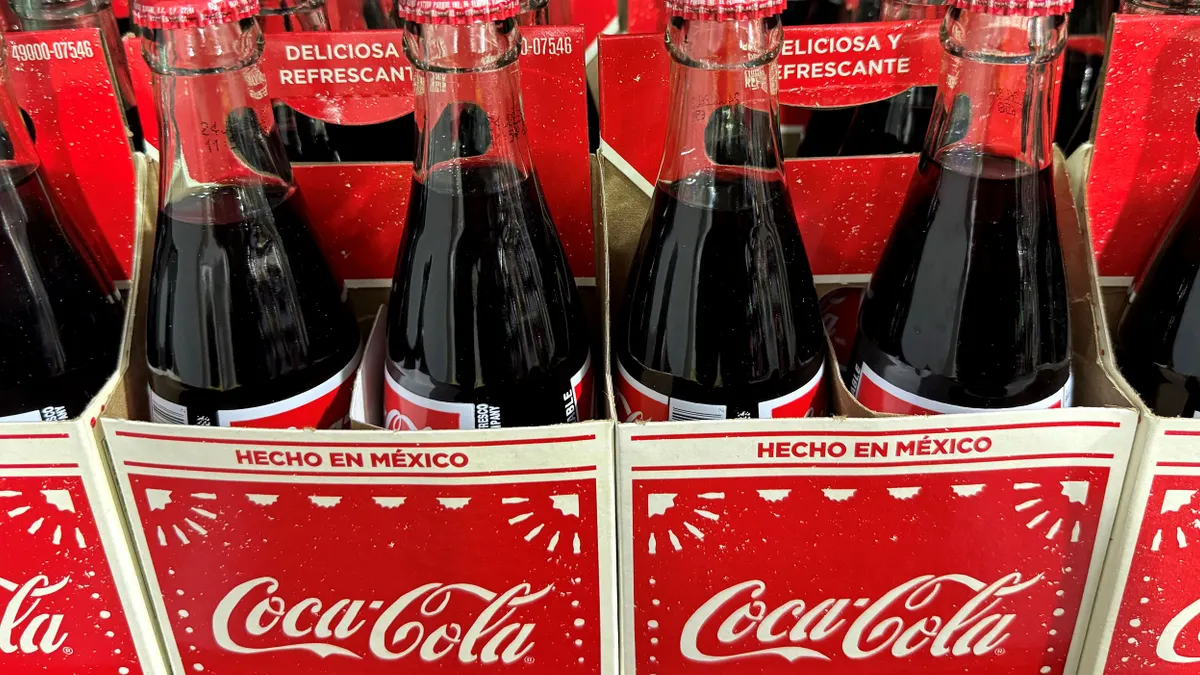
- Coca-Cola is using artificial intelligence and scenario modeling tools to support marketing and commercial investment decisions as part of a broader finance transformation at the company, according to a presentation at Gartner’s 2026 Finance Symposium/Xpo.
- Past investment decisions have been hindered by fragmented analysis, with different teams interpreting the same data in different ways, speakers said during a May 29 session at the event in National Harbor, Maryland. This led to extended cycles of discussion before decisions could be made, delaying responses to changing market conditions.
- Meetings often focused on “coordinating follow ups, more analysis, more deep dives… and by the time the team would produce the answer, the market had moved,” said Shelley Kench, Coca-Cola’s global resource allocation lead. She was joined by Noah Museles, a partner at Bain & Company, which supported the transformation.
Dive Insight:
The effort reflects Coca-Cola CFO John Murphy’s broader focus on tightening how resource allocation is handled across the business.
“Resource allocation is not a new idea… however, we think there's an opportunity to gain even more leverage from it — something I think about as potentially our new secret sauce,” Murphy said at the Consumer Analyst Group of New York Conference in February, according to a transcript.
The consumer goods industry faces an increasingly complex and volatile marketing environment brought on by factors such as economic uncertainty, softening consumer demand and “an explosion of media touchpoints and purchasing pathways,” according to a February report by Boston Consulting Group.
The firm reported in early 2025 that three-quarters of marketing leaders at consumer goods companies viewed omnichannel investment allocation and activation as their biggest challenges. Of those respondents, 68% cited organizational silos and poor internal collaboration as particularly significant barriers.
At the center of Coca-Cola’s push is “Fuel Light 360,” the company’s proprietary platform designed to support teams across the business as they evaluate potential marketing and commercial investments.
Murphy highlighted the tool in his CAGNY conference remarks, saying it allows Coca-Cola to “hone in on what's going to deliver the most value for our buck, and it allows us to collectively think about how to improve our allocation of capital over time to support the business.”
Speaking at the Gartner event, Kench described a situation where the company faced increased advertising pressure from a competitor in the sugar-free soda category. In the past, teams might have debated whether to respond by increasing spending on television, digital media or in-store promotions, often without a common framework for evaluating the trade-offs.
She said Fuel Light 360 allows teams to model different investment scenarios in real time, helping shift discussions from competing interpretations of the data toward decisions about how to respond.
“What we've done is really moved from a meeting that's all about reconciling and arguing about whose data is right to making choices,” Kench said.
Museles said the effort was ultimately about reshaping the decision-making process, not just deploying new technologies. The result: what once required up to two weeks of follow-up analysis can now be accomplished during a single meeting.
“We redesigned the meeting, designed the tool accordingly for what the users needed in the meeting and then rolled them both out at the same time,” Museles said. The company “went from two weeks to one hour … in terms of the decision cycle.”