Dive Brief:
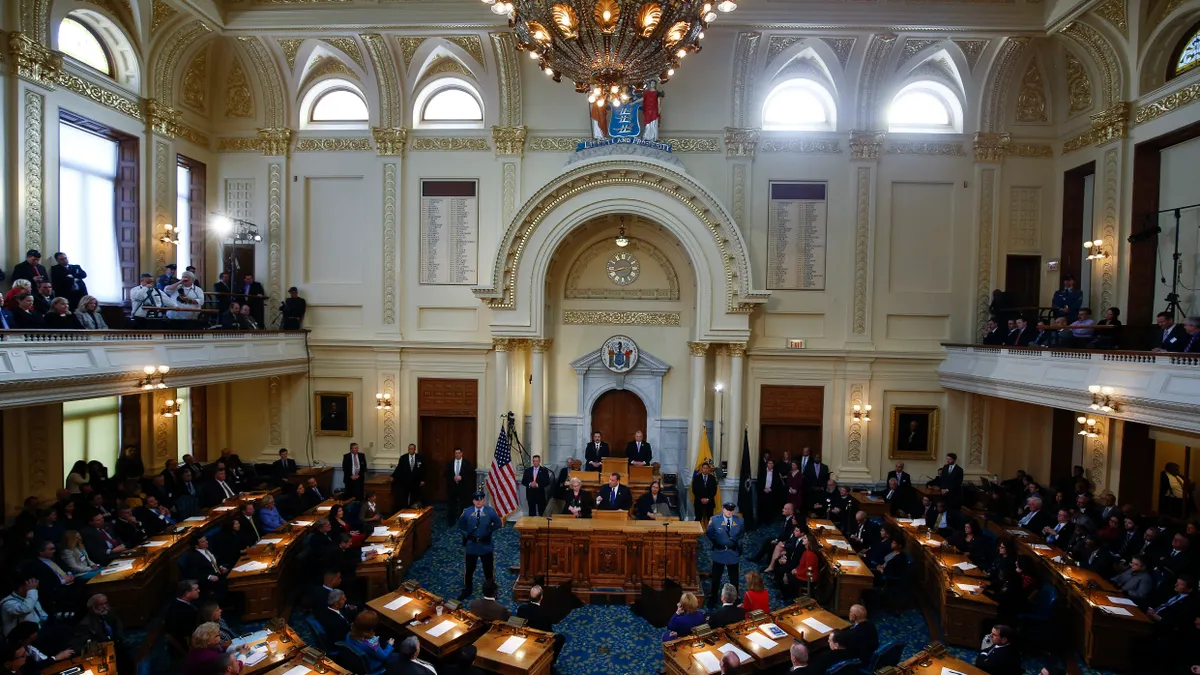
- The New Jersey Senate passed CPA pathways legislation on Dec. 18, with the action setting up the Garden State to join at least 24 others which have passed legislation or changed rules to provide an alternative path to obtaining a certified public accountant license that doesn’t require 150 college credit hours.
- Both houses passed the legislation unanimously, with the assembly voting 78-0 in June and the Senate passing it by a vote of 38-0 last month, according to the state legislature’s online bill tracker.
- With New Jersey joining many of the country’s most densely populated states such as New York and California in the initiative, most aspiring accountants will have more options when it comes to choosing their career routes. “Now most CPA candidates are in states that have the alternative pathways,” Jack Castonguay, an associate professor of accounting at Hofstra University in New York, said in an interview Monday.
Dive Insight:
The bill must still be signed into law by Gov. Phil Murphy, according to a spokesperson for the New Jersey Society of Certified Public Accountants, noting that they were awaiting additional information about the timing of the next step from the governor’s office. Murphy’s office did not immediately respond to a request for comment on the status of the bill.
New Jersey is poised to join a broader push by the industry to change the CPA licensing process to better appeal to a new generation of CPA candidates and address the accounting talent shortage. Many states have tweaked their laws or rules to offer an alternative path to licensure that would require just a bachelor’s degree rather than five years of post-secondary education as is currently the case, as well as substituting a second year of professional experience for the fifth year of schooling that is typically required to complete 150 hours of college credit.
Under S-4493, a CPA candidate will be able to be licensed with either a baccalaureate or higher degree or its equivalent or have successfully completed 150 college credit hours of education, rather than the current system which requires that all individuals seeking licensure have completed 150 hours of education.
State Senate Republican Leader Anthony M. Bucco, one of the bill’s sponsors, has said the legislation aims to make the state a destination for top professionals. “By cutting unnecessary red tape, we’re making it easier for current and aspiring public accountants to practice here without jumping through excessive hoops. It’s a commonsense move that helps qualified individuals succeed and strengthens our workforce,” he said in a statement emailed to CFO Dive.
Keep up with CPA licensure changes with CFO Dive’s tracker on the topic here.