Dive Brief:
- Joining a fast-growing majority of states, Wisconsin lawmakers this week passed legislation offering an alternative path to becoming a certified public accountant that doesn't require 150 college credit hours — typically equal to five years of post-secondary education that critics say presents a barrier to entering the profession.
- By a unanimous voice vote Wednesday, the state’s Senate passed SB732 one day after its companion bill sailed through the Assembly, according to Tammy Hofstede, president and CEO of the Wisconsin Institute of CPAs. The legislation creates a third path that enables candidates to be certified by obtaining a bachelor’s degree, gaining two years of experience and passing the CPA exam. It also keeps the existing paths that require 150 college credit hours or a master’s degree, a year of experience and passing the exam.
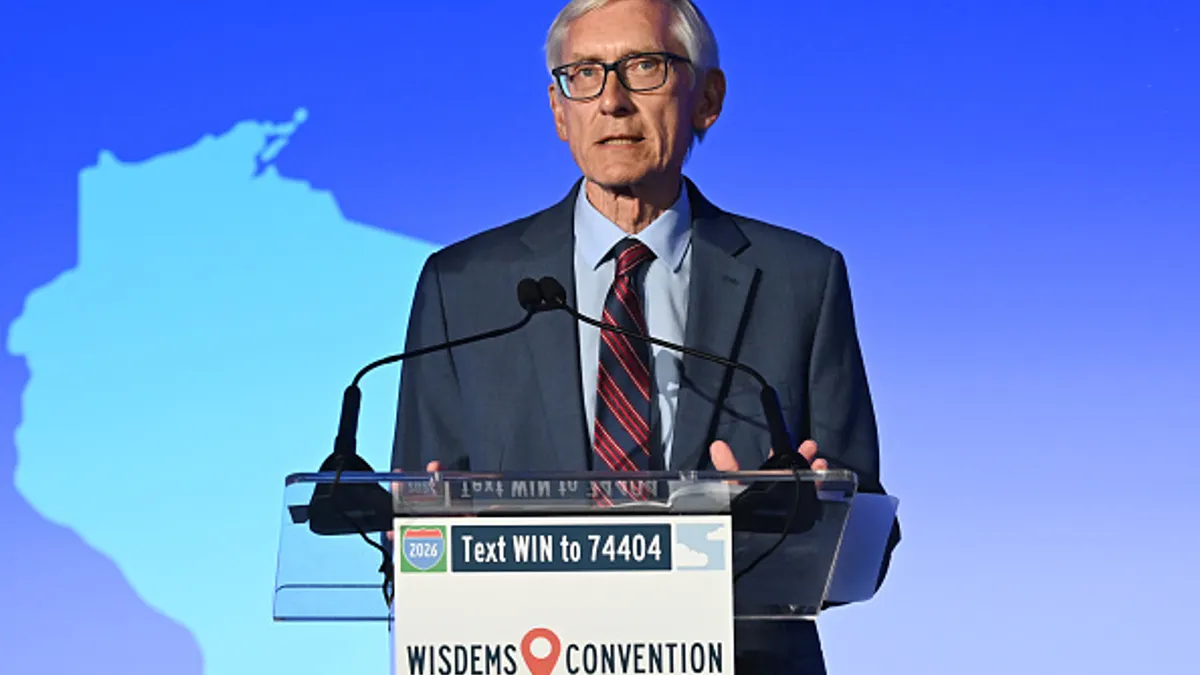
- The legislation will be effective immediately after it is signed into law by Gov. Tony Evers, which will likely be in March or April, Hofstede said. “We’re just waiting for the governor to sign it,” Hofstede said. After that “there’s no waiting period, no retroactive issues…so anybody who is eligible under the new law with the new requirements can do it.”
Dive Insight:
Since early last year, about 26 states have either put new CPA pathways laws on the books or changed rules to usher in CPA licensure reform in a bid to lower the barriers into the profession and tackle the accounting shortage.
In a surge of legislative activity this year, 19 additional states are advancing CPA pathways bills or rules, leaving just a handful yet to formally pursue the new requirements, according to the Minnesota Society of Certified Public Accountants, which is closely tracking the licensing changes.
The licensing initiative’s accelerated pace this year has surprised some accounting experts who had anticipated the changes to extend well into 2027, CFO Dive previously reported. On Thursday, the Massachusetts Senate passed a CPA licensure bill, with the state’s House expected to vote on it in the spring or early summer and an effective date currently set for Jan. 1, 2027, according to Zach Donah, president and CEO of the Massachusetts Society of CPAs.
Still, some states like New York and Alabama that have put CPA pathways laws on the books still need to nail down the details of how they will work.
For example, the legislation signed into law by Alabama Gov. Kay Ivey on Jan. 30 was silent on the education requirements for licensure, moving the responsibility for those decisions to the Alabama State Board of Public Accountancy, according to Robin Pearson, director of governmental affairs at the Alabama Society of CPAs. He expects the new format requiring a bachelor’s degree plus two years of experience and the passage of the CPA exam will be approved by the board and become effective by Oct. 15.
Robert J. Pawlewicz, an assistant professor in accounting at the University of Richmond, said he thinks that most state CPA bills clearly spell out the pathways and that the swift pace won’t lead to extensive additional work on the backend that will slow the actual implementation of the laws.
“To me the pace still appears very fast and I do not think it’s because legislators are pushing off the details to boards of accountancy,” Pawlewicz said in an email.
Wisconsin benefited from not being a leading state, according to Hofstede. WICPA supported the legislation, which was introduced in November after the state had the chance to “watch and learn” from the legislation other states were working on.
In spite of some larger and Big Four accounting firms laying off accounting staff, Hofstede believes the legislation is still needed as the accounting shortage persists in many areas. For example, she still hears from smaller businesses in Wisconsin that are struggling to find accountants to do taxes and audits.
“We’ve heard of so many of the smaller firms having to merge into big firms or the mom and pop shops closing because they can’t find the help that they need to service their community and clients,” Hofstede said. “The Big Four are a separate group in themselves. They usually have turnover and actually haven’t had that turnover so I think that’s why you’re seeing the layoffs there.”
Keep up with CPA licensure changes by accessing CFO Dive’s tracker on the topic here.