It’s been a busy two years for Shane Hostetter since he took the finance seat of the global chemical business Chemours in July 2024: he’s navigated tariffs, a cost-cutting inititative and most recently impacts on the company’s supply chain from the war in Iran.
A CPA who started his career in auditing with PricewaterhouseCoopers, Hostetter joined the Wilmington, Delaware-based company from Quaker Chemical, where he served for 13 years in varying roles including as CFO.
He also arrived at a challenging time for the company and its leadership. His predecessor Jonathan Lock resigned from the company after an internal probe found that Lock and the company’s then CEO and controller engaged in unethical financial practices in part to meet free cash flow targets.
In emailed responses, Hostetter answered questions from CFO Dive regarding efforts by the company to resolve weaknesses in internal controls, his role in restoring trust, and his views on tariffs and legacy environmental claims. This Q&A has been edited for brevity and clarity.
CFO Dive: The multi-year Pathway to Thrive is a restructuring/turnaround strategy poised to reduce Chemours’ costs by $250 million from 2024 to 2027. Are you still on a path to realize those costs by next year and what role are you playing as CFO in that initiative?
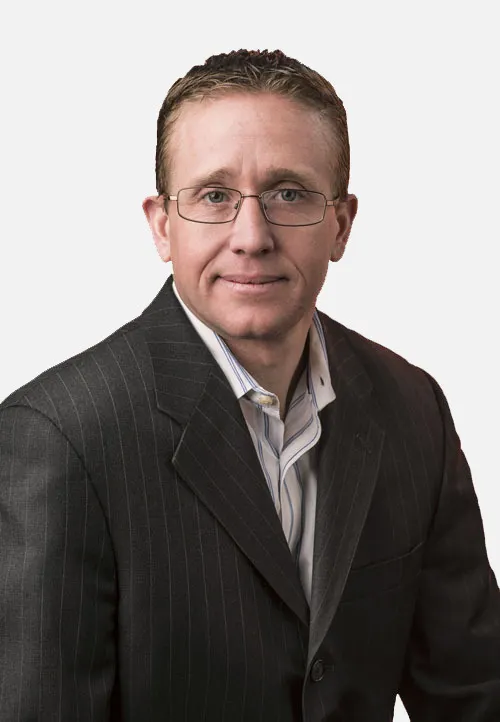
Shane Hostetter: Our Pathway to Thrive strategy isn’t solely about costs and turnaround efforts. Fundamentally Pathway to Thrive is about strengthening the company’s overall foundation — lowering our cost structure, improving how we operate, growing through core initiatives, and optimizing and strengthening our portfolio for long term success and performance through cycles.
Cost optimization is a clear priority across each business. We remain on track to deliver $250 million of cost reductions through Pathway to Thrive, and my role as CFO is ensuring we have the operating cadence, governance and financial discipline to turn the strategy into measurable results. You can see that discipline in how we’re approaching 2026: we reiterated full-year expectations for Adjusted EBITDA of $800–$900 million, representing year-over-year growth of approximately 10% at midpoint, and we’re focused on improving free cash flow conversion and reducing leverage as we execute the strategy.
CFO Dive: One concern that investors and analysts have about Chemours’ is the company’s environmental liabilities and potentially costly settlements related to its legacy PFAS, sometimes known as forever chemicals. Can you explain why you view the settlement the company reached last year with New Jersey as an important step forward for the company fiscally?
Shane Hostetter: Chemours has and continues to focus on advocating for science-based regulations and operating responsibly across our sites. We are committed to responsible manufacturing and have reduced fluorinated organic chemical process emissions by 76% against our goal to achieve a 99% or greater reduction by 2030. We report our progress annually in our sustainability report.
The agreement with New Jersey announced with DuPont and Corteva comprehensively resolves all pending environmental claims by the state, including PFAS-related claims, across four current and former operating sites and statewide PFAS claims. The settlement totals $875 million paid over 25 years with Chemours’ share approximately $250 million on a pre-tax net present value basis under our existing cost-sharing agreement.
Importantly, contingent on approval of the Judicial Consent Order, the purchase of $150 million Chemours’ rights to receive certain insurance proceeds related to PFAS claims by DuPont and Corteva, helps fund our share of these obligations and improves the financial profile of the settlement to approximately $85 million of obligations over 25 years with no payments needed in the first five years.
The New Jersey settlement is a meaningful step forward in our continued efforts to address the overall legacy PFAS and other environmental claims. Demonstrating a disciplined approach to resolving legacy matters over time, in a fiscally responsible way and in the best interest of our company, our shareholders and other stakeholders.
CFO Dive: While much has been discussed about companies hurt by the tariffs imposed in the last year or so, Chemours has benefited from them. Can you explain how parts of your business experienced tariffs as a tailwind and identify whether there were any areas in which tariffs have represented a headwind?
Shane Hostetter: Trade dynamics affect different parts of our portfolio in varying ways, and we’re not immune to the broader impact of tariffs across global markets. That said, in our Titanium Technologies business, Section 302 tariffs on titanium dioxide (TiO₂), that pre-date more recent policy developments, have helped create a fairer competitive environment for U.S. producers and opened volumes in markets where they’ve been implemented. These dynamics have limited imports from foreign production, given the economic disincentives that these tariffs create.
Outside the United States, there are other tariffs that continue to create more fair trade areas, which we believe are essential to support fairer competition and deter against countries that may attempt to compete on uneconomic pricing.
CFO Dive: The war in Iran has disrupted supply chains and the global flow of many raw materials. Can you cite a few steps you’ve taken to adjust to the volatility that we’ve seen in global markets since the start of the conflict in the Middle East in February?
Shane Hostetter: We’re managing volatility by staying close to suppliers and customers, actively managing raw material and logistics risks, and using flexible sourcing and operational planning to improve resilience. Also, where needed, we’ve found success in coordinating pricing actions to offset the overall inflationary environment that we are experiencing given current supply chain disruptions.
CFO Dive: You joined Chemours at a challenging time, in the wake of a leadership shakeup that came after an internal investigation found three executives who are no longer with the company had violated the company’s code of ethics by taking improper steps to meet cash-flow targets. Looking back on your nearly two years with the company, what steps have you taken as head of the finance department to enhance internal controls and do you feel the company's remediation efforts are sufficient to ensure compliance with ethics policies in the future?
Shane Hostetter: I’ve spent much of my career in the chemical industry, and what attracted me to Chemours was the opportunity to help move the business forward — with strong performance, strong controls, and a culture that earns trust. I joined Chemours at a point when strengthening controls and restoring trust were critical priorities, and I took that responsibility seriously.
By the close of 2024, we resolved all four material weaknesses in internal controls that had been identified, and we have continued to strengthen our control environment and governance practices. For me, this is about both systems and culture: maintaining strong processes, clear accountability, and a tone that reinforces that integrity is core to who we are and how we operate.
Working alongside our CEO Denise Dignam, my focus has been to keep the organization oriented toward creating value through disciplined execution of our strategy, and that starts with doing things the right way. As a leadership team, we are proud of the culture we’ve built — one that is aligned on our strategic direction and governed by compliance and ethical values.
CFO Dive: What project or change that you have initiated at Chemours are you most proud of?
Shane Hostetter: I’m most proud of pushing a mindset to challenge the status quo to create value. For instance, just because we’ve “always done it that way” doesn’t mean it’s the best way forward. Pushing a mindset of continuous improvement shows up every day through our Chemours Business System operating platform. Specifically, I continue to push the use of automation, process improvement, and, to extent where possible, using AI to take time out of processes so teams can focus on strategy. We have already made great strides in implementing AI in our day-to-day, and I’m very excited for the opportunities ahead in finance and our broader company.