Dive Brief:
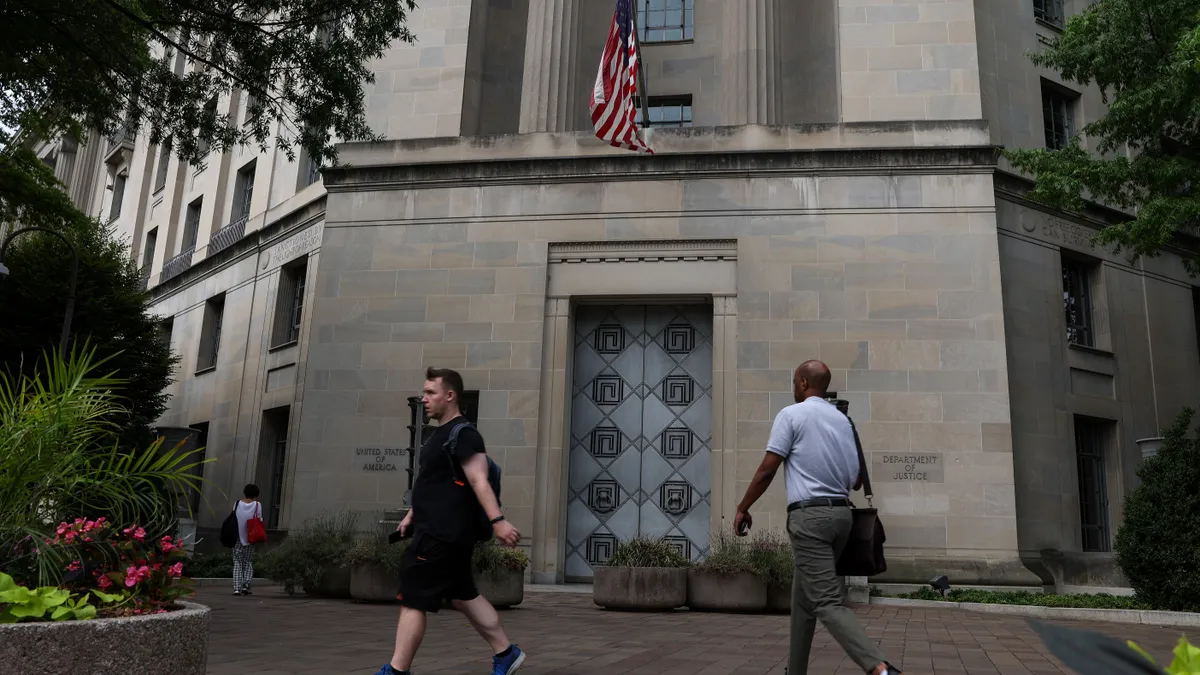
- The Justice Department is reviving a more targeted approach for reviewing mergers under the Hart-Scott-Rodino Act, a procedural change the agency says will reduce costs for companies while allowing investigators to more quickly identify transactions that warrant closer scrutiny.
- The Antitrust Division announced Thursday that it was streamling “second request” merger investigations — where the government demands more information on deals that raise potential competition concerns.
- “This Department of Justice is working to eliminate bureaucratic burdens while still preserving the integrity of Second Request investigations, which are aimed at protecting American consumers and affordability,” Associate Attorney General Stanley E. Woodward Jr. said in a press release. Among other benefits, the change will allow for quicker and more efficient review of proposed transactions, he said.
Dive Insight:
The department described the move as a return to a historical practice designed to reduce administrative burdens while preserving its ability to thoroughly investigate transactions that raise competitive concerns.
The announcement marks the newest step by the Trump administration to reshape merger enforcement by easing regulatory burdens for dealmakers.
“Moving away from the more aggressive posture of the Biden administration, the current administration has ushered in a more deal-friendly era,” according to a February analysis by global law firm Cooley. “Key differences include a commitment to regulatory speed for nonproblematic deals and a renewed willingness to consider structural remedies to resolve competitive concerns,” the report said.
Under the HSR Act, the DOJ or Federal Trade Commission may issue a second request when they determine additional information is needed to assess whether a proposed merger could inhibit competition. The process can take months, often requiring companies to produce large volumes of documents.
Historically, DOJ’s Antitrust Division used targeted second request probes to reduce administrative burden and focus government resources on the specific aspects of proposed transactions that raise competitive concerns, the department said.
In a targeted investigation, the division and the merging parties enter into a timing agreement in which they prioritize the submission of documents that could resolve the division’s questions prior to full compliance, according to the Thursday release.
“This return to historical practice is part of the Division’s commitment to reducing the burden and costs on merging parties without compromising the Division’s ability to thoroughly investigate transactions that raise potential competitive concerns,” the DOJ said, adding that it will continue to “require full compliance in circumstances in which broader information is necessary to reach an enforcement decision.”