You should go big or go home if you are going to wear a full suit to a Las Vegas fintech conference. That was the one fashion rule that seemed to hold true for the thousands of financial executives milling around the cavernous conference hall this week.
There was a breezy Califoria business casual vibe that dominated the attire donned by attendees of the “show” (Las Vegas speak for conference) that took place in the city once known for Elvis Presley-level glitz.
Think light beige or baby blue sports coats, button down shirts with open collars, and slacks and cognac brown shoes for men. The more casual attendees wore all white sneakers, a short sleeved polo shirt or T-shirt and slacks or jeans. Vests, often bearing Patagonia or fintech company brand names, were also popular alternatives to jackets for both men and women.
Intuit’s Mark Notarainni, who spoke on a panel, told CFO Dive that he was brought up to speed on the unspoken dress code before he arrived. “The PR team tells me what to wear,” he quipped during an interview. He followed their main advice: absolutely no tie.
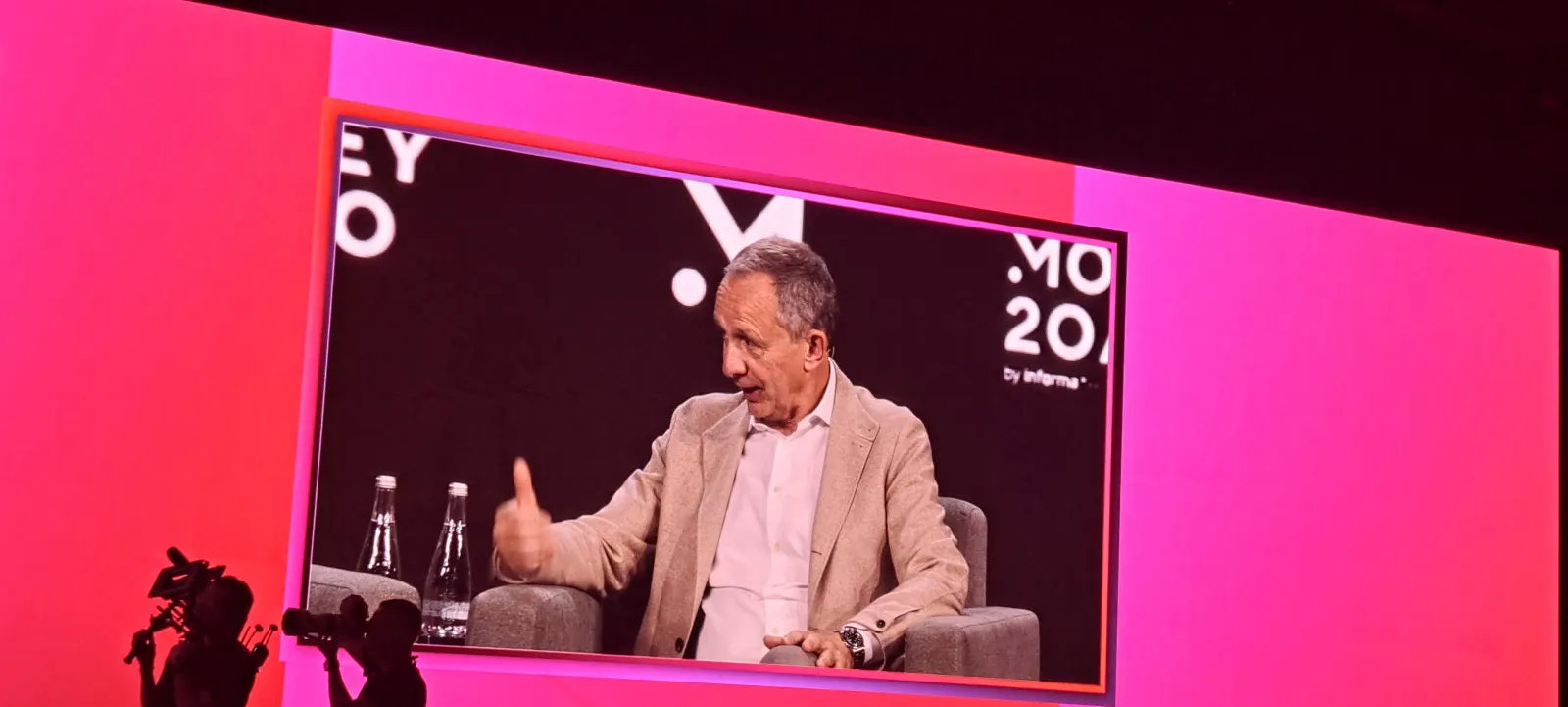
Throughout the four-day Money 20/20 gathering there wasn’t a lot of black to be seen, aside from Fiserv CEO Takis Georgakopoulos, who sported a black leather baseball-style jacket. More typical was the summery blazer paired with a white open-collared dress shirt and gray pants donned by PayPal Holdings CEO Enrique Lores.
“Fintech’s a lot of grays and browns and blues,” said Allen Osgood, founder of the New York-based Eisen, a compliance fintech startup, who said he was wearing sneaker-like brown accented Cole-Haan shoes for comfort reasons. “There’d be a lot more black at a New York conference.”
For some, comfort was another theme given the long days and how much walking was required to get to each meetup or session. Amber Ketchum, a director at Equifax from Detroit, chose sparkly red sneakers which she said helped her “run the gauntlet” and offered the added benefit of making it easy for new business colleagues to find and identify her. “I tell them to look for the red sneakers,” she said.

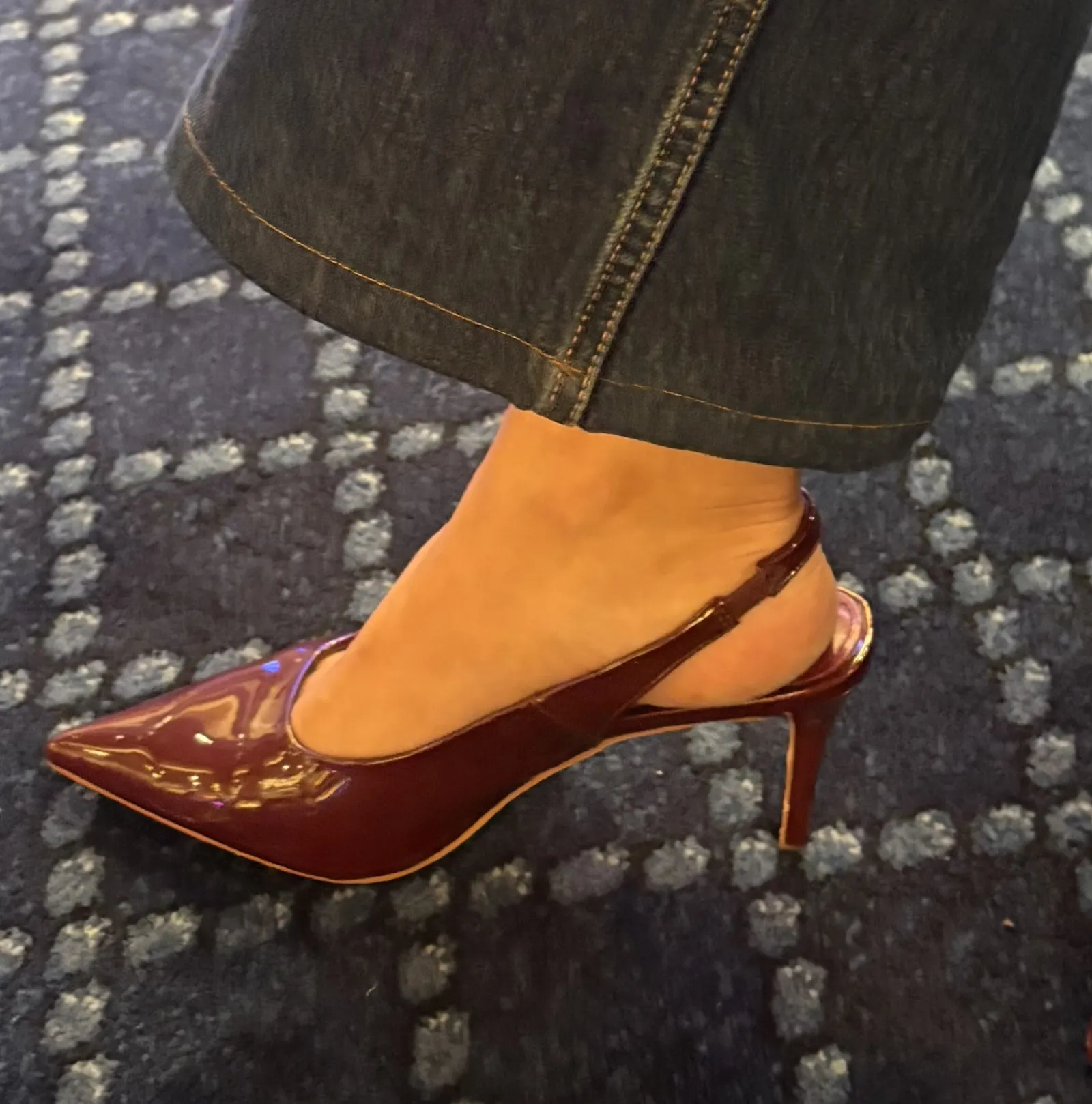
One attendee who would like to see the fintech industry giving more attention to style is Nicole Casperson, a podcaster and author of the book “Fintech feminists.” On Wednesday she wore an oversized men’s suit jacket, wide-legged jeans and deep red patent leather heels. The day earlier she said she was running around in a purple suit. In her work, she said she seeks to flip what she sees as a fintech stereotype that taking care of your appearance is vain or not worth the time for busy executives.
“Taking care of yourself and showcasing your appearance in a way that is reflective of you and your personality but is also very polished is actually a way to show you care about others,” Casperson told CFO Dive, noting it is especially if you’re a panel speaker. When you have a speaking engagement it’s something even more, she said. “That is a show, that is a performance. It’s basically like business Broadway.”
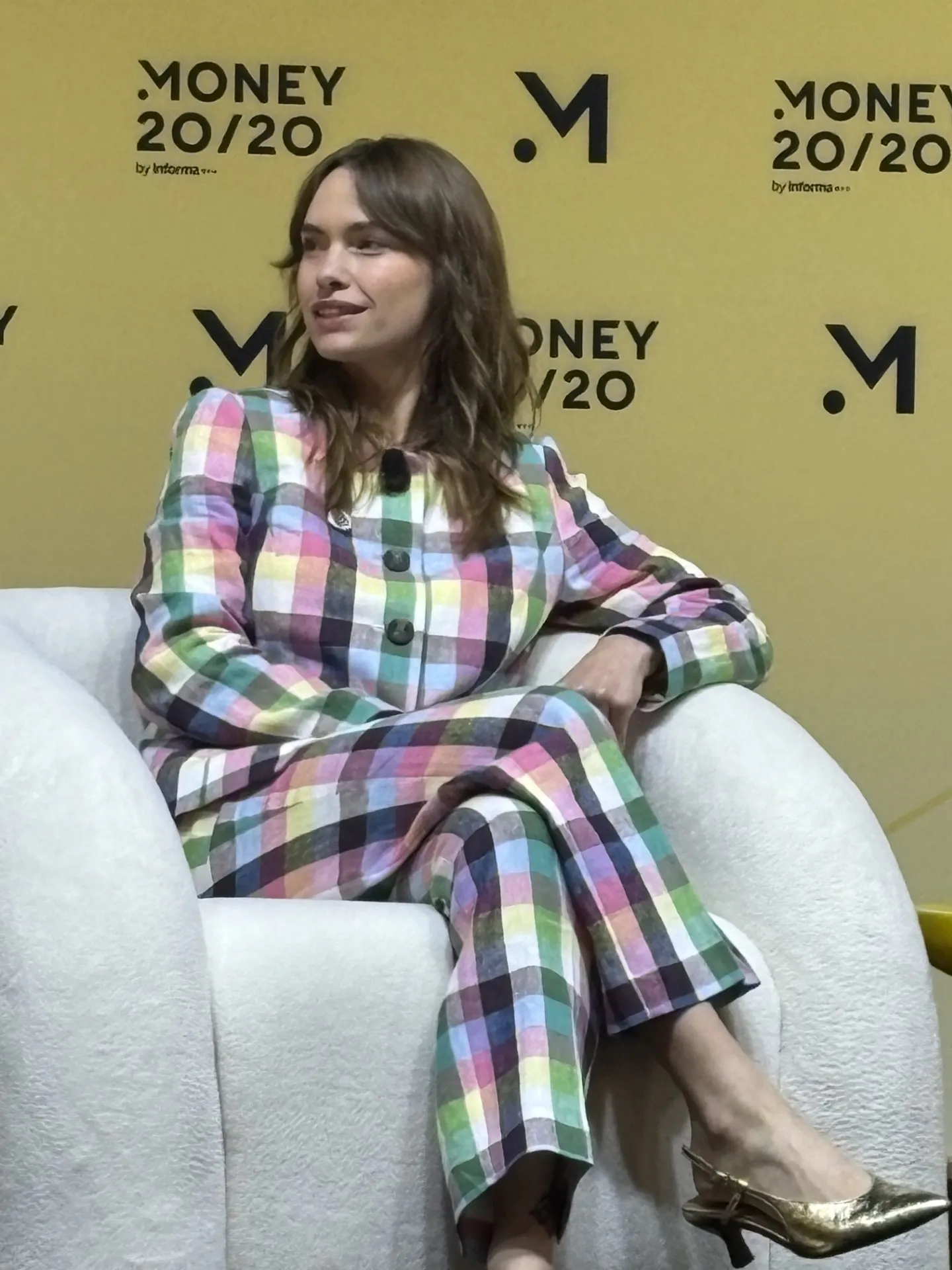
Arguably, San Francisco-based Plaid’s Hannah Hughes was one of the standouts when it came to the go-big suiting idea.
Joining a panel, she swept onto one of the stages Thursday wearing a light or madras-like plaid pantsuit. It could have been read as a costume given her company, but it came off as fresh. Her beach-ready hair and gold slingback heels suggested a person with an easy confidence whose dressing choices were clearly her decision alone.
 F
Among the men, Antonio Tornatore, chief digital transformation officer for Italian sports car manufacturer Ferrari, cut a similarly stylish albeit more subdued suit look. He wore a dark blue jacket and matching pants, a white dress shirt unbuttoned at the collar, with black Oxford style tie shoes.
Other suit wearers went bold via monochromatic colors. At least two women wore summer-white styles, one a bright white linen blazer with matching wide-leg pants, and a second woman was dressed in a classically tailored crepe suit in a cream color.
Still others like David Kait opted for clothes that were clearly a cut above the basic business casual. Born and raised in Greece, Kait now works for a large technology company in California. He was wearing a crisp grey and white pin-striped dress shirt, dark gray slacks and lighter gray blazer and black shoes. He sometimes wears suits but decided for a more low key look since he wasn’t a speaker.
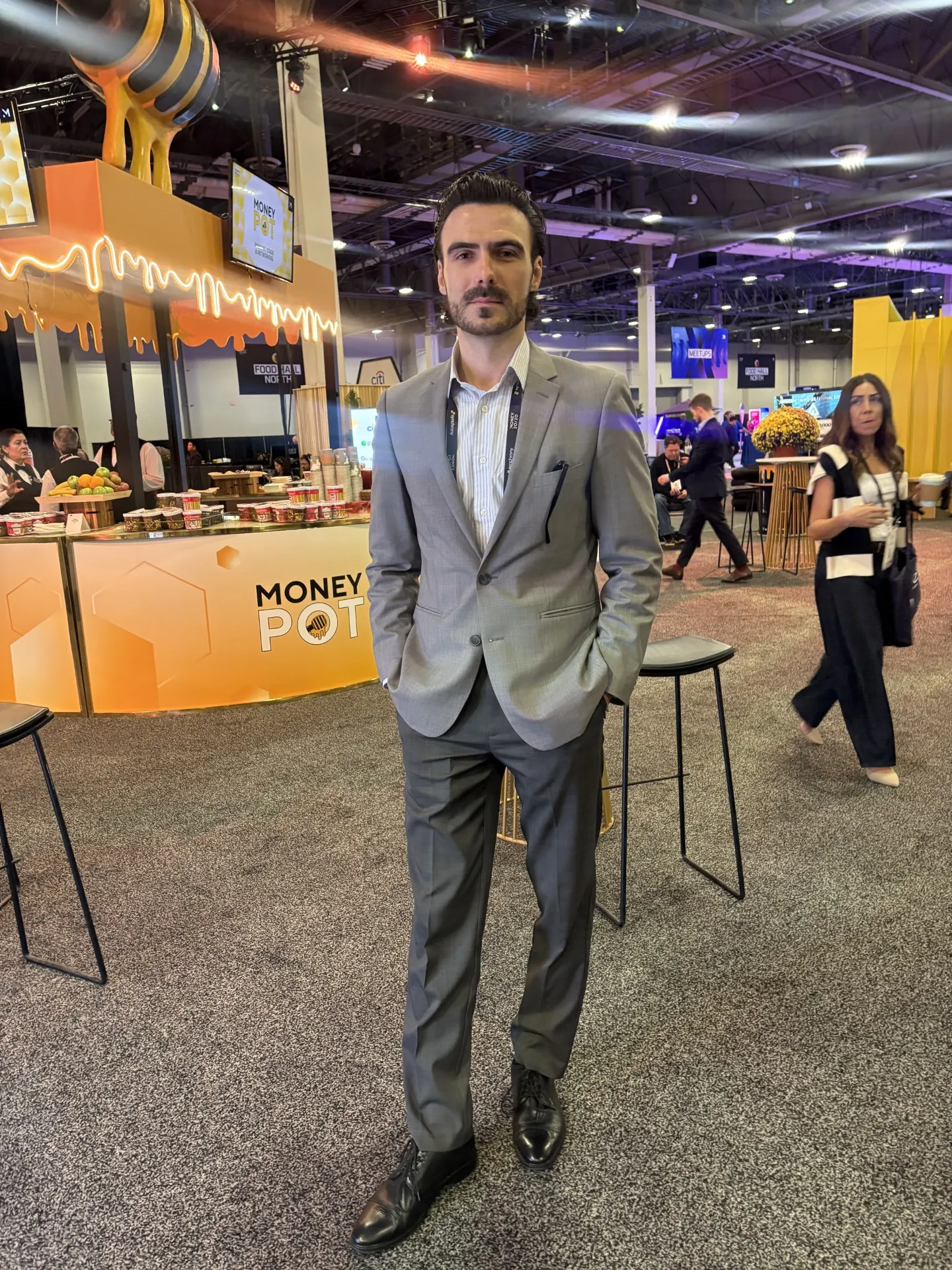
“Dress is a reflection of what you want to project to the world, how we want to feel, how we want to be perceived and for me it’s been something I’ve been interested in for many many years, intentionally picking the pieces that work together,” he said in an interview, noting that the attitude was engrained when his clothing was inspected daily earlier when he worked as a police officer. “It’s not so much about making a statement but having an elegant presentation.”
The Money20/20 conference is owned by CFO Dive’s parent, Informa.