Editor’s note: Jonathan Hatzor, CEO of Parametrix, which provides data center insurance, works with lenders and investors to analyze data center financing risk. Views are the author’s own.
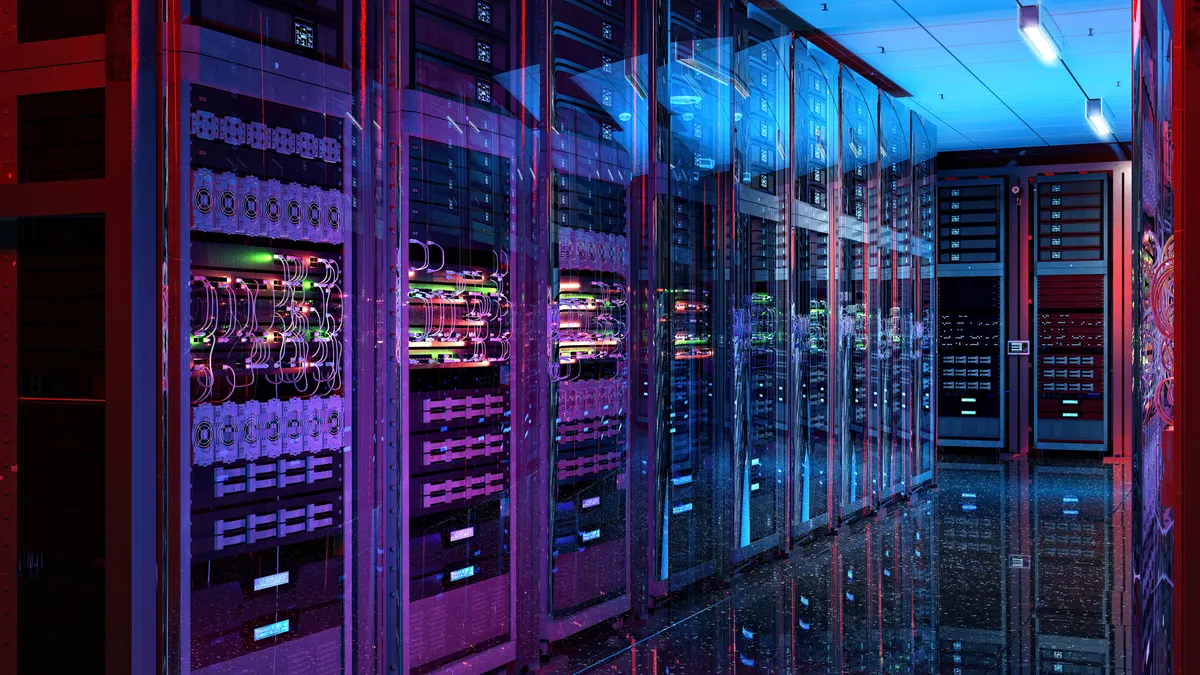
The next era of artificial intelligence rests on a physical backbone: a vast, capital-intensive build-out of data centers and power infrastructure requiring trillions of dollars in investments over the next five years. Debt markets are mobilizing to meet the insatiable demand, from investment-grade private placements to complex project finance structures.
When it comes to financing digital infrastructure, there is a growing underwriting gap. Data centers are still widely financed as though they are traditional real estate assets; buildings with secured long-term leases, strong counterparties and predictable rental streams. Lenders take comfort in creditworthy tenants, secured contracts and tangible collateral.
That framework is dangerously outdated. In the AI era, lenders are not just financing buildings, but they are financing high-performance compute factories. The value of these assets and the serviceability of the loans depend not only on tenant credit quality, but on uninterrupted operational performance. The stability of the capital stack is now impacted by power certainty, cooling resilience and the ability to maintain strict uptime thresholds and other performance criteria as defined in service-level agreements between tenants and asset owners.
This shift has introduced operational volatility into an asset class previously prized for its predictability. Its operations will determine credit performance.
Power is the new credit variable
In traditional real estate, the tenant often manages their own operations and bears any related risks, while the asset owner simply provides the space. This allowed financing models to differentiate between a property company or “PropCo” that owns the property, and an operating company or “OpCo” that runs the business within it.
This does not apply in colocation and hyperscale facilities, where the owner is responsible for uptime, power continuity and technical performance. This fundamental difference means that the lender is underwriting a complex operating business, with a single technical failure directly impairing collateral value.
The most immediate constraint is power. Grid interconnection delays, transmission bottlenecks and thermal constraints are forcing owners toward “behind-the-meter” generation and hybrid energy solutions. These structures introduce additional risks relating to fuel, regulation and execution, all variables that sit far outside traditional real estate analysis.
If the power solution is not firm, the facility cannot operate, and the revenue stream underpinning the debt is tarnished. Effectively, the resilience of energy architecture is now a major underwriting consideration.
The deal breaker: SLA and termination risk
Perhaps the most overlooked risk in data center lending is the dangerous impact of the service-level-agreement. A brief outage is no longer an operational inconvenience. It is a financial trigger with cascading effects on the balance sheet.
Modern hyperscale and colocation leases include strict availability thresholds and performance metrics, where a breach of just 26 seconds can activate severe penalties. These penalties behave like uncapped, variable operating expenses. Supposedly fixed rental income is now transformed into uncapped losses, directly eroding net operating income and the debt service coverage ratios.
Even more alarming is the termination risk. In the event of chronic performance failures, many hyperscale contracts allow the tenant to terminate the lease entirely. This results in a lender’s worst nightmare: a borrower with a highly specialized, purpose-built facility, a massive debt load and zero revenue to service it.
Concentration and obsolescence
Compounding these operational risks are new market dynamics specific to AI. Unlike traditional facilities with diverse tenant rosters, data centers face concentration risk as they often house a single massive hyperscale tenant, relying solely on one revenue source.
Lenders also face the risk of technological obsolescence. Data centers are increasingly optimized for specific graphics processing unit generations, which depreciate over five years. If the facility’s design becomes obsolete alongside the GPUs, the refinancing risk at the end of the loan skyrockets.
Bridging the gap with financial engineering
To unlock the capital required for AI infrastructure, financial engineering must evolve alongside technical complexity.
Lenders and institutional investors ultimately require predictability: assets capable of sustaining stable cash flows through operational stress. Where performance risk cannot be eliminated, it must be quantified and, where appropriate, transferred.
Structured risk transfer mechanisms, including SLA insurance, convert operational volatility into defined financial exposure. By mitigating exposure to performance-related penalties or revenue disruption, owners can stabilize NOI and maintain debt service resilience, even in periods of disruption. This restores underwriting clarity for lenders.
As trillions of dollars flow into digital infrastructure, the institutions that recognize and structure for the distinction between real estate and operating infrastructure will be best positioned to finance the AI economy sustainably.