Dive Brief:
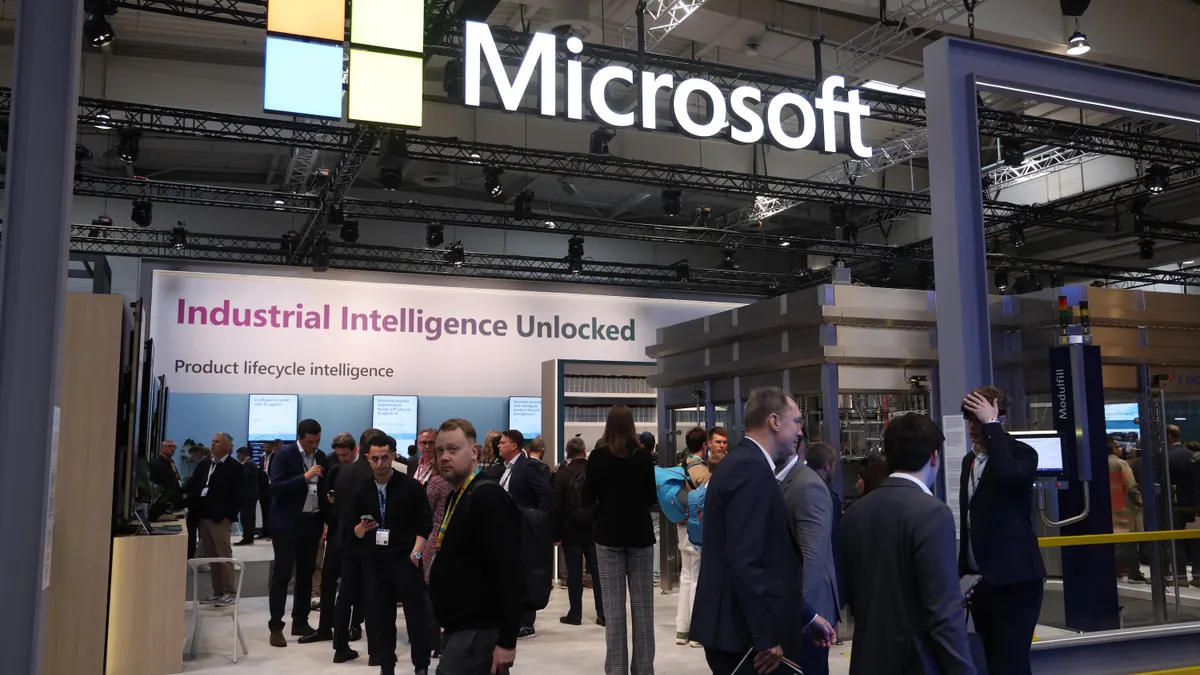
- Microsoft is keeping its calendar-year 2026 capital expenditure expectations largely in tact despite surging demand for cloud and artificial intelligence services, CFO Amy Hood said during the company’s latest earnings call.
- An accounting change adjusted the software giant’s capex expectation to about $175 billion, down from a previously estimated $190 billion. Microsoft is spreading the cost of its data centers and office buildings over a longer period for accounting purposes, a change Hood said is expected to provide only “a minimal benefit” to the company’s fiscal 2027 operating income.
- “The greater impact is on capital expenditures, as more of our future data center leases will shift from finance leases to operating leases as a result of this update,” she said during the Wednesday call. “Finance leases are included in capital expenditures, while operating leases are not.”
Dive Insight:
Microsoft posted $90 billion in total revenues for its fiscal 2026 fourth quarter ended June 30, up 18% year over year, while full-year revenue reached $331.8 billion. Cloud revenue totaled $59.3 billion in the quarter, up 27%, as Azure revenue increased 43% year over year.
During the Wednesday call, CEO Satya Nadella said the company added 31 new data centers across five continents during the quarter, bringing the total to 88 this year “as we expand our footprint in response to accelerating demand.”
“We're also bringing capacity online faster than ever,” he added.
Effective at the start of fiscal 2027, Microsoft is extending the estimated “useful life” of its data centers and office buildings from 15 to 25 years, Hood said, adding the change reflects “our operating history and expected use of these assets.”
“Outside of this useful life impact, our calendar year 2026 CapEx investment expectations remain unchanged,” she said.
The shift will provide a “minimal boost” to margins, Morningstar Senior Equity Analyst Dan Romanoff said in a Thursday client’s note.
“In the future, some leases will shift from finance to operating as a result of this, which should drive capex for calendar 2026 to $175 billion, from $190 billion previously,” Romanoff said. “We do not view this as controversial. Microsoft seemed to thread the needle on capex, as capex acceleration is a double-edged sword for investors. Invest too much, and investors question future returns, but invest too little, and they question the longer-term competitive position.”
Microsoft’s stock surged 15.5% on Thursday, the largest single-day market-value increase in stock market history, according to Yahoo Finance.
Other big tech companies have continued to ramp up capex as investors increasingly scrutinize whether surging AI infrastructure spending will generate meaningful returns.
A week ago, Alphabet’s shares fell about 7% after the Google parent raised its 2026 capital expenditure outlook to a range of $195 billion to $205 billion, up from its previous forecast of $180 billion to $190 billion, as it accelerates investment in AI infrastructure. The sell-off came despite strong AI-related demand, with Google Cloud revenue rising 82% year over year to $24.8 billion.
“Microsoft is investing aggressively but has not changed its capex plans following Alphabet’s announcement last week,” Romanoff said.