Dive Brief:
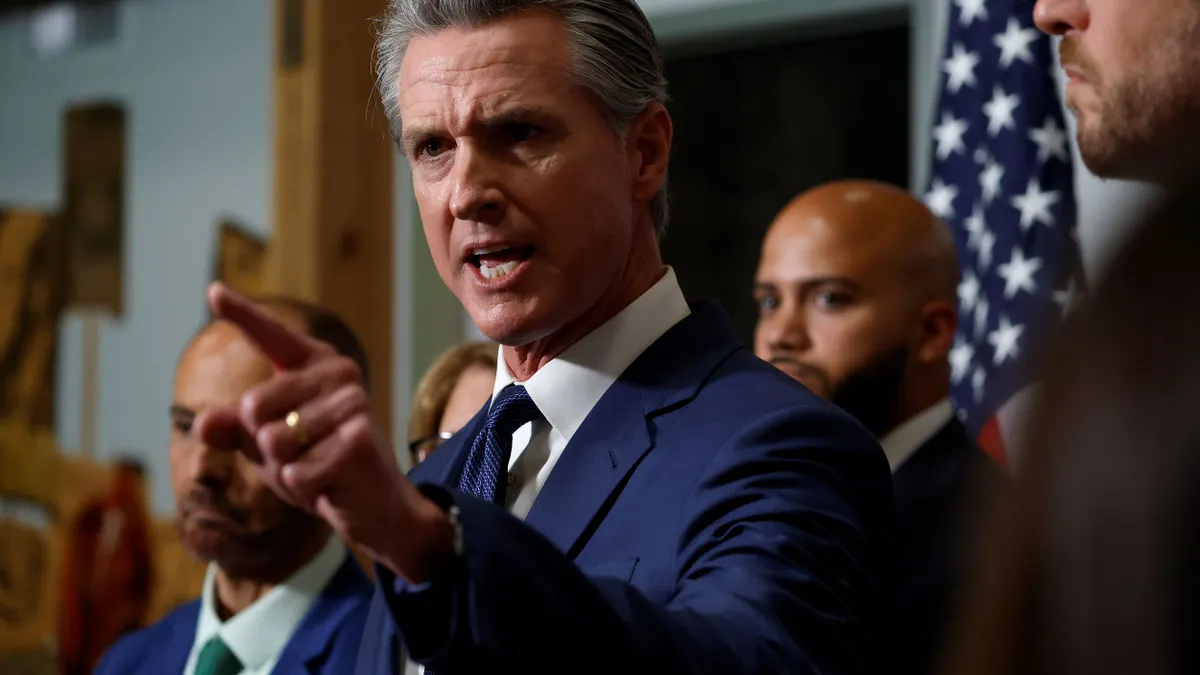
- As artificial intelligence rapidly reshapes the global economy, California Gov. Gavin Newsom is looking to position his state as an early mover in addressing potential labor-market risks of the technology.
- A May 21 executive order signed by Newsom directs California state agencies to track how AI is affecting the workforce and consider a range of potential policy approaches, including severance and other forms of compensation for displaced workers.
- “This moment demands that we reimagine the entire system — how we work, how we govern, how we prepare people for the future — and that work is starting right here in the Golden State,” Newsom said in a press release.
Dive Insight:
The move comes amid broadening concern and backlash against AI, including a warning from Pope Leo about AI risks and pro-AI commencement speakers around the U.S. drawing boos and jeering.
California plays a unique role in the pivotal AI moment. The state is a leading hub for AI development, while also being particularly exposed to shifts in hiring and job stability driven by automation, given its concentration of major technology companies that have recently announced layoffs.
Meta announced last week that it would be slashing 10% of its workforce, or about 8,000 employees, as it accelerates AI efforts, according to a CNBC report.
Meanwhile, Cisco Systems said earlier this month that it planned to cut nearly 4,000 jobs — representing less than 5% of its workforce — in a broad restructuring aimed at sharpening its focus on AI and other high-growth areas.
Newsom’s order is part of a growing wave of AI workforce initiatives across the country. Earlier this year, New York Gov. Kathy Hochul launched a commission to study AI’s impact on workers and economic mobility, while Utah established a task force focused on workforce readiness and responsible AI deployment.
The California order sets in motion a series of government reviews that ultimately could inform future legislative or regulatory inittiatives, according to an analysis by Fisher Phillips, a law firm speclializing in employment matters.
“The Governor is trying to lay the groundwork for what could eventually become significant new employer mandates,” the report said. “Whether those mandates ever materialize, and what form they take, will depend on the recommendations that emerge from these government reviews, and what state lawmakers do with them.”
The order calls for the California’s Labor and Workforce Development Agency to provide the governor with a review of emerging academic research on the workforce impacts of AI, including potential disproportionate effects on demographic groups, and early warning signs on future labor disruptions.
The agency was also ordered to supply recommendations on revisions and updates to the California Worker Adjustment and Retraining Notification Act to address early warning signs of disruptions by AI, as well as conduct a review of policies and practices that provide displaced workers with a “safety net,” including severance and other forms of compensation.
The Employment Development Department was directed to launch a dashboard within 90 days showing AI’s impacts on employment across various sectors using unemployment insurance data.
“Today’s order adds to California’s comprehensive approach in creating commonsense guardrails balanced with opportunities to advance innovation in this growing sector,” Newsom’s office said in its release.