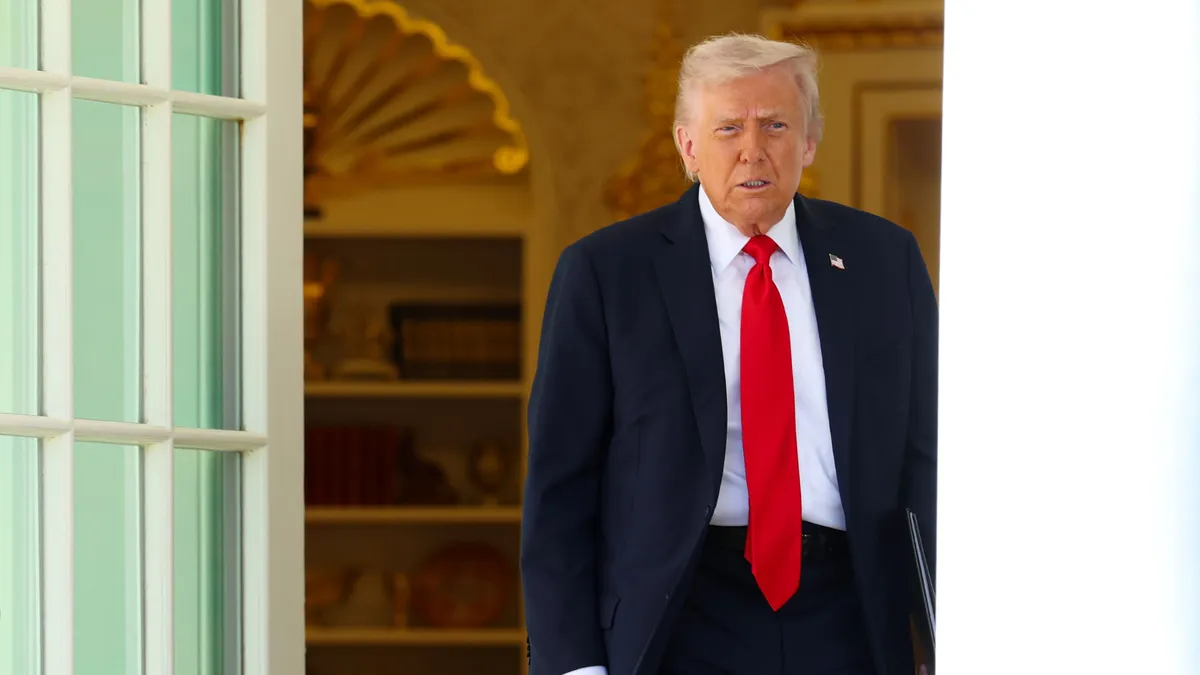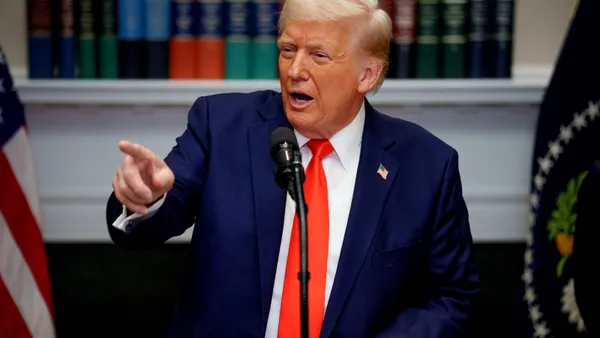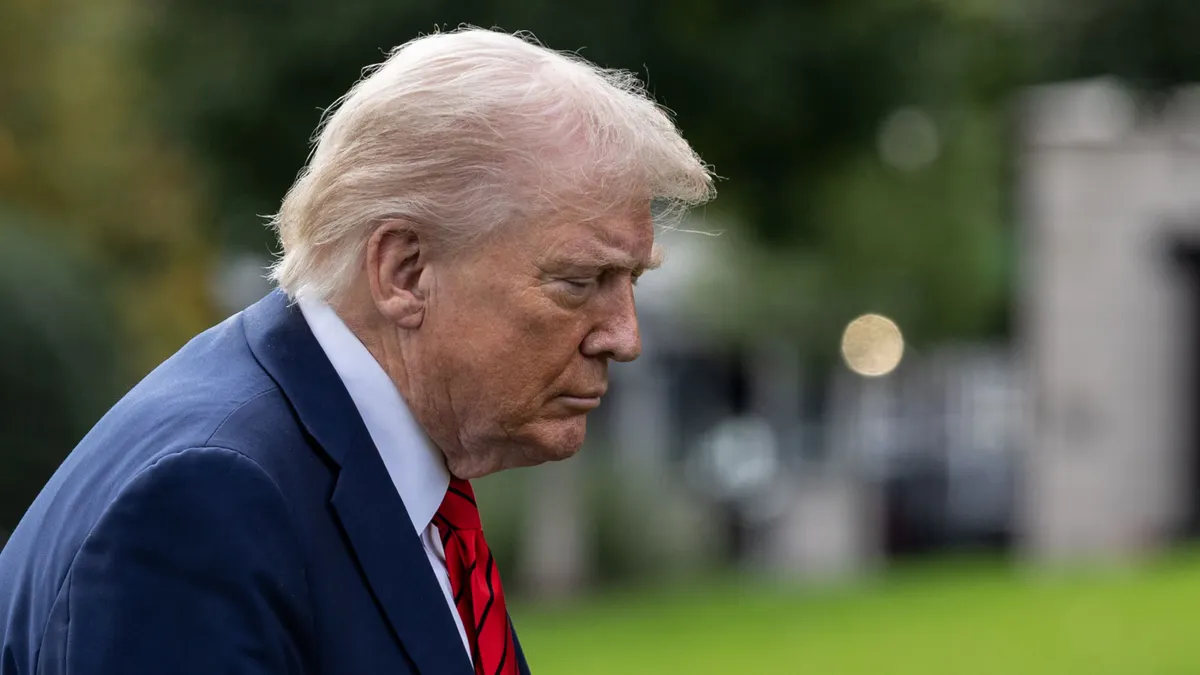
President Donald Trump on Monday indicated that he will be signing an executive order this week aimed at promoting a national, “one-rule” approach to regulating artificial intelligence technologies.
The news comes as U.S. companies face a growing patchwork of AI regulations at the state level.
“You can’t expect a company to get 50 Approvals every time they want to do something,” Trump said in a Truth Social post. “THAT WILL NEVER WORK!”
The exact details of the order were not immediately clear. The White House declined to comment beyond Trump’s post.
In a CNBC interview on Monday, National Economic Council Director Kevin Hassett said the order “is something that’s going to really help the AI companies understand what the rules of the game are.”
Florida Gov. Ron DeSantis (R) criticized the plan in a post on X, saying an executive order can’t preempt state legislative action.
“Congress could, theoretically, preempt states through legislation,” he said. “I doubt Congress has the votes to pass this because it is so unpopular with the public.”
Industry groups unsuccessfully lobbied Congress over the summer to use the Big Beautiful Bill Act as a vehicle for preempting state AI laws. The effort resulted in a bipartisan backlash across states.
The debate has been heating up again in recent weeks, dividing congressional Republicans.
House Majority Leader Steve Scalise (R-La.) said last week that GOP leadership had abandoned a plan to insert language preempting state AI laws into the must-pass National Defense Authorization Act, resisting pressure from the White House and tech industry groups, according to Politico.
“After yet again failing to convince Congress to pass its extreme proposal to block state AI regulation, Big Tech is turning to the politician it knows is open for business: Donald Trump,” U.S. Sen. Edward Markey (D-Mass.) said in a Monday press release.
“Trump’s plan to issue an Executive Order attempting to block state AI regulation would be an early Christmas present for his CEO billionaire buddies,” he said. Such a move, the senator added, would be “irresponsible, shortsighted, and an assault on states’ ability to safeguard their constituents.”
A Trump administration AI action plan released in July called for steps such as removing “bureaucratic red tape” at both the federal and state levels that could stifle the nascent market.
Last month, the White House put on hold a draft executive order that would have tasked Attorney General Pam Bondi with establishing an AI litigation task force focused on challenging state AI laws, “including on grounds that such laws unconstitutionally regulate interstate commerce, are preempted by existing federal regulations, or are otherwise unlawful,” according to Reuters.
It would also have directed the Department of Commerce to review state laws and issue guidelines that would withhold broadband funding in some cases, Reuters reported.