Dive Brief:
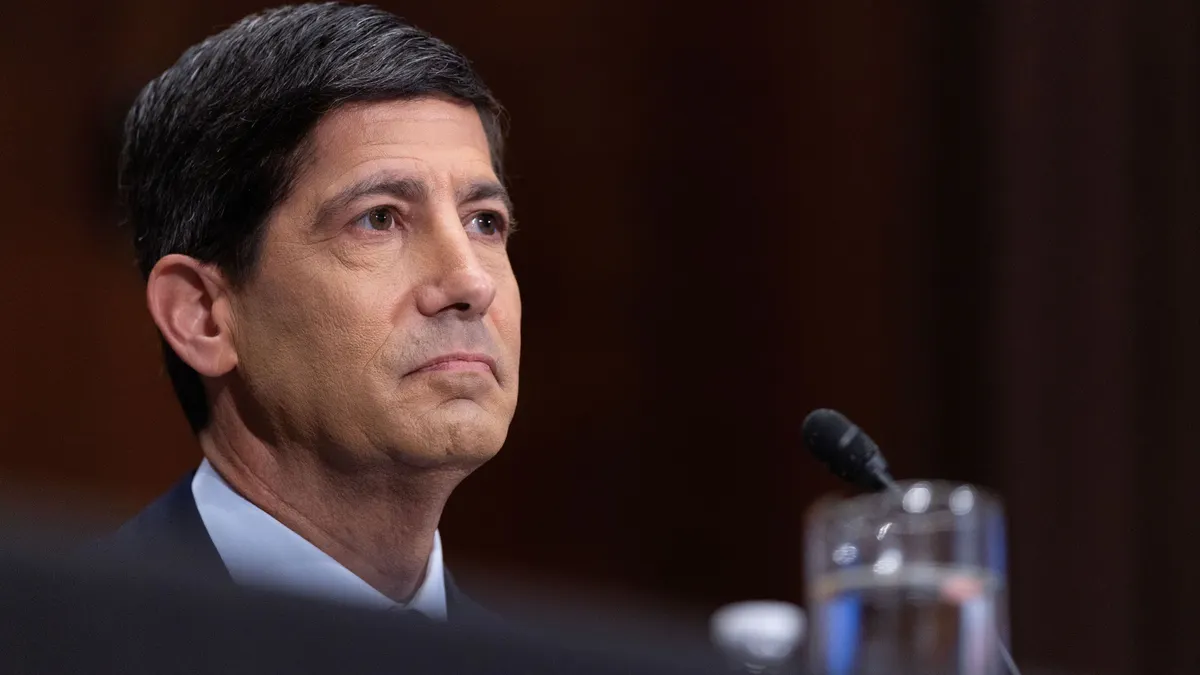
- Federal Reserve Chairman Kevin Warsh said Monday that the central bank is studying whether artificial intelligence will boost productivity and economic growth or fall short of expectations and trigger a downturn in equities, economic growth and employment.
- Unlike other transformative technologies, AI “could supercharge idea generation,” spurring economic growth far exceeding the long-run average and creating gains “shared broadly across labor and owners of capital,” he said in a speech.
- Or, “after significant capital investment and stock market gains, expected returns could turn down and equity valuations could fall, leading to an economic slowdown and a more notable rise in unemployment,” Warsh said.
Dive Insight:
Warsh spoke three days after the central bank said in a report on financial stability that a survey last month showed that 87% of financial market executives cited AI as a top risk compared with 50% of respondents during the first half of this year.
Share prices for AI companies may prove too high and disappointing earnings could trigger a stock market correction, the Fed said, citing comments by respondents to the Fed survey.
Or, complex AI-related financing may destabilize financial markets and the broader economy, the Fed said, citing the views of executives at broker-dealers, banks, investment funds and advisory firms.
AI may also be the weapon for a sophisticated and disruptive cyberattack, acting either on its own or at the hands of “malicious state actors,” the respondents said, according to the central bank.
“Will adversaries race to deploy SI, intending to do harm to our economy?” Warsh asked, referring to “super intelligence,’ a synonym for AI. He did not mention monetary policy or borrowing costs.
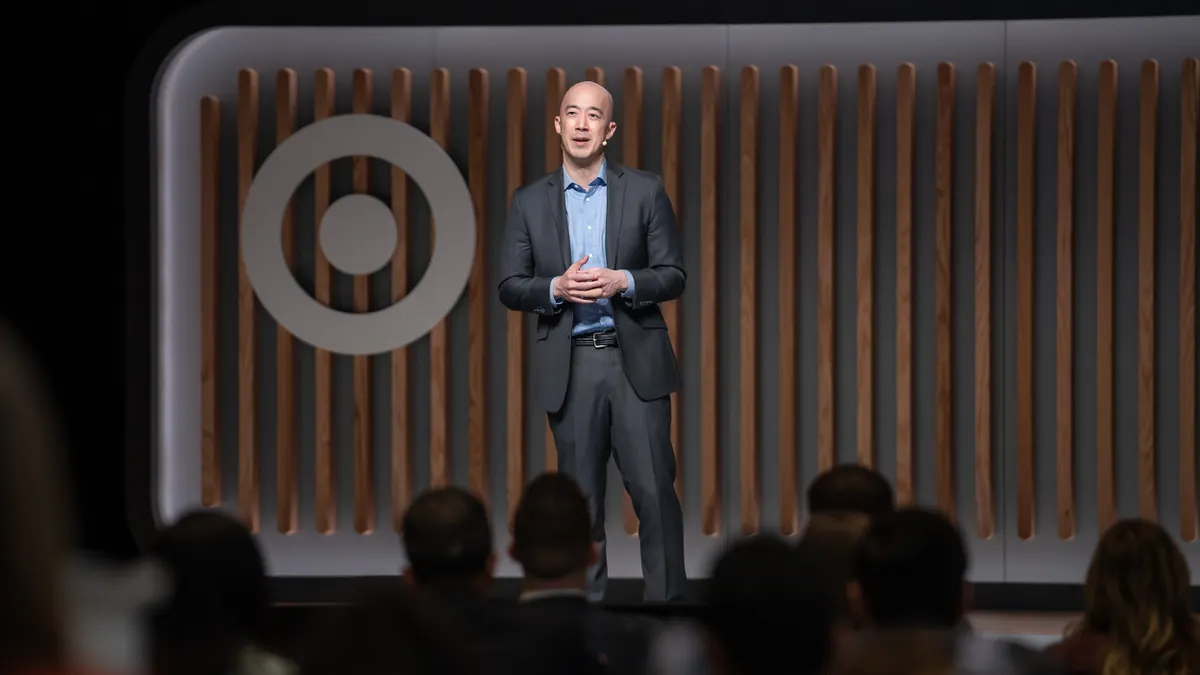
Warsh’s colleague, Fed Vice Chair Philip Jefferson, painted a more optimistic view of the impact of AI, focusing on productivity.
“There is a growing body of evidence that the new technology is lifting efficiency directly and substantially for some specific tasks, particularly where it can most readily substitute for humans,” Jefferson said in a speech Friday.
For example, researchers in a study published last year said that generative AI tools helped customer support employees resolve problems, Jefferson said.
More broadly, labor productivity growth averaged 2.2% between 2020 and 2025 compared with just 1.5% average growth during the prior business cycle, Jefferson said.
Productivity growth has “moved up in recent years, but it's too early to say what role AI played in that development,” he said.
The “surge in productivity began before the debut of popular AI chatbots in 2022 and likely reflects a variety of factors, including a pickup in new business formation,” Jefferson said.
“Some surveys that attempt to measure causality more directly have found only modest effects” from AI adoption, he said.
For example, researchers in a recent study surveyed senior managers and estimated that AI has boosted sales-per-employee by just 0.5% during the past three years, Jefferson said.
“All told, my judgement is that the evidence so far appears consistent with a contribution to aggregate productivity that is limited, but with the potential to grow quite substantially, broadly in line with historical episodes of technological breakthroughs,” according to Jefferson.
“That said, the magnitude and timing of forthcoming productivity gains remain highly uncertain,” Jefferson said.