Dive Brief:
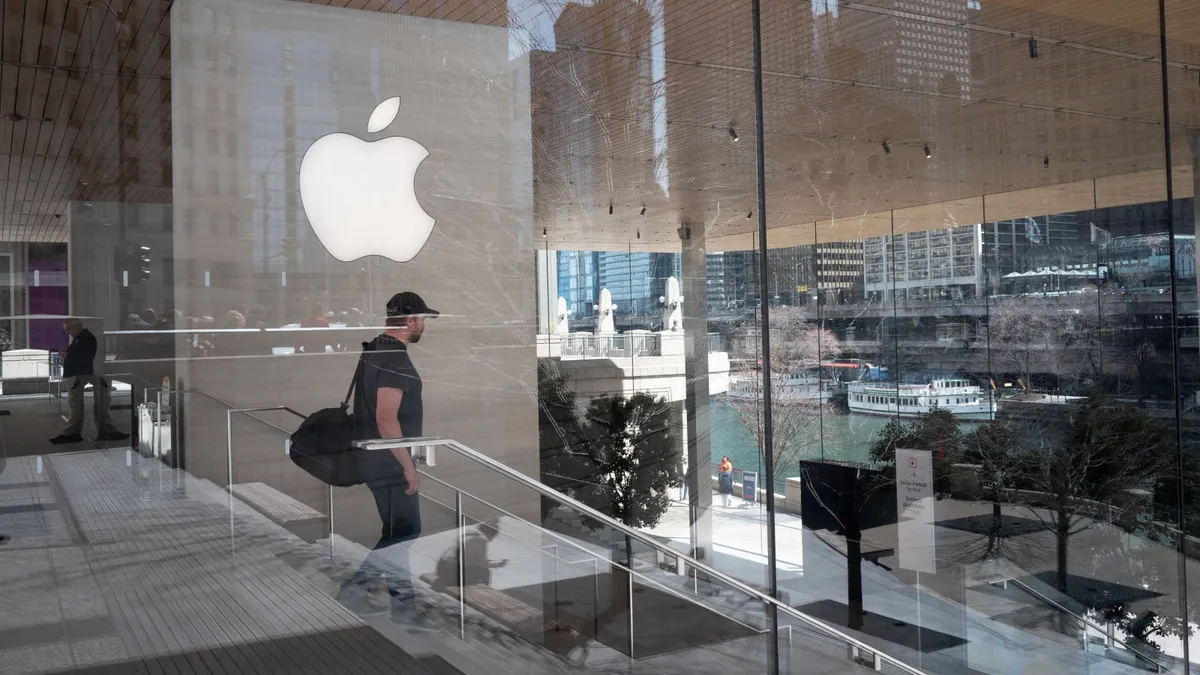
- Apple reduced its payments for property, plant and equipment — a measure of capital expenditures — by 29% in fiscal 2026 even as it increased research and development spending, according to earnings results released Monday.
- The iPhone maker's research and development expenses rose 32% to $45.8 billion in fiscal 2026, as the company boosts its AI investments.
- “We continue to significantly increase our overall investments in AI while continuing to invest in the product roadmap,” Apple CFO Kevan Parekh said during a Monday earnings call.
Dive Insight:
The R&D surge comes as Apple expands its AI capabilities. In September, the company rolled out a revamped, AI-powered Siri designed to draw on information in users' messages, emails and other personal data, understand what is on their screens and take actions across apps.
In June, Apple said it was expanding its Private Cloud Compute system, which processes complex AI requests on remote servers, to Google's cloud infrastructure. The company said it was using NVIDIA chips to handle more demanding AI tasks while maintaining Apple privacy and security protections.
Despite higher R&D spending, Apple reported $9 billion in payments for property, plant and equipment in fiscal 2026, down from $12.7 billion a year earlier.
The decline contrasts with the rising AI infrastructure spending of some of Apple’s big tech peers. Amazon's and Alphabet's capital expenditures rose 122% and 114%, respectively, in their latest reported quarters, to $75.9 billion and $51.4 billion.
Apple's “tepid approach to AI infrastructure spending has helped preserve cash flow, and strategic partnerships could allow Apple to strengthen its AI capabilities without taking on the same financial risks as its peers,” eMarketer analyst Jacob Bourne said in an emailed comment.
Apple’s R&D spending was relatively flat sequentially, at about $11.7 billion in the fourth quarter, compared with roughly the same amount in the fiscal third quarter. Overall operating expenses were also relatively flat, at $19.2 billion in the fourth quarter, compared with $19.1 billion in the third quarter.
Parekh said operating expenses are expected to grow 11% to 13% year over year in the fiscal first quarter, which ends in December. The increase will be driven by continued R&D investments, particularly in AI, he said. The forecast follows faster growth in the fiscal year ended in September, which saw operating expenses rise 22% to $75.5 billion.