Dive Brief:
- Consumer sentiment this month sagged to a record low in data originating in 1978 as the Iran war triggered a surge in the price of gasoline, the University of Michigan said Friday, describing survey results.
- The university’s consumer sentiment index fell to 49.8 from 53.3 in March, with the mood among households dimming regardless of political party, income, age and education, Surveys of Consumers Director Joanne Hsu said. Compared with March, expectations for inflation in 12 months jumped 0.9 percentage point to 4.7%.
- “The Iran conflict appears to influence consumer views primarily through shocks to gasoline and potentially other prices,” Hsu said in a statement. “Military and diplomatic developments that do not lift supply constraints or lower energy prices are unlikely to buoy consumers.”
Dive Insight:
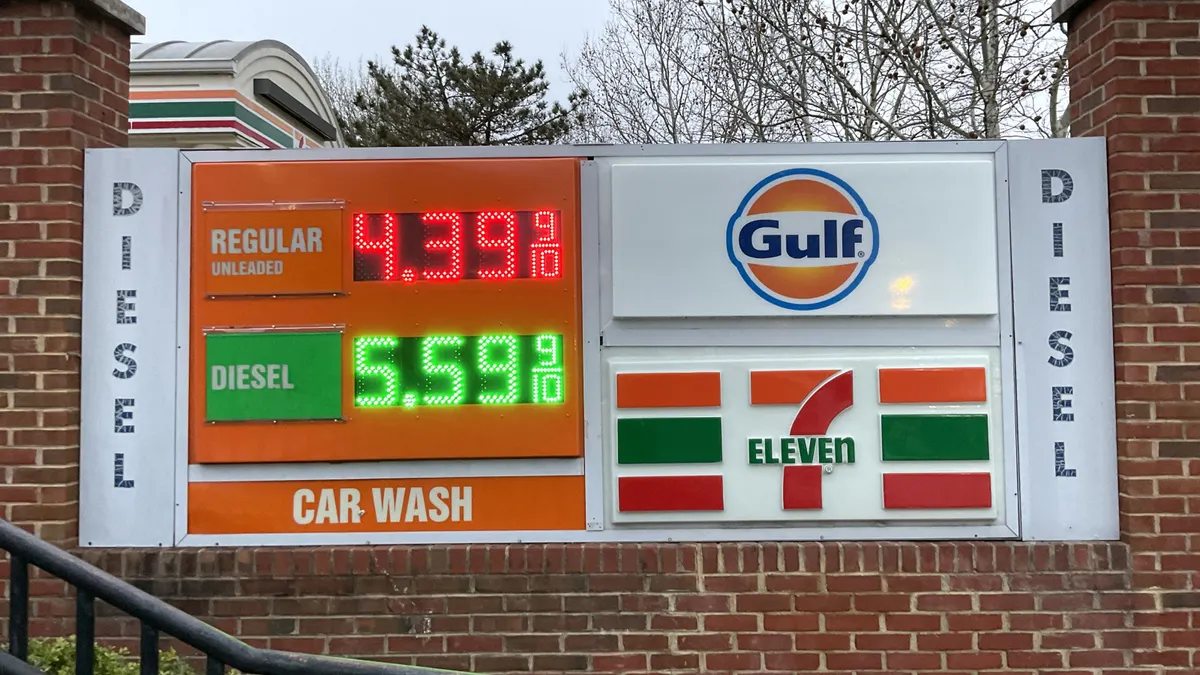
The average price for a gallon of gasoline has surged about 36% since U.S. and Israeli warplanes began strikes on Iran — from $2.98 to $4.01 on Friday, according to AAA.
“Americans are tired of high prices and the latest surge to over $4 gas and $5.50 diesel has cratered confidence and heightened affordability concerns,” Heather Long, chief economist at Navy Federal Credit Union, said in a statement.
“More pain will come as higher transportation costs are passed along for food, appliances, toys and every other item that travels on a ship, car or plane,” Long said. “Sentiment won’t improve until the Strait of Hormuz is open and there is a permanent end to the conflict.”
While fueling inflation in goods prices among manufacturers to a 10-month high, the Iran war has also slowed output growth to the weakest three-month pace since the start of 2024, S&P Global said Thursday in a report on its purchasing managers index for services and manufacturing.
The sudden surge in gasoline prices pushed up retail sales 1.7% last month after a 0.7% increase in February, the Census Bureau reported on Tuesday. Excluding outlays for gas, retail sales rose 0.6% last month.
Consumer expectations for inflation over the long term increased this month to 3.5% — the highest level since October 2025 — after ranging between 3.2% and 3.3% during the prior four months, Hsu said.
The 1.2 percentage point gap between consumers’ one-year and long-term expectations for inflation “indicate a belief that the inflation will eventually come under control again,” Long said, noting that the Federal Reserve will likely focus in coming months on curbing inflation worries.
Fed policymakers seek to hold long-run inflation at 2%. They are scheduled to meet for discussions about monetary policy April 28-29.