Dive Brief:
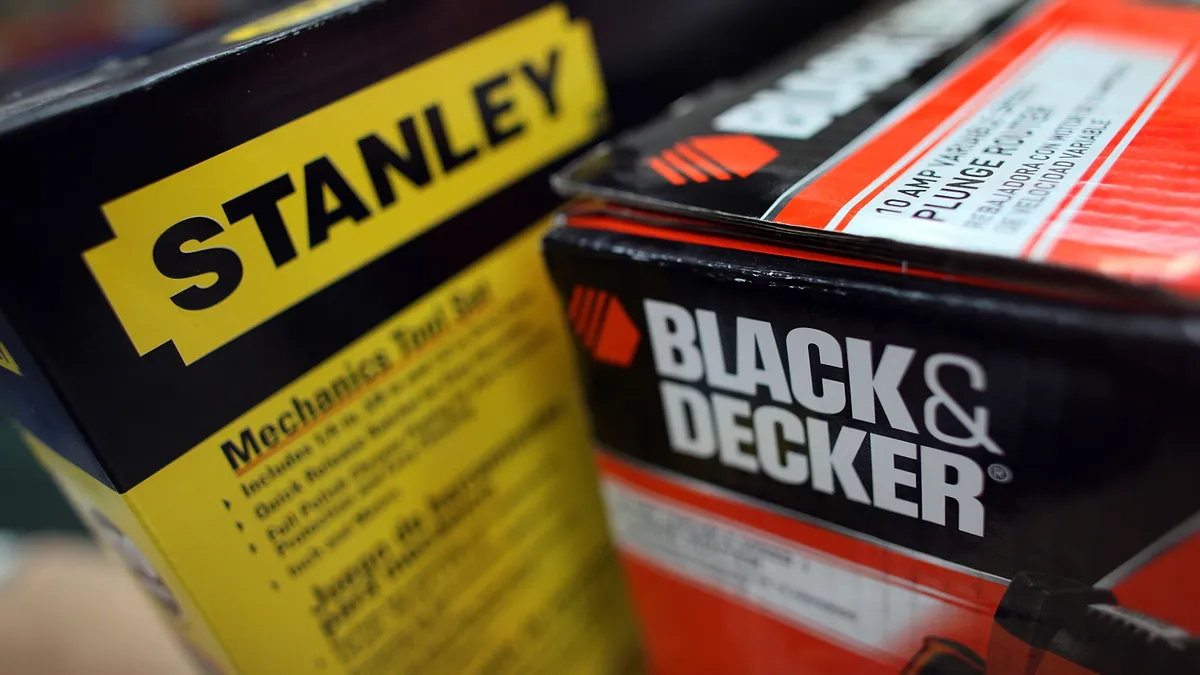
- Stanley Black & Decker raised its full-year earnings outlook Wednesday after tariff refunds helped lift third-quarter gross margin by 430 basis points and added 67 cents per share to earnings.
- The refunds are also allowing the company to accelerate spending on growth initiatives that had been planned for next year. The New Britain, Connecticut-based maker of power tools recognized a $180.7 million pretax gain from tariff refunds realized in the quarter.
- “These tariff refunds have clearly given us the rare opportunity to ramp up and pull forward certain growth investments into 2026,” CFO Patrick Hallinan said during an earnings call.
Dive Insight:
Stanley Black & Decker is among a growing number of companies reporting significant financial benefits from refunds tied to tariffs imposed under the International Emergency Economic Powers Act.
The refunds followed the Supreme Court's February decision striking down the Trump administration's use of the 1977 law to impose import tariffs.
The refunds have become a prominent topic on corporate earnings calls, with companies including Walmart, Target, Apple and Home Depot highlighting significant impacts.
Companies mentioned tariff refunds 388 times across 72 S&P 500 earnings calls in the third quarter, according to an Oct. 22 analysis by financial research platform Equibles.
Stanley Black & Decker previously disclosed a $118 million pretax gain from IEEPA tariff refunds in the second quarter. That amount was partially offset by $83.4 million in directly attributable costs, including variable incentive compensation and growth investments.
For Stanley Black & Decker, the refunds provided a significant lift to third-quarter results. The company reported net sales of $3.7 billion, down 1% from a year earlier on a reported basis but up 4% organically. Adjusted earnings per share were $2.31, including an approximately 67-cent benefit from net tariff refunds.
The company raised its 2026 adjusted earnings-per-share outlook to a range between $5.95 and $6.25, from $5.20 and $5.80.
For the full year, the company expects tariff refunds to contribute a net 60 cents per share to adjusted earnings, including gross refunds received in the second and third quarters and partially offsetting costs and taxes across the rest of the year, Hallinan said.
The updated outlook does not include potential fourth-quarter tariff refunds because their timing and amounts remain too uncertain, Hallinan said. The company has received most of the refunds for which the government has “provided a refund pathway,” he added.
Stanley Black & Decker also raised its 2026 free cash flow outlook to a range of $1 billion to $1.2 billion, from $600 million to $800 million. The updated forecast reflects stronger cash generation year to date and tariff refunds received in the third quarter.
The refunds are helping the company bring forward $70 million to $80 million in growth investments that had been planned for 2027, Hallinan said in response to an analyst's question. The spending will go toward areas including personnel, brand building and marketing.
“We continue to take a disciplined and returns-based approach to reinvesting a meaningful portion of these tariff refunds in brand health to support sustainable and profitable organic growth over the long term,” Hallinan said.