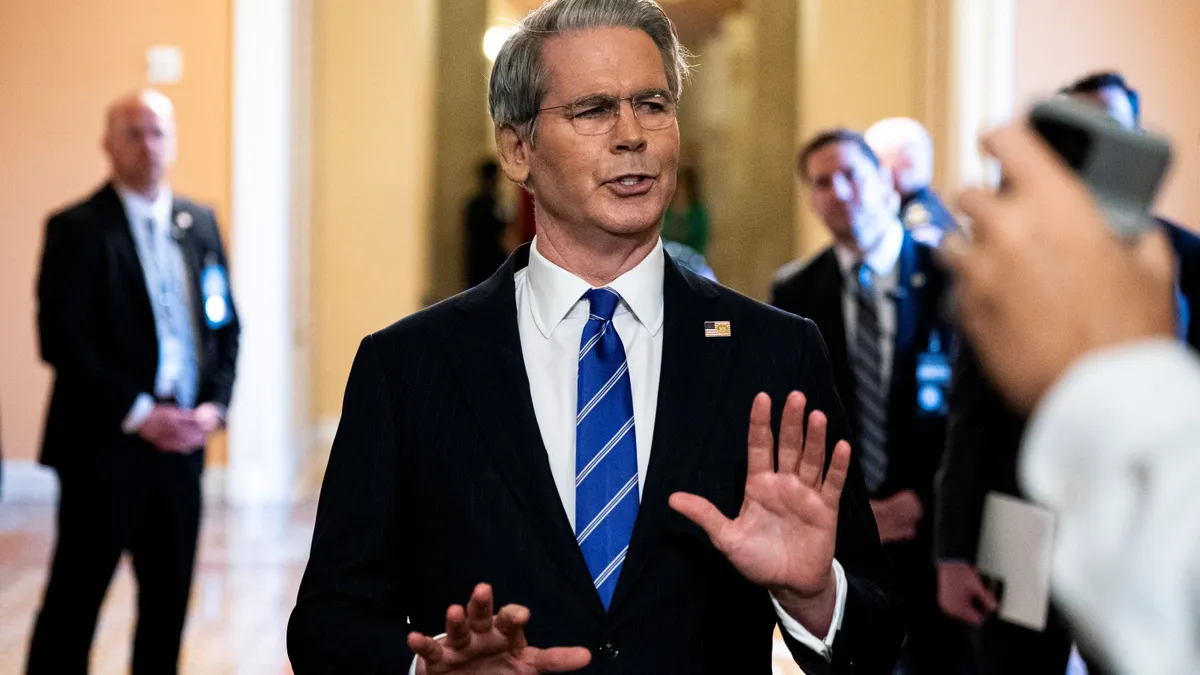
Anthropic's debut on the public markets puts CFO Krishna Rao under greater scrutiny as the Claude developer seeks to sustain its rapid growth while managing enormous investments in artificial intelligence.
Anthropic's initial public offering, which closed Nov. 20, raised a record $93.5 billion in gross proceeds. The company also raised about $26 billion from private investors in a separate transaction conducted alongside the offering.
Anthropic shares surged 34% above their $83 IPO price when trading began Nov. 19, but the stock has since plummeted. The volatile debut underscores the pressure Rao now faces.
“Every word he says about spending, growth, or profitability will be scrutinized, and even a small change in tone could trigger an immediate stock market reaction,” said Brian Oh, head of technology, media and telecommunications at Guidepoint Insights, a provider of research services.
The situation is further complicated by volatility across the broader AI market, said Steven Wahrhaftig, vice president of equity research at global financial services firm Wedbush.
“This is a tough backdrop for a company that is early in its growth and is difficult to navigate,” he said.
Rao joined Anthropic in April 2024 after serving as CFO of Fanatics Commerce and healthcare payments company Cedar, according to his LinkedIn page. Earlier in his career, he held finance and corporate development roles at Airbnb, where he helped the company prepare for its 2020 public offering, and worked in private equity at Blackstone.
Rao, who is 43, received $720,250 in total compensation in 2025, according to Anthropic's IPO filing, and his annual base salary increased to $1.25 million in February 2026.
Analysts interviewed for this article identified four challenges for Rao as Anthropic adjusts to being a public company.
1. Balancing growth and financial discipline
Anthropic must show that its heavy investments in computing capacity, research and talent can translate into sustainable profits within a reasonable timeframe, said Janice Quek, vice president of equity research at CFRA Research.
“Rao will have to convince investors that the company is taking a disciplined approach to spending, without sacrificing its growth momentum and opportunities to capture incremental market share,” Quek said.
That balance will be harder for Anthropic to strike as a public company, with investors closely scrutinizing how it spends and raises money. Rao will need to maintain a “strict capital allocation framework,” according to Wahrhaftig.
“As a private company, there is more leeway with capital allocation given that the funding and numbers remain behind closed doors,” Wahrhaftig said. “Now that the company is public, everything must be disclosed, so it cannot continuously turn to equity or debt capital markets to fuel aggressive funding initiatives.”
2. Forecasting revenue in a consumption-based business
As a public company, Anthropic will face greater scrutiny over its financial forecasts. That could be particularly challenging given its consumption-based business model, where customer adoption and usage can vary significantly across use cases.
“Anthropic is largely a consumption-based business, and forecasting revenue isn't easy when customer usage can change so quickly,” Oh said. He noted that Snowflake faced similar challenges in its early years as a public company.
Similarly, Mandeep Singh, global head of technology research at Bloomberg Intelligence, said a consumption-based model puts Anthropic's ability to sustain top-line growth in question, given the potential for uneven adoption.
“For coding agents, the diffusion has been fast but we have also seen model companies see much slower adoption with image and video models,” Singh said.
3. Managing enormous infrastructure commitments
Anthropic's rapid growth requires enormous investments in the computing power and data-center infrastructure needed to develop and run its AI models.
To secure those resources, the company enters into long-term agreements that can require it to pay for computing capacity even if it does not use all of it. This creates a financial risk because infrastructure costs could outpace revenue from customer usage.
Anthropic's IPO filing details about $900.9 billion in committed spending, almost all related to computing and infrastructure.
“That's an enormous number even for a company growing this fast,” Oh said. “I don't think the size of the commitments alone is the problem, as long as demand continues growing and compute utilization remains strong.”
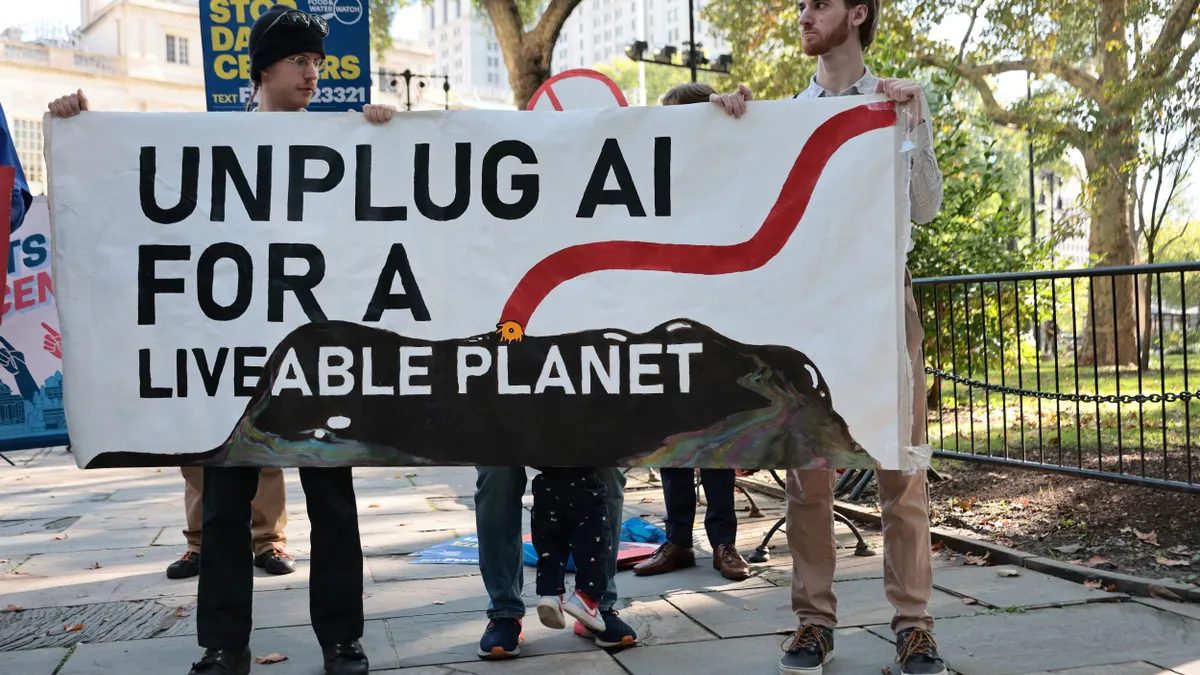
Meanwhile, the company's ability to secure the data-center capacity it needs could be affected by tighter regulation. The Nov. 3 midterm elections brought victories for candidates who advocated stronger oversight of data centers. The Associated Press reported after the elections that 32 of 34 winning gubernatorial candidates in races where it had called a winner supported stronger regulation or restrictions.
Texas Gov.-elect Gina Hinojosa, for example, has called for a moratorium on new data-center approvals until state lawmakers establish new rules governing the facilities.
4. Scaling the finance function and internal controls
The transition also will require Rao to ensure the finance team is equipped to support Anthropic as a public company. He will need a finance function capable of producing reliable forecasts, monitoring spending commitments and giving executives the information they need to make capital-allocation decisions.
The company's scale, growth rate and infrastructure commitments raise the stakes.
“When a company grows this quickly, financial reporting, controls and forecasting need to keep pace, especially under the scrutiny of public markets,” said Steven Baum, CFO of Ocorian, a global financial services provider.