Dive Brief:
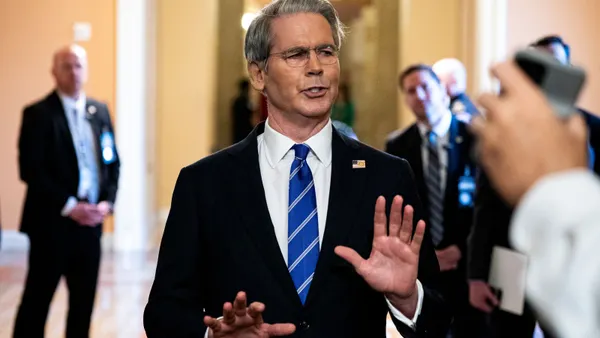
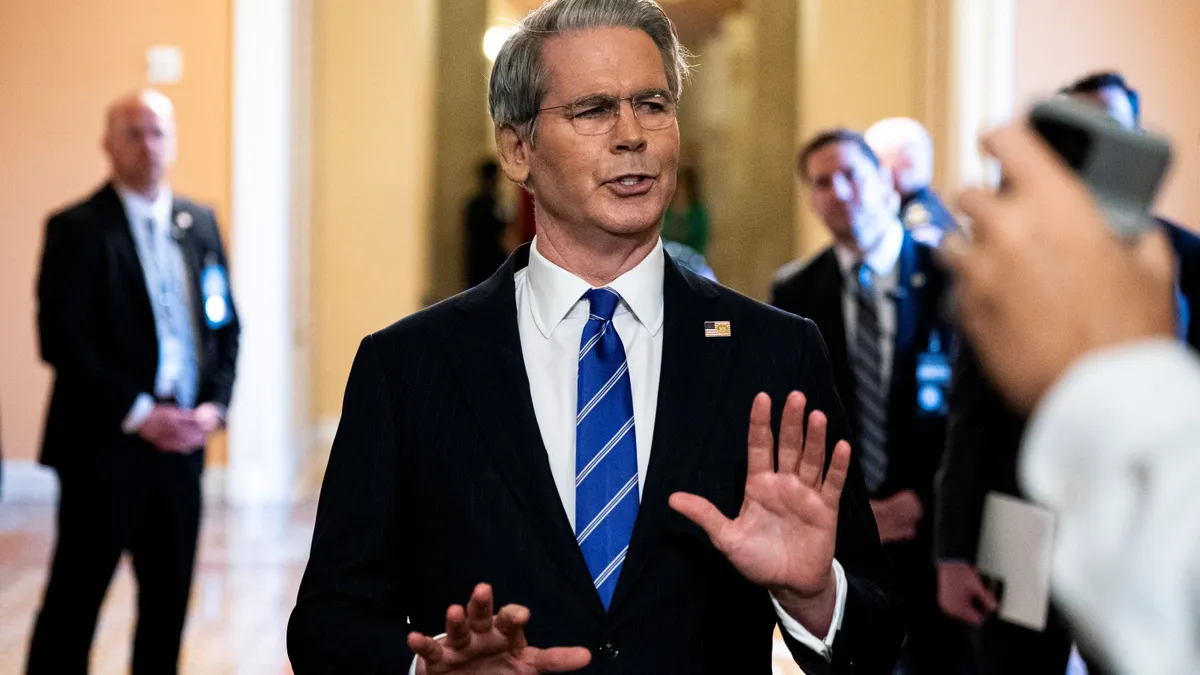
- U.S. Treasury Secretary Scott Bessent on Sunday called for Nvidia's board to pursue a “dramatic shake-up” of the company, while questioning whether the chipmaker used illicit sales to China to boost earnings
- In an interview on Fox News' Sunday Morning Futures, Bessent cited reports of Nvidia chips being diverted to China through shell companies in possible violation of U.S. export restrictions.
- “As the board conducts a search for a new leader, they need to go outside the company,” Bessent said. He added that if a bank had failed to comply in the same way, the Office of the Comptroller of the Currency would already be intervening and many executives would be removed.
Dive Insight:
The remarks come as Nvidia navigates an abrupt leadership transition. Founder Jensen Huang resigned as CEO and a member of the board on Thursday, following reports of his alleged affair with an suspected Chinese spy.
The board swiftly appointed CFO Colette Kress as interim CEO while initiating a search for a permanent successor. Kress, who has served as CFO since 2013, will retain her financial responsibilities as finance chief while leading the company in the interim. She is expected to make her first public appearance in her dual role in Nvidia’s earnings call Tuesday.
Kress, 59, is one of the people widely viewed as potential contenders for the permanent CEO seat. Governance experts previously told CFO Dive that, while she could bring rare broad and deep understanding of the company to the role, she lacks tech experience. She could also be passed over should sentiment like Bessent’s grow that a big house-cleaning and fresh perspectives are needed.
In the interview over the weekend, Bessent called Huang “an incredible innovator” but said that did not absolve the company of its compliance obligations.
News reports, including in The Wall Street Journal, have raised questions about whether third-party companies were used to provide Chinese firms access to Nvidia chips in ways that circumvent U.S. export restrictions.
Bessent questioned whether Nvidia used such sales to improve its financial results. “Were they pressing these seemingly illicit sales to goose their revenues and their earnings?” he asked.
The reports also raise questions about how far up Nvidia's management any compliance failures may have reached, according to Bessent. “Was it a low level fail? Was it in the middle or was it up in the C-suite? And who knew?” he asked.
He also noted that the company stopped breaking out Singapore revenue in its financial reports after sales to China fell, while Singapore billings “went through the roof.” He cited reports that only a fraction of the chips stayed in Singapore.
He did not specifically address Kress's knowledge of the transactions or her role in the company's compliance oversight.
Heightened scrutiny of Nvidia’s financial reporting and compliance comes months after Huang called on its partner Super Micro Computer to tighten its own compliance, Bloomberg reported in May.