Dive Brief:
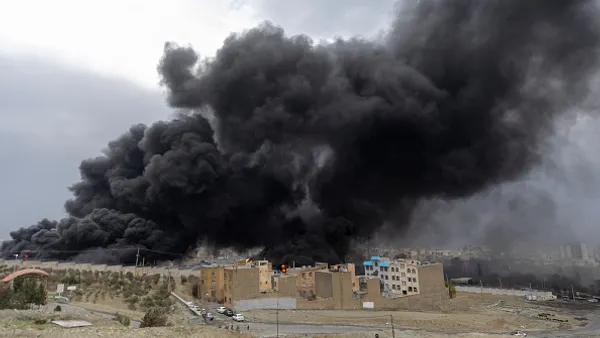
- Monetary policy is well calibrated to handle changes to inflation, economic growth and other risks posed by the war with Iran, John Williams, vice chair of the Federal Reserve’s policy-setting committee, said Thursday as the U.S. for the fourth day enforced a blockade on shipments of oil and other goods through the Strait of Hormuz.
- Despite conflict in the Middle East, the U.S. economy will probably grow between 2% and 2.5% this year, Williams said. Stimulative fiscal policy, favorable financial conditions and investment in artificial intelligence will likely offset the economic harm from higher energy prices and other causes of uncertainty, he predicted.
- The war “has introduced substantial risks and heightened uncertainty,” Williams said in a speech. Yet “the current stance of monetary policy is well positioned to balance the risks to our maximum employment and price stability goals,” he said.
Dive Insight:
Since trimming the main interest rate in December to a range between 3.5% and 3.75%, the Fed has held borrowing costs steady while considering how to deal with the conflicting risks posed by a softening labor market and accelerating inflation.
The central bank’s policy dilemma has worsened with a surge in energy prices since the start of U.S. and Israeli attacks on Iran on Feb. 28. Futures for Brent crude oil, the global benchmark, have rocketed since then by about 36%, from $73 per barrel to $99 per barrel.
Higher oil prices threaten to increase inflation, slow economic growth and push up unemployment, complicating central bank efforts to meet a congressional mandate to maintain stable prices and full employment.
The war is fueling “significant disruptions in energy prices, which are already lifting overall inflation,” according to Williams, who serves as president of the New York Fed.
Moreover, the conflict may cause “a large supply shock with pronounced effects that simultaneously raises inflation — through a surge in intermediate costs and commodity prices — and dampens economic activity,” he said.
“This has begun to play out already,” Williams said, noting disruptions in the supply of energy and related goods and rising prices for fertilizer, airfares, groceries and other consumer goods.
The Consumer Price Index including all categories of prices rose 0.9% last month, or 3.3% on an annual basis, with a 21.2% leap in an index for gasoline prices fueling nearly 75% of the increase, according to the Bureau of Labor Statistics.
At the same time, the CPI excluding volatile food and energy prices increased just 0.2% in March, or 2.6% over 12 months after a 2.5% annual gain in February, the BLS said. The Fed seeks to hold inflation at no more than 2%.
Turning to the other side of the Fed’s dual mandate, Williams noted “conflicting signs” from the labor market.
Although supply and demand for labor have come into better balance in recent months, some “data suggest a labor market that continues to gradually soften,” he said.
The comparatively low hiring rate — one half of a “low-hire, low-fire” job market — is “not so good if you are looking for a job or worried you may need one soon,” Williams said.
Low levels of hiring and a rise in long-term unemployment “may be contributing to a somewhat more pessimistic perception among households than other indicators of the labor market suggest,” he said.
The war-induced surge in gasoline prices pounded a measure of household sentiment this month to the lowest level since the start of data collection in 1952.
Consumer sentiment plunged 11% in April, with assessments of personal finances also falling 11% because of soaring prices and falling asset values, the University of Michigan found in a survey.
The decline in job-finding rates and other “labor market indicators bear continued monitoring,” Williams said.