Dive Brief:
- Consumer prices rose last month at a lower-than-forecast annual rate of 3.5% from a 4.2% pace in May, the Bureau of Labor Statistics said Tuesday, moments before Federal Reserve Chair Kevin Warsh pledged to slow inflation to the central bank’s 2% goal.
- A 5.7% decline in energy prices — including a 9.5% slump in the price of gasoline — accounted for much of the decline in price pressures in June, the BLS reported. Consumer prices excluding volatile food and energy were unchanged last month and rose 2.6% over the 12-month period.
- “For the Fed, the better-than-expected June CPI likely can justify refraining from a hike” in the federal funds rate at its July 28-29 policy meeting, Fifth Third Commercial Bank Chief Economist Bill Adams said. Still, “the Fed will need to see more good news on inflation to hold off on interest rate hikes in the rest of the year,” he said in a statement.
Dive Insight:
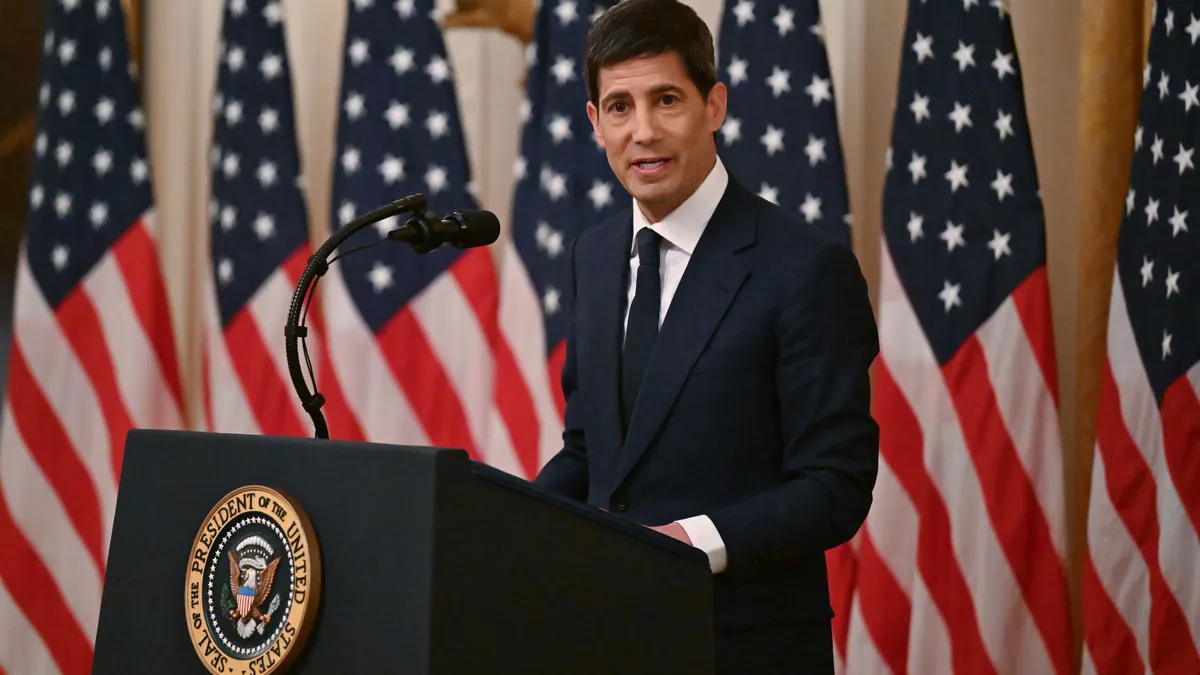
Warsh, testifying before a congressional panel for the first time as leader of the Fed, told lawmakers that the fight against above-target inflation is just beginning.
“While I reviewed the data that came out this morning on CPI and it was positive relative to expectations, I’m not for cherry picking,” he told the House Financial Services Committee.
“I’m not going to show up here and say mission accomplished,” Warsh said, adding “there’s plenty of work to do.”
After five years of above-target price gains, Fed officials are unanimous in their determination to slow inflation to 2%, he said.
At a meeting of central bank governors and district bank presidents in June, “there was no willingness to tolerate higher prices — there was a commitment that was unambiguous and unanimous that we’re going to deliver,” Warsh said.
Inflation may accelerate this month after the collapse of a ceasefire in the war with Iran and a rebound in oil prices.
Since June 30, futures for Brent crude oil, the global benchmark, have jumped by about 17%, from $72 per barrel to $85 per barrel.
Still, the unexpectedly low inflation data prompted traders in interest rate futures to reduce the probability that Fed policymakers this month will raise the federal funds rate by a quarter percentage point. They see 16.6% odds of an increase compared with 41.7% odds on Monday.
Regarding the labor market and the Fed’s mandate to achieve full employment, Warsh said, “America’s labor market appears broadly stable.
“Job creation has kept pace with the workforce,” he said. “We’re seeing relatively few layoffs, only slight variance in the rate of job vacancies and solid growth in nominal wages.”