For Microsoft, the challenge of extracting value from artificial intelligence tools deployed internally has shifted from getting employees to use the technology to proving that it can change business results.
Rather than treating adoption as an end in itself, Microsoft is increasingly redesigning workflows around specific business outcomes and measuring whether those changes deliver tangible results, according to a Sept. 17 blog post detailing lessons from the company's AI transformation.
“Access to AI will not be the differentiator,” Kathleen Hogan, executive vice president and chief strategy and transformation officer, said in the blog post. “The advantage will come from an organization’s ability to empower and engage employees, redesign work, govern AI responsibly and operationalize what works.”
The approach is playing out across the company, from sales to its cloud supply chain, she said.
Sellers who used Microsoft 365 CoPilot at least half of the time from January to June 2024 saw a 9.4% increase in revenue per account manger and 20% increase in close rates as compared to those with “low usage” of AI, according to the post.
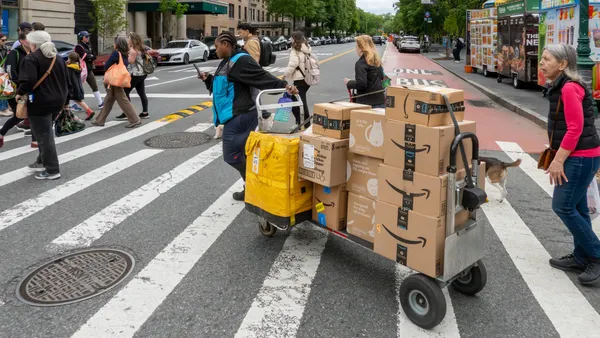
In its cloud supply chain, the company deployed more than 100 AI agents across planning, sourcing, fulfillment and logistics.
“Those agents investigate shifts in demand and model capacity while comparing transportation options across air, land and sea on cost, timing and carbon impact — complexity few teams could manage alone,” Hogan said, adding that cycle time fell by up to 75% in selected workflows.
The blog post highlighted results from a recent AI “playbook” published by Microsoft. Hogan said the playbook draws on hundreds of AI transformation efforts across the company, outlining what has worked and lessons learned from failures.
Some agents have progressed from answering questions to helping planners update or cancel purchase orders directly, “within defined permissions and approval thresholds,” she said.
The shift at Microsoft comes amid escalating concerns about the rapid development and deployment of autonomous AI systems and the potential for them to behave in unintended or harmful ways.
The debate has intensified in recent weeks, with some AI leaders including Anthropic CEO Dario Amodei and OpenAI CEO Sam Altman calling for a slowdown in development to give safety measures time to catch up.
Microsoft has also weighed in, outlining its position in a Sept. 14 draft code of conduct for its AI models made public on the company’s website.
The company said AI should remain “subordinate to humanity” and subject to meaningful human oversight and control. The code says models should not resist human interruption, correction or shutdown and should operate within defined permissions and boundaries.
“We’ll take feedback, iterate on it, and publish a revised version toward the end of the year, which we’ll use to guide our model development in 2027 and beyond,” Microsoft said in a preface to the draft code.