Dive Brief:
- The Kraft Heinz Company, in a move effective Wednesday, named Nordstrom CFO Kelly Dilts and long-time Kroger veteran J. Michael Schlotman to its board of directors as it moves to execute its $600 million transformation plan, according to a Wednesday press release and securities filing.
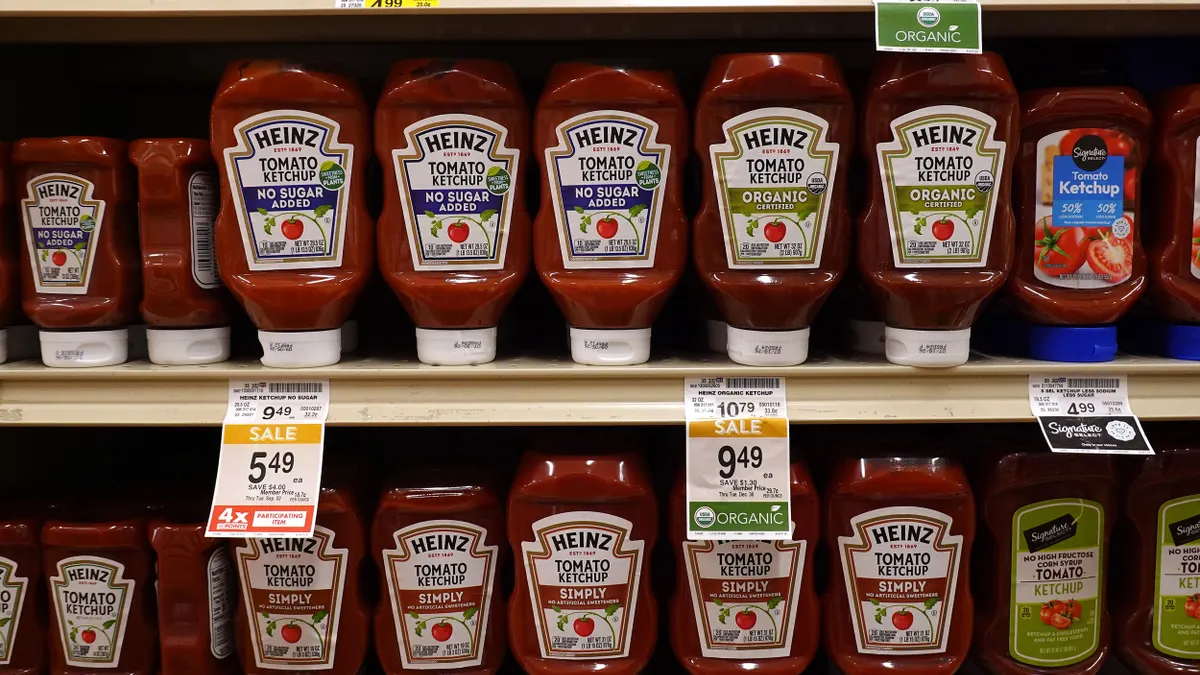
- The maker of such household name brands as Heinz ketchup, Kraft macaroni and cheese and other packaged foods and beverages such as CapriSun and Jell-O will lean on the “deep consumer, financial and operational expertise,” as it takes steps to strengthen its portfolio and foster growth, according to the Wednesday release.
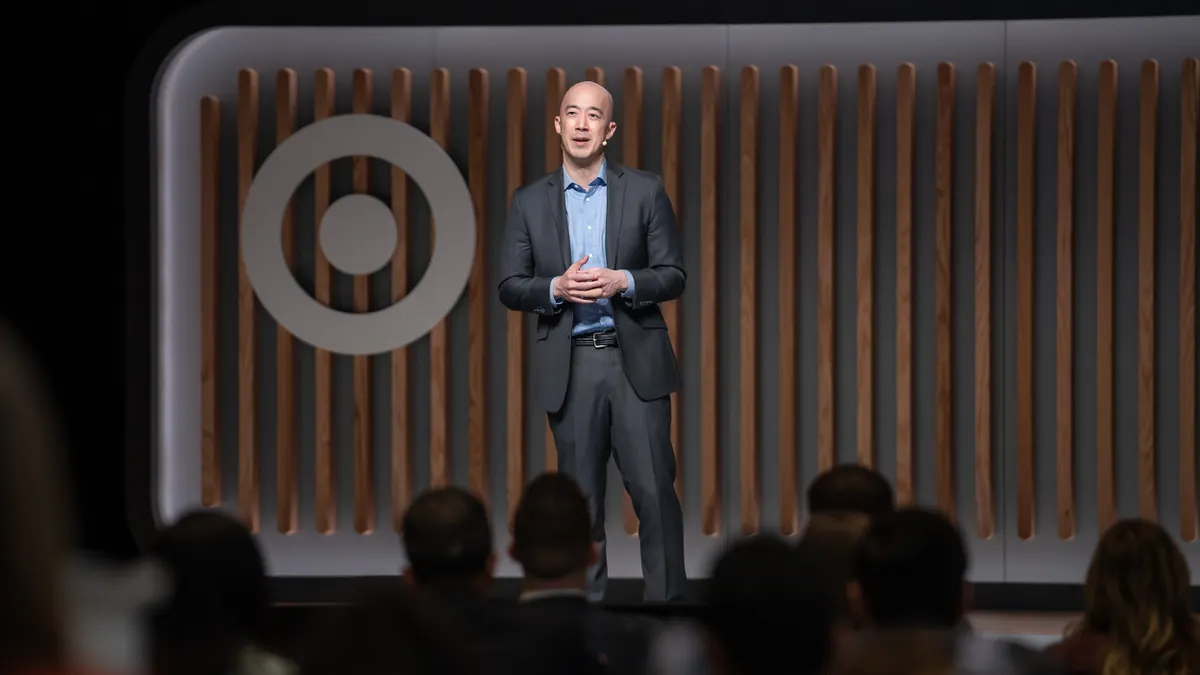
- “Kelly and Mike have spent their careers deeply connected to the consumers, customers and market forces that shape our industry,” CEO Steve Cahillane said in a statement included in the release. “Their experience leading scaled businesses through change will be invaluable as we sharpen our focus, strengthen our brands and continue to build a more profitable Kraft Heinz.”
Dive Insight:
Schlotman served 34 years at grocery chain Kroger, including 19 years as its CFO before retiring in December of 2019, according to his LinkedIn profile. Since leaving Kroger, he has served in various board seats for companies including Kellanova — formed after the Kellogg company’s split in 2023 — Connetic Ventures and CVG Airport.
Dilts, meanwhile, has served in Nordstrom’s top finance seat since September of 2025, joining the retailer after two years as CFO for Dollar General, according to her LinkedIn. She took Nordstrom’s CFO chair shortly after it delisted from the NYSE and began operating as a private company, CFO Dive reported at the time.
Both Dilts and Schlotman will receive compensation for their service on the board under Kraft Heinz’s non-employee director compensation standards, according to the filing with the Securities and Exchange Commission.
The board appointments come as the consumer food group, dually headquartered in Chicago and Pittsburgh, takes several strategic steps to execute on its growth strategy. Also Wednesday, Kraft Heinz announced it will divest its North American coffee business, which includes brands such as Maxwell House, Ethical Bean and Sanka, according to a press release.
Kraft entered into an agreement with an affiliate of private equity group One Rock Capital to divest its coffee segment at an enterprise value of $650 million, according to the release. Kraft will retain a 30% equity stake after the deal, which is expected to close in mid-2027 pending regulatory approval.
The company expects the agreement to yield net cash proceeds of $500 million after tax, which will be used to pay down debt, it said. The transaction is “expected to be growth and margin accretive to Kraft Heinz,” according to the Wednesday release.
The transaction represents an “important step in simplifying and strengthening our portfolio,” Cahillane said Wednesday during the company’s earnings presentation for its third quarter.
“With this transaction, we can concentrate our capital and management attention where we see the greatest potential for growth and where we can create the most value for our consumers... and our shareholders,” he said according to a transcript.
Both the board appointments and coming divestment of the coffee business come as Kraft Heinz advances Cahillane’s strategy to return the company to sustainable, profitable growth.
Cahillane, a Kellanova alum, took Kraft’s top executive chair in January as the business was preparing for a split into two entities to address ongoing headwinds and challenges in the food industry, according to a December 2025 press release.
Shortly after he took the reins, however, Kraft paused the planned seperation, with Cahillane stating many of its challenges were “fixable and within our control,” according to its full year 2025 earnings report in February.
The consumer goods company then announced it would be making a $600 million investment across its marketing, research and development and sales division in a bid to boost growth, they said — following up with another $100 million investment in August, CFO Dive sister publication Marketing Dive reported.
Kraft is continuing to have “constructive” conversations with retailers as part of those investments, which includes pricing and product development decisions, Cahillane said Wednesday.
“We want to be a tailwind for our retailers, not a headwind,” he said according to an earnings transcript. “And part of that comes through innovative thinking about how we make the aisle more dynamic, more interesting, how we bring more innovation, how we drive more traffic.”
Net income for the company’s third quarter ended Sept. 26 fell nearly 13% year-over-year to $536 million, Kraft Heinz said in its Wednesday release. Meanwhile, net sales fell by 2% YoY to $6.1 billion for the period, according to its earnings report.