Dive Brief:
- Retail sales edged up 0.2% last month after a 1% gain in May, the Census Bureau reported Thursday, as the declining price of gasoline veiled healthy consumer spending at auto, electronics and other retailers.
- Census Bureau data show that sales at retailers in June notched the fifth straight monthly increase even as spending at gas stations fell 5.3% following the announcement of a ceasefire in the Iran war and a decline in energy prices. The government measures retail sales in dollars, so total spending growth slowed as fuel prices fell and consumers spent less for gasoline.
- Household real spending likely rose during the second quarter at an annualized 2.5% rate, “a marked improvement on the meager 0.5% expansion in Q1,” Pantheon Macroeconomics Senior U.S. Economist Oliver Allen said in a note.
Dive Insight:
Retail spending will probably slow during the second half of 2026, Allen predicted.
“The lift to cashflow from tax refunds now has faded, leaving consumers far more exposed to the real income shock from the jump in gas prices,” he said.
The average price for a gallon of regular gasoline has fallen during the past month to $3.94 from $4.04 – a 2.6% decline, according to AAA. During the past year, however, the price has surged from $3.16 per gallon for a 24.8% gain.
“Meanwhile, the underlying trend in spending also likely is weak, given that the subdued labor market is weighing on income growth and the personal saving rate already is relatively low,” Allen said.
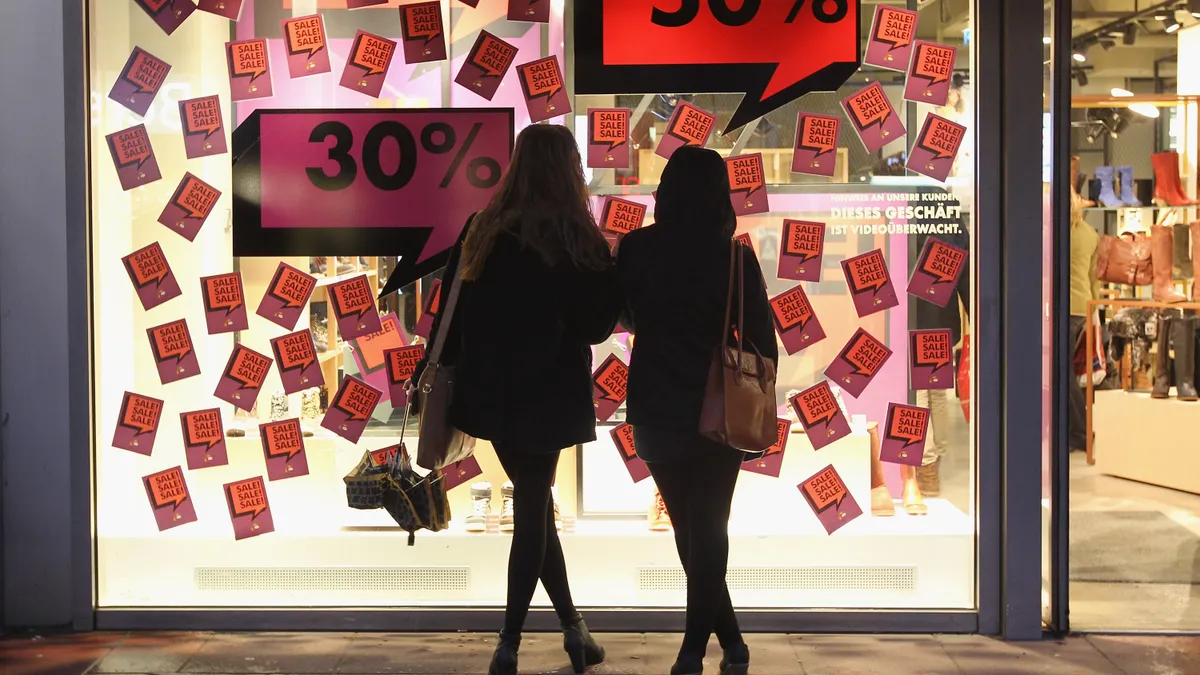
Consumers trimmed outlays on clothing, groceries, and health and personal care products, with spending falling 0.3%, 0.4% and 0.8%, respectively, according to the Census Bureau.
“Over the past few months, value shopping has gained traction as household budgets have come under pressure,” the Bank of America Institute said in a note Wednesday, citing the bank’s card data.
“Spending at value grocers has picked up alongside elevated gasoline prices,” BoA said. “Meanwhile, discount apparel spending is growing at the fastest in three years, although growth has moderated some since April, likely reflecting the fading impact of tariff-related price hikes.”
The Federal Reserve, in its Beige Book report on the economy across its 12 districts since late May, described a similar value-oriented trend.
“Consumer spending edged up as higher prices, particularly for fuel, dampened sales in other categories,” the central bank said Wednesday. “Several districts noted declines in spending on discretionary items or trading down to more affordable varieties.”
For example, the Boston Fed said “consumer spending rose modestly, supported by the World Cup soccer tournament, but many consumers showed heightened price sensitivity.”
Kevin Warsh, testifying to House and Senate committees this week for the first time as Fed chair, said “household consumption growth is moderate.”
Overall, “economic activity is expanding at a solid pace, showing resilience in the face of recent developments,” Warsh said.