Dive Brief:
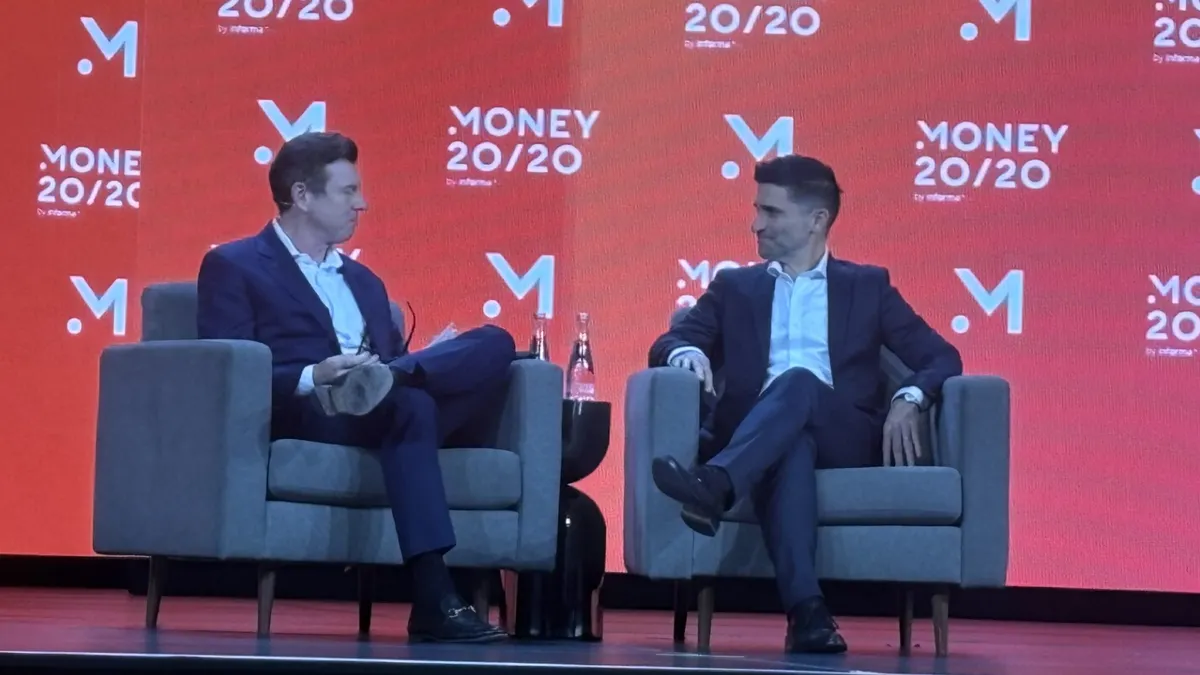
- Anthropic CFO Krishna Rao told Bloomberg’s Ed Ludlow Thursday that the company chose to go public to improve its access and cost of capital, as well as to realize the “democratizing” impact of opening up stock ownership opportunities to the public.
- Rao, in a wide-ranging interview with Ludlow, side-stepped a timing question on why the company forged ahead with its initial public offering now despite “anxiety” in the world. Instead, the finance chief focused on the move being part of the company’s long-term plan.
- “I think of this IPO as one stop on the train,” Rao said. “In other words, we are building this business for the long-term. Today is a day where we’re obviously excited to be at this point, but it is just one stop on the train.”
Dive Insight:
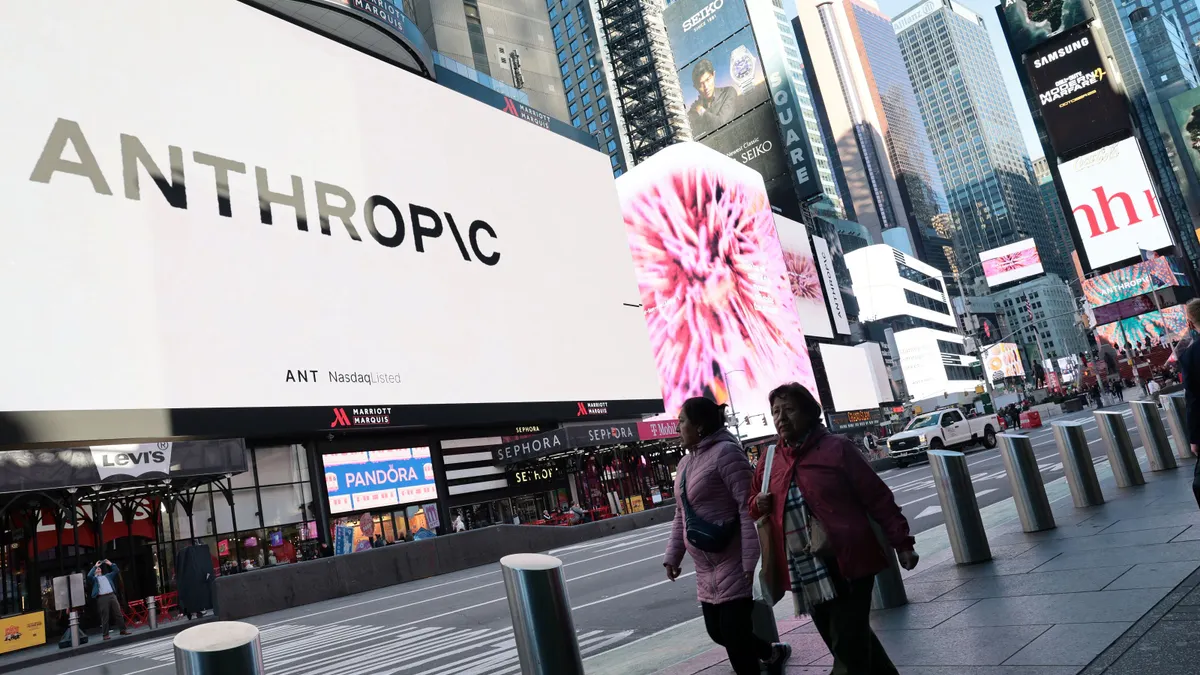
Shares of the company, which is behind artificial intelligence platform Claude, began trading Thursday under the symbol ANT in a blockbuster IPO with yielded proceeds before expenses that totaled $93.5 billion. The company set a record for the largest-ever public offering.
Rao, who took the CFO seat at Anthropic in April 2024, was previously a principal in the private equity group at Blackstone and global head of corporate and business development at Airbnb, according to his LinkedIn profile. In the interview, he marveled at the speed of Anthropic’s growth to date.
The San Francisco-based company is barely six years old and only saw its first dollar of revenue in Q1 of 2023, he said. “It’s kind of an incredible journey that the company’s been on in a relatively short amount of time,” he said. “Since that time you flash forward not that long to last month, where we had over $81 billion of run rate revenue so it’s been a compressed amount of time with an incredible amount of growth.”
Asked what has changed now that the company has come out of the IPO with much more cash, Rao stressed the need for a still conservative balance sheet. But, he said the capital raise better positions the company to thrive through different market cycles.
“We think it positions us really well, regardless of what the market conditions are,” he said. “If they’re more volatile or less, we can be opportunistic.”
Rao also emphasized the importance of the company’s business or “enterprise” customers in an answer to a question on how he balances the tension between managing commercial growth and safety.
“I actually wouldn’t call it a tension,” Rao said. “The way I would think of it is we built safety and capability in tandem…it’s part of the founding principles of the company, it’s embedded in our DNA.”
The company has about 11,900 enterprise customers as of the end of Q3, which is almost 8 times the number it had at the beginning of the year, he said. Many of those customers need both safety and capabilities.
“These are some of the biggest and most complex and demanding companies in the world… they don’t just want the most capability,” Rao said. “They also want safety and alignment because we are deploying this technology in ways that touch their employees, touch their customers, touch their data…It’s just not enough to have a capable model or a capable product, you actually have to have something that builds trust.”