Dive Brief:
- The U.S. Court of Appeals for the D.C. Circuit erred when it ruled that Sarbanes-Oxley's confidentiality protections do not extend to the identities of accountants facing disciplinary proceedings before the Public Company Accounting Oversight Board, according to the New Civil Liberties Alliance, a nonprofit public-interest law firm.
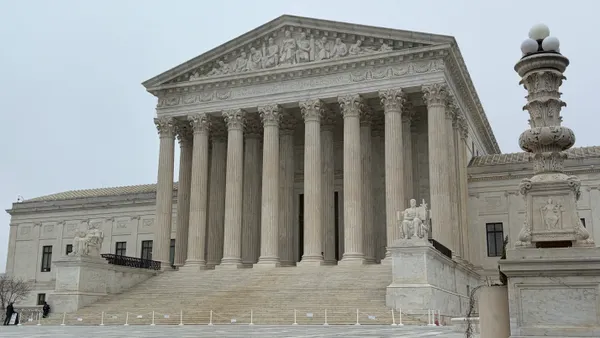
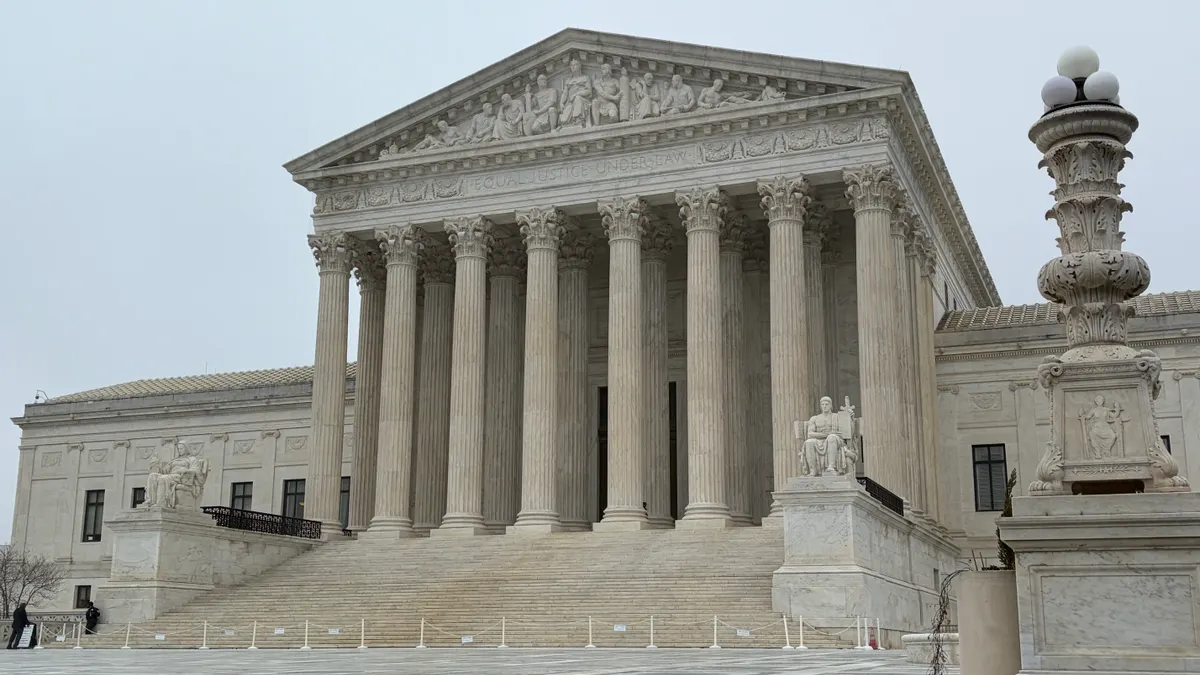
- In a Nov. 9 petition asking the U.S. Supreme Court to review the ruling, the NCLA argued that the appeals court gave no weight to Sarbanes-Oxley's confidentiality protections, which were intended in part to shield accountants from reputational harm arising from unproven disciplinary allegations. The group said the ruling could discourage accountants from challenging the constitutionality of PCAOB proceedings in federal court.
- “The accounting profession should be extremely concerned about this case,” NCLA attorney Russ Ryan said in an email. “As we make clear in our petition, the D.C. Circuit decision essentially greenlights immediate public disclosure of every accountant and firm investigated for or charged with suspected wrongdoing by the PCAOB's unaccountable private-citizen, non-governmental staff employees. Until the D.C. Circuit decision, literally nobody believed that was even possible, much less perfectly permissible.”
Dive Insight:
The dispute involves an accountant, identified in court filings as John Doe, who faces disciplinary proceedings initiated by the PCAOB in December 2022.
The PCAOB, which oversees auditors of publicly traded companies, has accused Doe of misconduct involving audit documentation, misleading inspectors and failing to cooperate with an investigation. Doe disputes the allegations.
In January 2023, Doe filed a federal lawsuit challenging aspects of the PCAOB's structure and operations, including its funding, the appointment and removal of its officials, and its disciplinary process.
Doe sought permission to pursue the lawsuit under a pseudonym, arguing that publicly identifying him would undermine the confidentiality of the disciplinary proceedings and potentially damage his professional reputation before the allegations were resolved.
The case was initially filed in Texas but transferred to the U.S. District Court for the District of Columbia. In August 2024, the district court denied Doe's request to proceed anonymously.
Doe appealed the anonymity ruling separately from his underlying constitutional claims, which remained before the district court.
The D.C. Circuit upheld the anonymity ruling in June, reasoning that Sarbanes-Oxley's confidentiality provisions protect investigative materials and disciplinary hearings, but do not extend to the identities of accountants facing PCAOB proceedings.
The NCLA, which challenges what it considers unlawful government actions, contends that the appeals court misinterpreted the statute.
The group also argued that the ruling creates a split between federal appeals courts. The First Circuit has held that statutory confidentiality requirements should carry substantial weight when courts evaluate requests to proceed anonymously, even when those requirements do not directly apply to the information at issue, the petition noted.
By contrast, the NCLA said, the D.C. Circuit gave Sarbanes-Oxley's confidentiality requirements no weight in its analysis of Doe's request. The group cited that difference as a reason for the Supreme Court to intervene.
“If SCOTUS declines to review this case, Doe will need to reluctantly reveal his identity in order to pursue his appeal and suffer the irreparable reputational harm that results,” Ryan told CFO Dive.
He said the NCLA took the case because the PCAOB is “arguably the most unconstitutional federal creature Congress has ever devised — a private corporation unleashed to regulate, prosecute and punish a huge segment of the national economy with no accountability to the electorate and no meaningful oversight by any government official.”
The PCAOB did not immediately respond to a request for comment on the petition.
The NCLA warns that leaving the ruling intact could deter accountants from bringing constitutional challenges to PCAOB proceedings because doing so could require them to surrender the anonymity they would otherwise have during confidential disciplinary proceedings.
The petition asked the Supreme Court to review the D.C. Circuit's decision and consider reversing it.
Separately, on Sept. 30, the federal district court rejected Doe's constitutional challenges to the PCAOB proceedings in a ruling that also addressed similar claims brought by another accountant. The court held that some claims must proceed through the administrative review process and rejected others on their merits.
According to the petition, Doe intends to appeal that decision separately.